
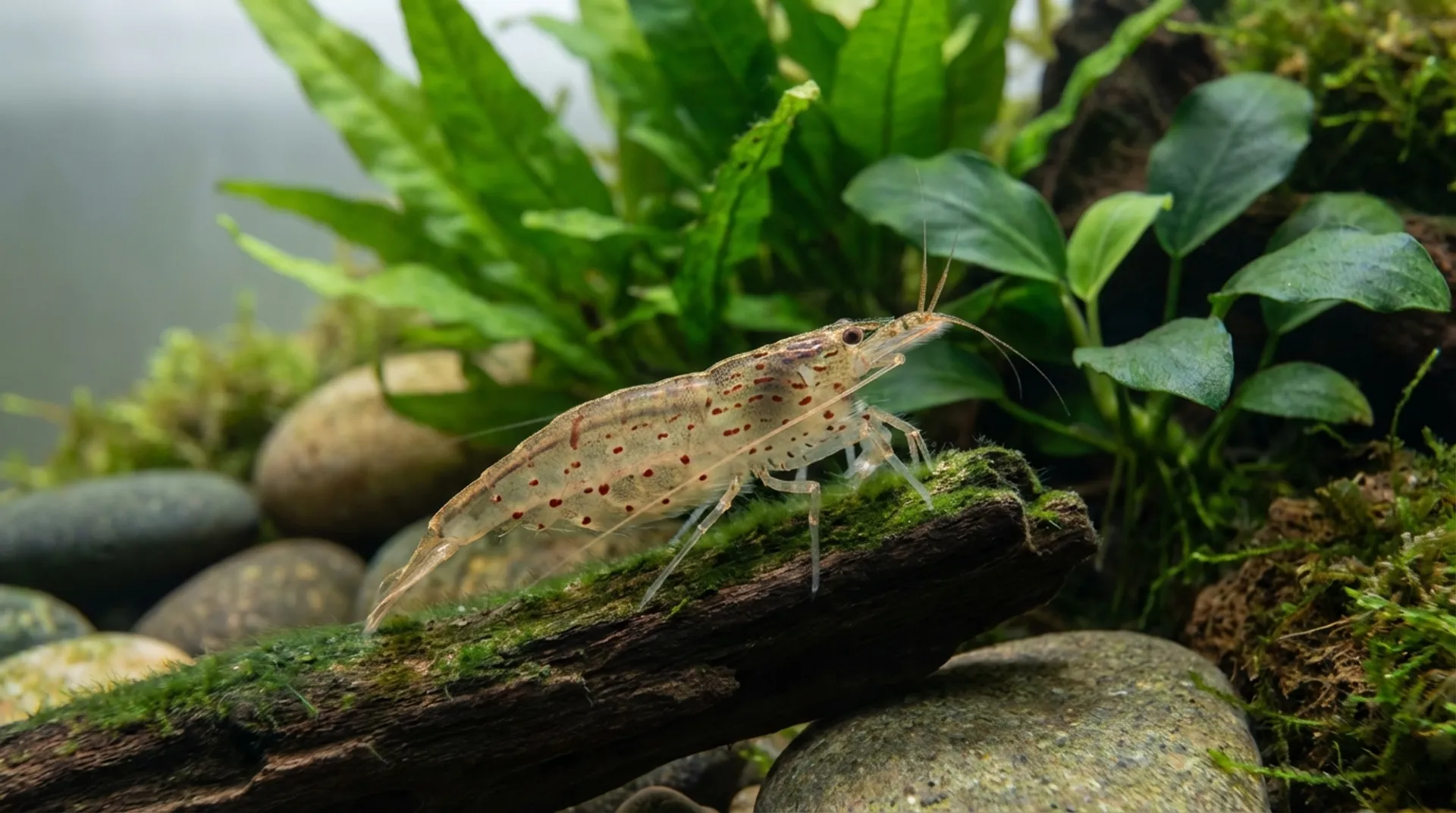
Picture this: you’ve just set up your dream planted aquarium, but within weeks, unsightly algae starts taking over your beautiful hardscape. Before you reach for harsh chemicals or expensive equipment, consider nature’s most efficient cleanup crew member – the Amano shrimp (Caridina multidentata). These translucent workhorses have earned their reputation as the ultimate algae eaters, and for good reason.
Amano shrimp, named after legendary aquascaper Takashi Amano who popularized them, are arguably the most effective algae-eating invertebrates in the freshwater aquarium hobby. Unlike many other shrimp species that are primarily kept for their beauty, Amanos are functional first – though their ghostly appearance and active behavior make them fascinating to watch. Their incredible appetite for algae, combined with their hardy nature and peaceful temperament, makes them an ideal choice for both beginners and experienced aquarists.
In this comprehensive guide, we’ll explore everything you need to know about keeping Amano shrimp healthy and happy while maximizing their algae-eating potential. From precise water parameters to feeding strategies, tank setup requirements, and the unique challenges of breeding these remarkable creatures.
Understanding Amano Shrimp Basics
Amano shrimp are native to Japan and Taiwan, where they naturally inhabit freshwater streams and rivers. In the wild, they can grow up to 2 inches in length, making them one of the larger freshwater aquarium shrimp species. Their semi-transparent bodies are marked with distinctive brown or reddish spots and dashes, providing excellent camouflage among aquatic plants.
What sets Amanos apart from other aquarium shrimp is their incredible work ethic. A single adult Amano shrimp can consume impressive amounts of algae daily, often working tirelessly to keep surfaces clean. They’re particularly effective against green spot algae, hair algae, and various soft algae types that plague many aquariums.
Their lifespan of 2-3 years is longer than many other freshwater shrimp, and they’re remarkably hardy once established in a suitable environment. However, they do have one unique requirement that sets them apart from most aquarium inhabitants – they’re excellent jumpers and require a tight-fitting lid to prevent escapes.
Essential Water Parameters
Successful Amano shrimp keeping starts with maintaining proper water parameters. These shrimp are more forgiving than their Caridina cousins, but consistency is key to their long-term health.
Temperature: 68-78°F (20-26°C) is the optimal range, though they can tolerate 68-82°F (20-28°C). Higher temperatures may accelerate growth and activity but could potentially shorten their lifespan. Maintain stable temperatures to reduce stress.
pH: Amanos thrive in pH 6.5-7.5, though they can adapt to a broader range of 6.0-8.0. Neutral to slightly acidic conditions are preferred and support their natural behavior patterns.
Water Hardness: Moderate to hard water (GH) is essential for proper molting. If your tap water is soft, consider adding mineral supplements like Wonder Shells to provide necessary minerals for healthy exoskeleton development.
KH (Carbonate Hardness): 0-10 KH works well, with this range supporting pH stability without being too extreme.
TDS (Total Dissolved Solids): Aim for 100-400 ppm, which correlates with the appropriate GH and KH levels.
Ammonia and Nitrite: Must be 0 ppm at all times. Amanos are highly sensitive to these toxic compounds and require a fully cycled aquarium.
Nitrates: Keep below 20 ppm through regular water changes and good tank maintenance.
Pro tip: Always test your tap water for copper, which is lethal to all shrimp. If copper is present, use a water conditioner that neutralizes heavy metals or consider RO water remineralized for shrimp keeping.
Tank Setup and Requirements
Tank Size
While Amanos can survive in smaller tanks, a minimum of 5-10 gallons is recommended for a small group. The general rule is a maximum of 2 Amano shrimp per gallon due to their larger size compared to other freshwater shrimp. A 10-gallon tank can comfortably house 10-15 shrimp with excellent water quality maintenance.
Filtration
Gentle to moderate water flow works best for Amanos. Sponge filters are excellent choices, providing biological filtration without creating dangerous currents. If using canister or hang-on-back filters, baffle the output to reduce flow intensity. The key is maintaining excellent biological filtration for water stability while avoiding strong currents that can stress the shrimp.
Substrate and Decoration
Amanos aren’t particularly fussy about substrate, but fine gravel or specialized shrimp substrates work well. More importantly, provide plenty of hiding spots using:
- Driftwood pieces with crevices
- Rock formations with caves
- Dense plant growth
- Ceramic tubes or PVC pipe sections
Hiding spots are crucial during molting periods, which occur every few weeks. Leave molted exoskeletons in the tank – they provide valuable calcium that other shrimp will consume.
Lighting
Amanos are adaptable to various lighting conditions but prefer moderate lighting that supports plant growth without encouraging excessive algae. They’re most active during dawn and dusk periods, often hiding when lights first come on.
Feeding Your Algae-Eating Army
While Amanos are exceptional algae eaters, they shouldn’t rely solely on algae for nutrition. A varied diet ensures optimal health and continued algae-eating efficiency.
Primary Foods
- Algae: Their preferred food source, particularly green spot, hair, and soft algae varieties
- Biofilm: Naturally occurring bacterial films on surfaces provide essential nutrients
- Blanched vegetables: Zucchini, spinach, and cucumber are favorites
- Commercial foods: High-quality algae wafers and shrimp pellets
Supplemental Foods
- Protein sources: Occasional daphnia or bloodworms (sparingly)
- Natural supplements: Indian almond leaves provide tannins and encourage biofilm growth
- Specialized shrimp foods: Calcium-rich foods support molting
Feed once or twice daily in small amounts, removing any uneaten food after 2-4 hours to prevent water quality issues. Overfeeding can actually reduce their algae consumption as they become less motivated to forage.
Pro tip: If your tank is algae-free, supplement with algae wafers, but don’t overfeed. Hungry Amanos are more effective algae eaters than well-fed ones.
Breeding Challenges
Breeding Amano shrimp presents unique challenges that make it impractical for most home aquarists. Unlike other freshwater shrimp that can complete their entire lifecycle in freshwater, Amano larvae require saltwater to survive.
Female Amanos release larvae into the water, but these larvae must be transferred to brackish water with specific gravity of 1.005-1.015 (approximately 5-15 ppt salinity) to survive. The breeding setup requires:
- Separate saltwater system with precise salinity control
- pH 7.5-8.0 in the saltwater setup
- Temperature 75-80°F (24-27°C)
- Phytoplankton cultures for feeding larvae
- Fine mesh filters to prevent larvae loss
Even with perfect conditions, success rates are extremely low. Most aquarists purchase juveniles from specialty breeders rather than attempting home breeding.
Tank Compatibility
Amanos are peaceful community members that coexist well with many tank mates. Their larger size compared to other shrimp species makes them less likely to be eaten by small fish.
Compatible Tank Mates
- Small peaceful fish (tetras, rasboras, small barbs)
- Bottom dwellers (otocinclus catfish, small corydoras)
- Other shrimp species (though breeding between species won’t occur)
- Peaceful invertebrates (snails)
Incompatible Tank Mates
- Aggressive fish (cichlids, larger barbs)
- Fish known to eat shrimp (loaches, puffers)
- Any fish that might nip at antennae
- Very large fish that might accidentally consume them
Quarantine new tank mates before introduction to prevent disease transmission to your cleanup crew.
Health and Maintenance
Healthy Amanos are active, constantly foraging, and display good coloration. Signs of stress or illness include:
- Lethargy or hiding constantly
- White fungal growth on the body
- Erratic swimming patterns
- Loss of color
Maintain optimal health through:
- Weekly water changes: 20-30% to maintain water quality
- Regular parameter testing: Monitor pH, ammonia, nitrite, and nitrate levels
- Gentle filter maintenance: Rinse filter media in tank water to preserve beneficial bacteria
- Stable conditions: Avoid sudden changes in temperature or water chemistry
Amanos molt every few weeks throughout their lives. During molting periods, they may hide for 24-48 hours while their new exoskeleton hardens. This is completely normal behavior.
Conclusion
Amano shrimp truly earn their reputation as the ultimate algae eaters through their tireless work ethic, impressive appetites, and hardy nature. While they may not be the most colorful aquarium inhabitants, their functional benefits and fascinating behavior make them invaluable members of any cleanup crew.
Success with Amanos comes down to providing stable water conditions, appropriate tank setup with plenty of hiding spots, and a balanced diet that supplements their natural algae consumption. Remember that while they’re excellent algae controllers, they work best as part of a comprehensive tank management strategy that includes proper lighting, nutrient control, and regular maintenance.
Whether you’re battling stubborn hair algae or simply want an efficient, low-maintenance cleanup crew, Amano shrimp deliver results that few other aquarium inhabitants can match. Set up their environment correctly, and these remarkable creatures will reward you with years of dedicated algae-eating service.
Frequently Asked Questions
Amano shrimp thrive in temperatures of 68-78°F (20-26°C), pH 6.5-7.5, moderate to hard GH, KH 0-10, and TDS 100-400 ppm. They require fully cycled tanks with 0 ppm ammonia and nitrite.
You can keep up to 20 Amano shrimp in a 10-gallon tank, following the rule of 2 shrimp per gallon maximum. However, 10-15 shrimp would be more comfortable with better water quality.
Amano shrimp excel at eating green spot algae, hair algae, and soft algae types. However, they may not completely eliminate all algae and should be supplemented with other foods for optimal health.
No, Amano shrimp cannot successfully breed in freshwater. Their larvae require saltwater (5-15 ppt salinity) to survive, making breeding extremely challenging for home aquarists.
Yes, Amano shrimp are peaceful and compatible with non-aggressive fish like tetras, rasboras, and otocinclus. Avoid keeping them with loaches, puffers, or fish that might nip at their antennae.
With proper care, Amano shrimp typically live 2-3 years. They molt every few weeks throughout their lives, which is essential for growth and health.
Track Your Parameters Like a Pro
Stop guessing if your water is right. ShrimpKeeper tracks TDS, GH, KH, pH, and temperature with species-specific recommendations.
Download FreeRelated Articles
Yellow Golden Back Shrimp Care Guide: Complete Setup & Breeding Tips
Yellow Golden Back Shrimp are stunning, hardy Neocaridina perfect for beginners. Learn proper water parameters, tank setup, and breeding techniques for a thriving colony.
Red Bee Shrimp: Complete Care Guide and Grading System
Red Bee Shrimp are stunning Caridina species known for their vibrant red and white patterns. Learn the precise water parameters, grading system, and care requirements needed for success.
Blue Bolt Shrimp: Complete Care and Breeding Guide
Blue Bolt shrimp are stunning Caridina specimens that reward dedicated keepers with vibrant colors and successful breeding when provided with soft, acidic water conditions.