
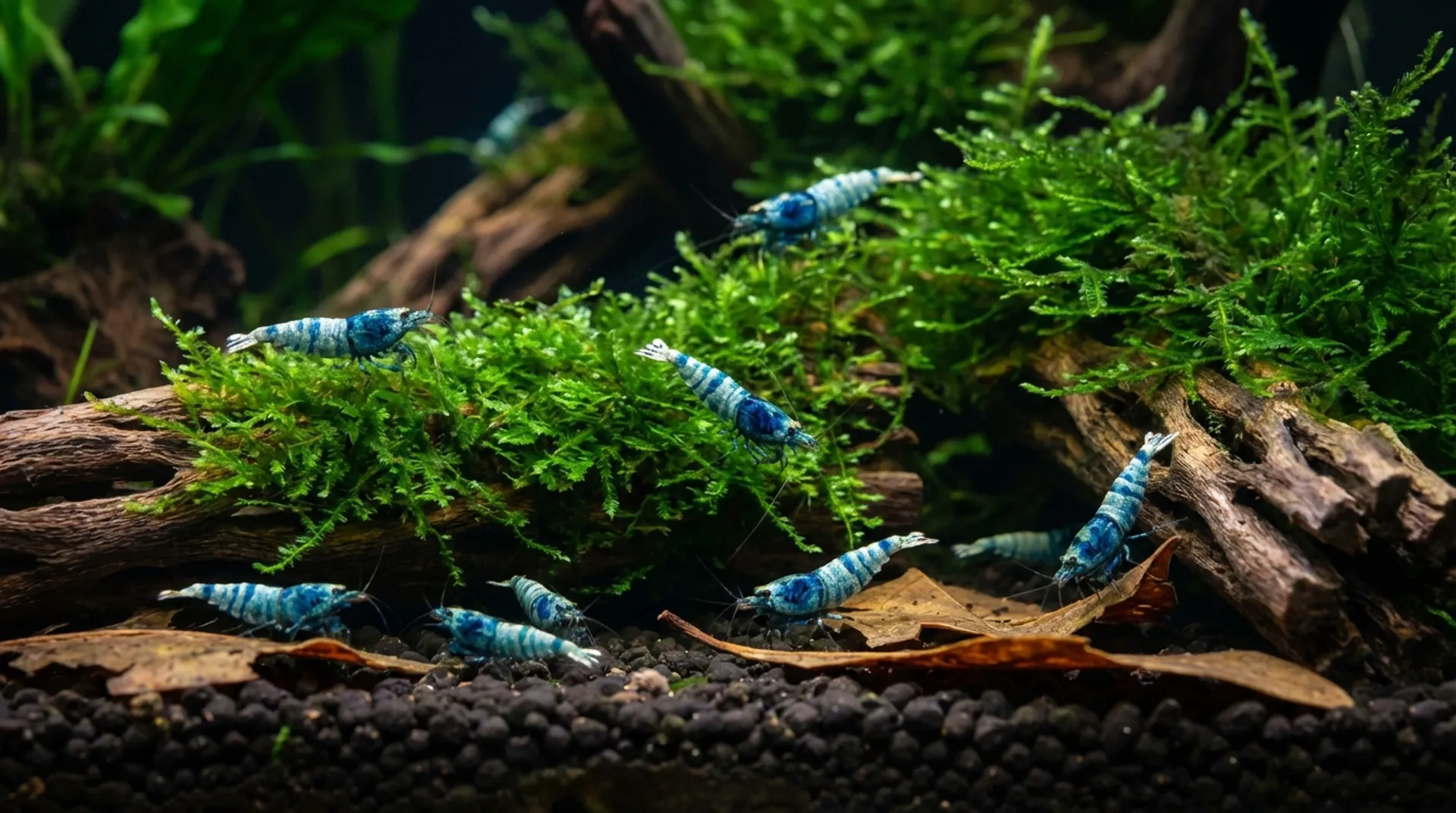
Imagine watching electric blue streaks dart through your aquarium’s moss carpets, their vibrant patterns catching the light like living sapphires. Blue Bolt shrimp (Caridina cf. cantonensis) represent one of the most stunning achievements in freshwater shrimp breeding, combining breathtaking coloration with fascinating genetics that keep hobbyists captivated for years.
These remarkable Caridina shrimp aren’t just beautiful – they’re a rewarding challenge that teaches patience, precision, and the art of creating perfect aquatic ecosystems. Unlike their hardier Neocaridina cousins, Blue Bolts demand soft, acidic water conditions that mirror their natural Southeast Asian habitats, making them ideal for dedicated shrimp keepers ready to master advanced husbandry techniques.
In this comprehensive guide, we’ll explore everything from setting up the perfect Blue Bolt habitat to understanding their complex grading systems and breeding successful colonies. Whether you’re considering your first Caridina species or looking to refine your Blue Bolt breeding program, you’ll discover the precise water parameters, feeding strategies, and troubleshooting techniques that separate thriving colonies from disappointing failures.
Understanding Blue Bolt Shrimp
Blue Bolt shrimp belong to the Caridina cf. cantonensis species complex, the same group that includes Crystal Red and Crystal Black shrimp. These selective breeding achievements originated from Taiwan Bee shrimp genetics, with breeders developing increasingly vibrant blue colorations and distinct pattern variations over multiple generations.
What sets Blue Bolts apart is their incredible color intensity and pattern diversity. High-grade specimens display deep sapphire blue bodies with contrasting white or clear sections, creating striking visual impact that commands premium prices in the aquarium trade. The “bolt” pattern typically features solid blue coloration with dramatic contrast zones, though specific patterns vary between breeding lines.
Their scientific classification places them in the same species group as other Taiwan Bee variants, but their care requirements align closely with other soft-water Caridina species. This means they share the same sensitivity to parameter fluctuations while offering unique genetic combinations that make each breeding project exciting and unpredictable.
Essential Tank Requirements
Tank Size and Setup
While Blue Bolt shrimp can technically survive in 5-gallon tanks, serious keepers should consider 10-20+ gallon setups for several critical reasons. Larger volumes provide crucial parameter stability, especially important given Blue Bolts’ sensitivity to pH and TDS fluctuations. A 20-gallon long tank offers ideal surface area for biofilm development while accommodating breeding colonies without overcrowding stress.
Your tank setup should prioritize gentle water flow and abundant surface area. Sponge filters or Matten filters provide biological filtration without creating dangerous currents that stress shrimp or trap shrimplets. Position your filter intake away from corners where baby shrimp might congregate, and consider adding prefilter sponges to powerheads or canister filter intakes.
Substrate Selection
Active buffering substrates are virtually mandatory for Blue Bolt success. These specialized substrates lower pH naturally while providing essential buffering capacity that standard aquarium gravels cannot offer. Popular options include ADA Amazonia, Fluval Stratum, and various Japanese-manufactured shrimp substrates designed specifically for Caridina species.
The substrate depth should measure 2-3 inches to provide adequate buffering capacity and root space for plants. Rinse new substrate gently to remove excess dust, but avoid over-washing as you’ll remove beneficial minerals. Expect the substrate to leach tannins initially, which actually benefit shrimp health by providing natural pH buffering and antimicrobial properties.
Critical Water Parameters
Temperature Control
Blue Bolt shrimp thrive in temperatures between 68-75°F (20-24°C), with 70-73°F representing the sweet spot for most colonies. Higher temperatures accelerate metabolism and breeding activity but reduce dissolved oxygen levels and increase sensitivity to parameter swings. Lower temperatures slow growth but improve long-term stability and coloration development.
Temperature stability matters more than hitting exact numbers. Daily fluctuations exceeding 2-3°F can trigger molting problems and stress responses. Use reliable aquarium heaters with accurate thermostats, and consider backup heating systems for valuable breeding colonies.
pH and Buffering
The ideal pH range for Blue Bolt shrimp falls between 6.0-6.8, with 6.2-6.5 being optimal for most strains. This acidic environment supports proper mineral absorption during molting while discouraging harmful bacterial growth. However, maintaining stable pH requires careful attention to your buffering system.
With KH levels near zero (0-1 dKH), your tank has minimal carbonate buffering capacity. This means pH can swing dramatically with organic waste buildup, CO2 fluctuations, or inadequate water changes. Active substrates provide some buffering, but you must monitor pH daily during the initial setup period and weekly once established.
Hardness Parameters
General hardness (GH) should measure 3-6 dGH to provide essential calcium and magnesium for successful molting. Too low, and shrimp cannot build proper exoskeletons; too high, and you’ve created Neocaridina conditions that don’t suit Blue Bolt genetics. Most successful breeders target 4-5 dGH for consistent results.
Carbonate hardness (KH) must remain extremely low at 0-1 dKH. Higher KH levels prevent the acidic conditions Blue Bolts require and indicate inappropriate water chemistry. If your KH reads above 1, you’re likely using tap water or incorrect remineralizers that won’t support long-term success.
TDS Management
Total dissolved solids should measure 120-150 ppm for established Blue Bolt colonies. This range provides necessary minerals without overwhelming their osmoregulatory systems. Use calibrated TDS meters and check readings weekly, as TDS creep from feeding and waste accumulation can gradually push levels too high.
Beginning shrimp keepers often focus solely on TDS numbers while ignoring GH/KH ratios. Remember that TDS measures everything dissolved in your water – minerals, organics, and waste products. A tank reading 150 TDS from proper remineralizers differs dramatically from 150 TDS including nitrates and dissolved organics.
Water Preparation and Maintenance
RO/DI Water Systems
Successful Blue Bolt keeping requires RO/DI (reverse osmosis/deionization) water systems to achieve the soft water conditions these shrimp demand. Standard tap water contains too many dissolved minerals, chlorine compounds, and unpredictable chemistry that makes consistent parameter control impossible.
Invest in a quality RO/DI system with at least 75 gallons per day capacity for regular water changes. Replace filters according to manufacturer schedules, and always test your RO/DI output with TDS meters – readings should approach 0-5 ppm from properly functioning systems.
Remineralization Process
Pure RO/DI water lacks the minerals shrimp need for survival, so you must add them back using Caridina-specific remineralizers. Products like SaltyShrimp GH/KH+, Dennerle Shrimp King Mineral, or Brightwell Aquatics Shrimp GH+ provide the correct mineral ratios without raising KH levels.
Mix replacement water 24-48 hours before water changes to ensure complete dissolution and stable parameters. Test each batch for GH, KH, pH, and TDS before adding to your tank. Small parameter mismatches can shock sensitive Blue Bolt colonies and trigger molting failures.
Water Change Protocol
Perform 10-20% water changes weekly to maintain water quality without shocking your shrimp. Larger changes risk parameter swings that stressed colonies cannot handle. Always temperature-match replacement water and add it slowly using drip acclimation techniques.
Remove uneaten food within 2-3 hours of feeding to prevent organic waste buildup. Decaying food rapidly increases ammonia levels and creates pH instability that proves fatal to Blue Bolt colonies. Use feeding dishes to concentrate food in one area for easier removal.
Diet and Feeding Guidelines
Staple Foods
High-quality sinking pellets formulated for Caridina species should form the foundation of your Blue Bolt diet. Look for products with balanced protein levels (30-35%), natural color enhancers, and minimal fillers. Popular brands include Dennerle Shrimp King, Glasgarten Shrimp Dinner, and Hikari Crab Cuisine.
Supplement pellets with blanched vegetables like zucchini, spinach, and cucumber for variety and fiber. Remove vegetable matter after 4-6 hours to prevent decomposition. Many breeders also offer specialized foods like bee pollen, spirulina powder, and calcium-rich supplements to enhance coloration and reproduction.
Feeding Frequency
Feed Blue Bolt shrimp every 2-3 days rather than daily to prevent overfeeding complications. These efficient scavengers constantly graze on biofilm and organic matter, requiring less supplemental feeding than larger aquarium inhabitants. Juvenile shrimp need more frequent feeding, but adults can fast for several days without health impacts.
Use the “gone in 2 hours” rule – if food remains after 2 hours, you’ve fed too much. Overfeeding causes more Blue Bolt deaths than underfeeding, as excess organics destabilize water chemistry and promote harmful bacterial blooms.
Natural Food Sources
Biofilm represents the most important natural food source for Blue Bolt shrimp and their offspring. Encourage biofilm growth with Indian almond leaves, alder cones, and well-aged driftwood. These materials slowly decompose while releasing beneficial tannins and creating surfaces for beneficial bacteria.
Java moss, Christmas moss, and other fine-leaved plants provide additional grazing surfaces while improving water quality through nutrient uptake. Established plant growth also offers hiding places for molting shrimp and protection for newborn shrimplets.
Pro tip: Add Indian almond leaves to new tanks 2-3 weeks before introducing shrimp. The leaves will establish beneficial biofilm while naturally lowering pH and providing antimicrobial compounds that boost shrimp immunity.
Breeding Blue Bolt Shrimp
Setting Up for Success
Breeding Blue Bolt shrimp requires patience, stable parameters, and a well-established tank with abundant biofilm. Females typically reach sexual maturity at 4-6 months, while males mature slightly earlier. A breeding colony should include at least 10-15 adult shrimp to maintain genetic diversity and consistent reproduction.
Slightly warmer temperatures around 73-76°F can encourage breeding activity, though many successful breeders maintain standard 70-73°F ranges. The key factor is stability – parameter fluctuations will halt breeding behavior and stress gravid females into dropping eggs.
Breeding Behavior and Egg Development
Mated females carry 20-40 eggs for approximately 3-4 weeks, depending on temperature. The eggs start translucent and develop visible eye spots as hatching approaches. Provide plenty of moss and fine-leaved plants where females can seek shelter during the vulnerable egg-carrying period.
Newly hatched shrimplets measure only 2-3mm and require established biofilm for survival. Unlike Neocaridina species that can survive on commercial foods immediately, Blue Bolt babies depend on naturally occurring microorganisms for their first several weeks of life.
Genetic Considerations
Blue Bolt genetics follow complex inheritance patterns that can produce surprising offspring variations. Even high-grade parents may produce lower-grade offspring, while selective breeding over multiple generations improves overall colony quality. Keep detailed breeding records to track successful genetic lines.
Inbreeding depression can become problematic in small colonies, leading to reduced fertility, weaker offspring, and increased sensitivity to parameter changes. Introduce new bloodlines every 12-18 months to maintain genetic diversity and colony vigor.
Understanding Blue Bolt Grading
Grading Criteria
Blue Bolt grading systems vary between breeders and suppliers, but several key factors determine quality rankings. Color intensity and uniformity represent the primary considerations – higher grades display deeper, more saturated blue coloration without faded or muddy areas.
Pattern clarity and contrast also influence grading decisions. Premium specimens show clean pattern boundaries between blue and clear/white sections, with distinct “bolt” patterns that create dramatic visual impact. Lower grades may have blurred pattern boundaries or inconsistent coloration.
Grade Classifications
Most breeders use letter grades (A, AA, AAA) or descriptive terms like “Extreme Blue Bolt” or “Super Blue Bolt” to indicate quality levels. Unfortunately, these classifications aren’t standardized across the hobby, so always examine actual photos and ask specific questions about grading criteria.
High-grade Blue Bolts command premium prices but offer superior breeding potential for developing quality colonies. Lower grades still make beautiful display animals and can produce higher-grade offspring when paired with quality breeding partners.
Pro tip: Buy from reputable breeders who provide detailed photos and honest descriptions of their grading standards. A breeder’s “A-grade” might be another’s “AA-grade,” so focus on actual appearance rather than grade labels.
Common Problems and Solutions
Parameter Instability
The most common Blue Bolt problems stem from parameter fluctuations that stress colonies and trigger health issues. Daily pH swings, TDS creep from overfeeding, and temperature fluctuations can cause molting failures, breeding cessation, and increased mortality rates.
Solution: Invest in quality monitoring equipment and check parameters daily during tank setup, then weekly once established. Maintain consistent feeding schedules, perform regular water changes with properly prepared replacement water, and use backup systems for critical equipment like heaters and filters.
Molting Difficulties
Blue Bolt shrimp experiencing molting problems often display white rings around their bodies, lethargy, and eventual death during the molting process. This typically indicates insufficient calcium/magnesium (low GH) or parameter instability that stresses their physiological processes.
Solution: Maintain GH levels between 4-5 dGH and ensure stable water conditions. Add calcium-rich foods like crushed coral or specialized shrimp supplements if molting problems persist. Avoid parameter changes during active molting periods.
Poor Breeding Success
Failed breeding attempts often result from inadequate biofilm development, parameter instability, or insufficient colony size. Young colonies may take 6-12 months to establish consistent breeding patterns, even under ideal conditions.
Solution: Be patient and focus on maintaining excellent water quality rather than forcing breeding activity. Ensure adequate biofilm surfaces, stable parameters, and a mature colony of at least 10-15 adults before expecting regular reproduction.
Plant Selection and Aquascaping
Recommended Plant Species
Java moss and Christmas moss provide ideal surfaces for biofilm development while offering protection for shrimplets. These hardy species tolerate the soft water conditions Blue Bolts require and need minimal maintenance once established.
Anubias species, Java ferns, and Cryptocoryne varieties also thrive in Blue Bolt tanks while adding visual interest and natural filtration. Avoid plants requiring intense lighting or CO2 supplementation, as these can destabilize pH levels through daily fluctuations.
Hardscape Materials
Driftwood and smooth stones create natural-looking environments while providing additional biofilm surfaces. Choose materials that won’t significantly alter water chemistry – avoid limestone or other calcium-rich rocks that raise GH and pH levels.
Indian almond leaves, alder cones, and other botanicals serve dual purposes as natural pH buffers and food sources. Replace these materials every 2-3 months as they decompose to maintain consistent water chemistry benefits.
Advanced Tips for Success
Colony Management
Successful Blue Bolt colonies require long-term planning and genetic management. Keep detailed records of breeding pairs, offspring quality, and any problems that develop over time. This information helps you make informed decisions about future breeding directions.
Consider maintaining separate tanks for different quality grades to prevent genetic dilution while maximizing breeding potential from your best specimens. This approach requires more space and equipment but produces better long-term results.
Troubleshooting Techniques
When problems develop, resist the urge to make dramatic changes that could worsen the situation. Instead, focus on identifying root causes through careful parameter testing and observation of shrimp behavior patterns.
Keep detailed logs of water changes, feeding schedules, and any environmental changes that coincide with health problems. This systematic approach helps you identify triggers and develop solutions based on actual data rather than guesswork.
Conclusion
Blue Bolt shrimp represent the pinnacle of freshwater shrimp keeping, combining stunning visual appeal with challenging husbandry requirements that reward dedicated hobbyists with thriving, breeding colonies. Success depends on mastering soft water chemistry, maintaining parameter stability, and providing the specialized conditions these remarkable creatures need to flourish.
Remember that Blue Bolt keeping is a long-term commitment requiring patience, attention to detail, and willingness to learn from both successes and setbacks. Start with quality breeding stock, invest in proper equipment for water preparation and monitoring, and focus on creating stable conditions rather than chasing perfect parameter numbers.
With consistent care and proper technique, your Blue Bolt colony will reward you with breathtaking displays of color and the satisfaction of successfully breeding one of the hobby’s most prized species. Take your time, ask experienced breeders for advice, and enjoy the journey of creating your own electric blue underwater paradise.
Frequently Asked Questions
Blue Bolt shrimp require soft, acidic water with pH 6.0-6.8, GH 3-6 dGH, KH 0-1 dKH, TDS 120-150 ppm, and temperature 68-75°F for optimal health and breeding.
Blue Bolt shrimp breed best in species-only tanks with stable parameters. They need plenty of biofilm surfaces and no fish predators that might eat shrimplets.
Blue Bolt grading focuses on color intensity, pattern uniformity, and contrast. Higher grades show deeper blue coloration, clean patterns, and consistent body translucency without faded areas.
While Blue Bolts can survive in 5-gallon tanks, 10-20+ gallon tanks are preferred for breeding colonies as larger volumes provide better parameter stability.
Yes, Blue Bolt shrimp require RO/DI water remineralized specifically for Caridina species to achieve the soft water conditions they need for molting and breeding success.
Blue Bolt shrimp eat high-quality sinking pellets, algae wafers, blanched vegetables, biofilm, and natural supplements like Indian almond leaves. Feed sparingly to avoid water quality issues.
Track Your Parameters Like a Pro
Stop guessing if your water is right. ShrimpKeeper tracks TDS, GH, KH, pH, and temperature with species-specific recommendations.
Download FreeRelated Articles
Yellow Golden Back Shrimp Care Guide: Complete Setup & Breeding Tips
Yellow Golden Back Shrimp are stunning, hardy Neocaridina perfect for beginners. Learn proper water parameters, tank setup, and breeding techniques for a thriving colony.
Red Bee Shrimp: Complete Care Guide and Grading System
Red Bee Shrimp are stunning Caridina species known for their vibrant red and white patterns. Learn the precise water parameters, grading system, and care requirements needed for success.
Taiwan Bee Shrimp Care Guide for Advanced Keepers
Taiwan Bee shrimp represent the pinnacle of advanced shrimp keeping, demanding precision, patience, and expertise to achieve stunning colors and successful breeding in your aquarium.