
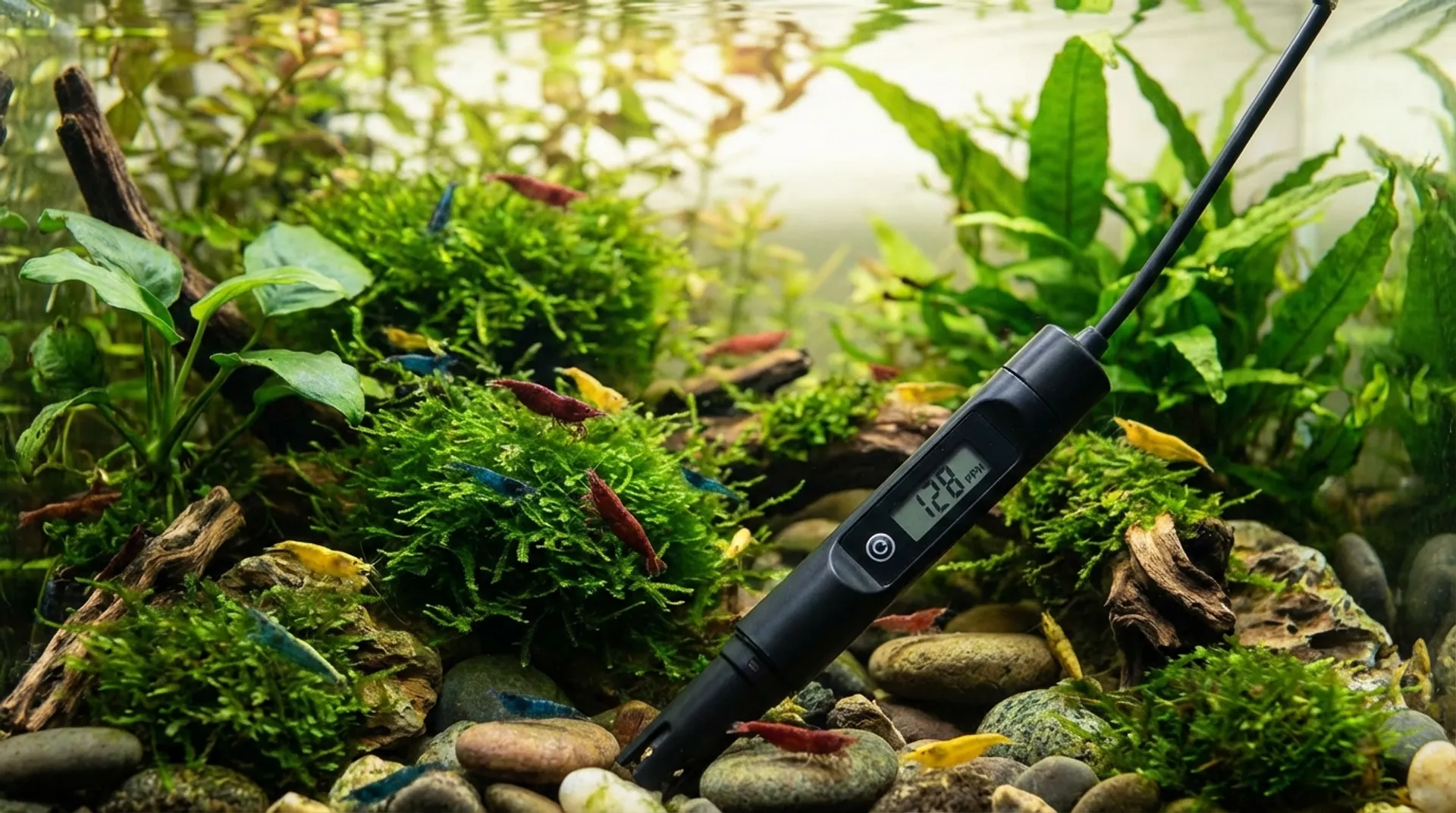
You’ve just tested your shrimp tank water and discovered your TDS reading is dangerously low. Your colorful Neocaridina shrimp seem sluggish, and you suspect the lack of essential minerals is to blame. Don’t panic – raising TDS safely is a manageable process when you understand the fundamentals.
Total Dissolved Solids (TDS) represents all the minerals and salts dissolved in your aquarium water. For freshwater shrimp, maintaining proper TDS levels is crucial for healthy molting, vibrant colors, and successful breeding. Too low, and your shrimp struggle with essential biological processes. Too high, and you risk osmotic stress.
This comprehensive guide will walk you through everything you need to know about raising TDS in your shrimp tank, from understanding target ranges to implementing safe adjustment techniques that won’t shock your delicate invertebrates.
Understanding TDS Requirements for Different Shrimp Species
Not all shrimp species require the same TDS levels. Understanding your specific shrimp’s needs is the foundation of proper water management.
Neocaridina species (Cherry shrimp, Blue Dream, Orange Sakura) thrive in TDS ranges of 200-300 ppm. These hardy shrimp can tolerate slight fluctuations but perform best when maintained consistently within this range.
Caridina species (Crystal Red, Taiwan Bee, Blue Bolt) require lower TDS levels, typically 60-90 ppm for most varieties. Some high-grade Caridina prefer even lower ranges around 100-150 ppm, depending on their specific lineage.
Wild-type and specialty shrimp may have unique requirements. Always research your specific species before making water parameter adjustments.
The minimum TDS for Neocaridina shrimp comes from the combined GH and KH requirements, which alone contribute approximately 143 ppm to your total reading. This means additional minerals from remineralizers will push your final TDS well above this baseline.
Why RO Water is Essential for TDS Control
Starting with reverse osmosis (RO) or deionized (DI) water is the most reliable method for achieving precise TDS control. RO/DI water begins at approximately 0-10 ppm TDS, providing a clean slate for mineral addition.
Tap water contains unpredictable dissolved solids including chlorine, chloramines, heavy metals, and varying mineral concentrations. Using tap water makes it impossible to control exactly what enters your tank, potentially introducing harmful substances or creating unstable parameters.
Quality RO/DI water benefits:
- Complete control over mineral content
- Elimination of harmful chemicals
- Consistent starting point for remineralization
- Predictable results with remineralizer products
Pro tip: Invest in a quality TDS meter (costing $10-20) to verify your RO water quality. Fresh RO water should read 0-5 ppm TDS. If higher, your RO system needs maintenance.
Step-by-Step Method to Raise TDS
Step 1: Prepare Your RO Water
Start with fresh RO/DI water at 0-10 ppm TDS. Verify this reading with your TDS meter before proceeding. If your RO water shows higher readings, replace your filters or service your system.
Step 2: Choose the Right Remineralizer
Select a remineralizer designed specifically for your shrimp species:
- Salty Shrimp GH/KH+ for Neocaridina species
- Salty Shrimp GH+ for soft-water Caridina species
- Bee Shrimp Mineral GH+ for Taiwan Bee and Crystal shrimp
Each product has different mineral compositions, affecting your final TDS reading differently.
Step 3: Calculate Initial Dosing
Follow manufacturer instructions for your target GH and KH levels. Most remineralizers provide dosing charts, but expect to fine-tune based on your TDS meter readings.
For Neocaridina shrimp targeting:
- GH: 6-8 dGH
- KH: 2-4 dKH
- Final TDS: 200-300 ppm
Step 4: Mix and Test
Add remineralizer to your RO water gradually, mixing thoroughly between additions. Test TDS frequently during this process to avoid overshooting your target.
Allow the mixture to stabilize for 30 minutes before taking final readings, as some minerals take time to fully dissolve.
Step 5: Gradual Tank Introduction
Never add high-TDS water directly to your tank if it represents a significant parameter change. Instead:
- Remove 10-20% of existing tank water
- Add new remineralized water slowly over 1-2 hours
- Monitor shrimp behavior for signs of stress
- Repeat daily until reaching target TDS
Advanced TDS Adjustment Techniques
Using TDS Boost Products
Some manufacturers offer dedicated “TDS boost” products that increase total dissolved solids without affecting GH or KH. These products contain additional salts and trace elements that contribute to TDS readings.
Use TDS boost products when:
- Your GH and KH are correct but TDS is too low
- You need fine-tuning after primary remineralization
- Your shrimp show signs of mineral deficiency despite adequate GH/KH
Blending Water Sources
Experienced keepers sometimes blend RO water with carefully selected tap water to achieve specific TDS targets. This technique requires:
- Comprehensive tap water analysis
- Consistent municipal water quality
- Regular monitoring and adjustments
- Understanding of water chemistry interactions
This method isn’t recommended for beginners due to its complexity and potential for introducing harmful substances.
Monitoring and Maintenance
Regular monitoring ensures stable TDS levels and early detection of problems.
Daily monitoring: Check TDS during the first week after adjustments to ensure stability.
Weekly monitoring: Once established, weekly TDS checks are sufficient for most tanks.
Water change protocol: Always prepare replacement water to match your tank’s current TDS reading. Pre-mix and test all new water before adding to your tank.
Natural TDS fluctuations: TDS naturally increases through evaporation and biological processes. Top-off with RO water to prevent excessive concentration, and perform regular water changes with properly remineralized water.
Common Mistakes and Troubleshooting
Mistake 1: Rapid TDS changes Shrimp are extremely sensitive to sudden parameter shifts. Always adjust TDS gradually over 24-48 hours to prevent shock.
Mistake 2: Ignoring GH and KH Focusing solely on TDS without considering GH and KH can create mineral imbalances. Always test and adjust these parameters alongside TDS.
Mistake 3: Using pure RO water Pure RO water (0 TDS) is toxic to shrimp and will cause rapid deaths. Always remineralize before use.
Mistake 4: Inconsistent remineralization Using different remineralizer brands or concentrations between water changes creates parameter swings. Stick to one product and consistent mixing ratios.
Troubleshooting low TDS persistence:
- Check your remineralizer expiration date
- Verify RO water quality
- Test in a separate container to isolate issues
- Consider substrate or decoration interference
Conclusion
Raising TDS in your shrimp tank is a fundamental skill that directly impacts your colony’s health and success. By starting with quality RO water, using appropriate remineralizers, and monitoring carefully, you can achieve stable water parameters that support vibrant, thriving shrimp.
Remember that consistency is more important than perfection. Maintaining stable TDS levels within the appropriate range for your species will yield better results than chasing exact numbers with frequent adjustments. Take your time, monitor regularly, and your shrimp will reward you with active behavior, successful molts, and healthy reproduction.
Frequently Asked Questions
Neocaridina shrimp thrive in TDS levels between 200-300 ppm. This range provides the essential minerals they need while maintaining stable water conditions.
While possible, using RO water with remineralizers gives you complete control over water composition. Tap water contains unknown dissolved solids that can harm sensitive shrimp.
Raise TDS gradually over 24-48 hours to avoid shocking your shrimp. Sudden changes can cause molting problems and stress-related deaths.
TDS measures all dissolved solids, while GH measures calcium and magnesium hardness, and KH measures carbonate hardness. TDS is broader and includes all minerals.
You'll need a TDS meter for monitoring and quality remineralizer products. A digital TDS meter costs $10-20 and is essential for consistent results.
Remineralizers contain additional salts beyond GH and KH minerals, which contribute to the total TDS reading. This is normal and expected behavior.
Track Your Parameters Like a Pro
Stop guessing if your water is right. ShrimpKeeper tracks TDS, GH, KH, pH, and temperature with species-specific recommendations.
Download FreeRelated Articles

How to Lower pH in a Shrimp Tank Safely
Discover proven methods to safely lower pH in your shrimp tank without shocking your precious Caridina shrimp. Master gradual adjustments using natural techniques.
The Perfect Water Parameters for Caridina Shrimp
Unlock the secrets to thriving Caridina shrimp colonies with precise water parameter ranges that mimic their natural soft, acidic habitat.
How to Make Your Own Shrimp Food at Home: Complete DIY Guide
Discover how to create cost-effective, nutritious homemade shrimp food that promotes better growth and breeding. Get proven recipes and step-by-step instructions.