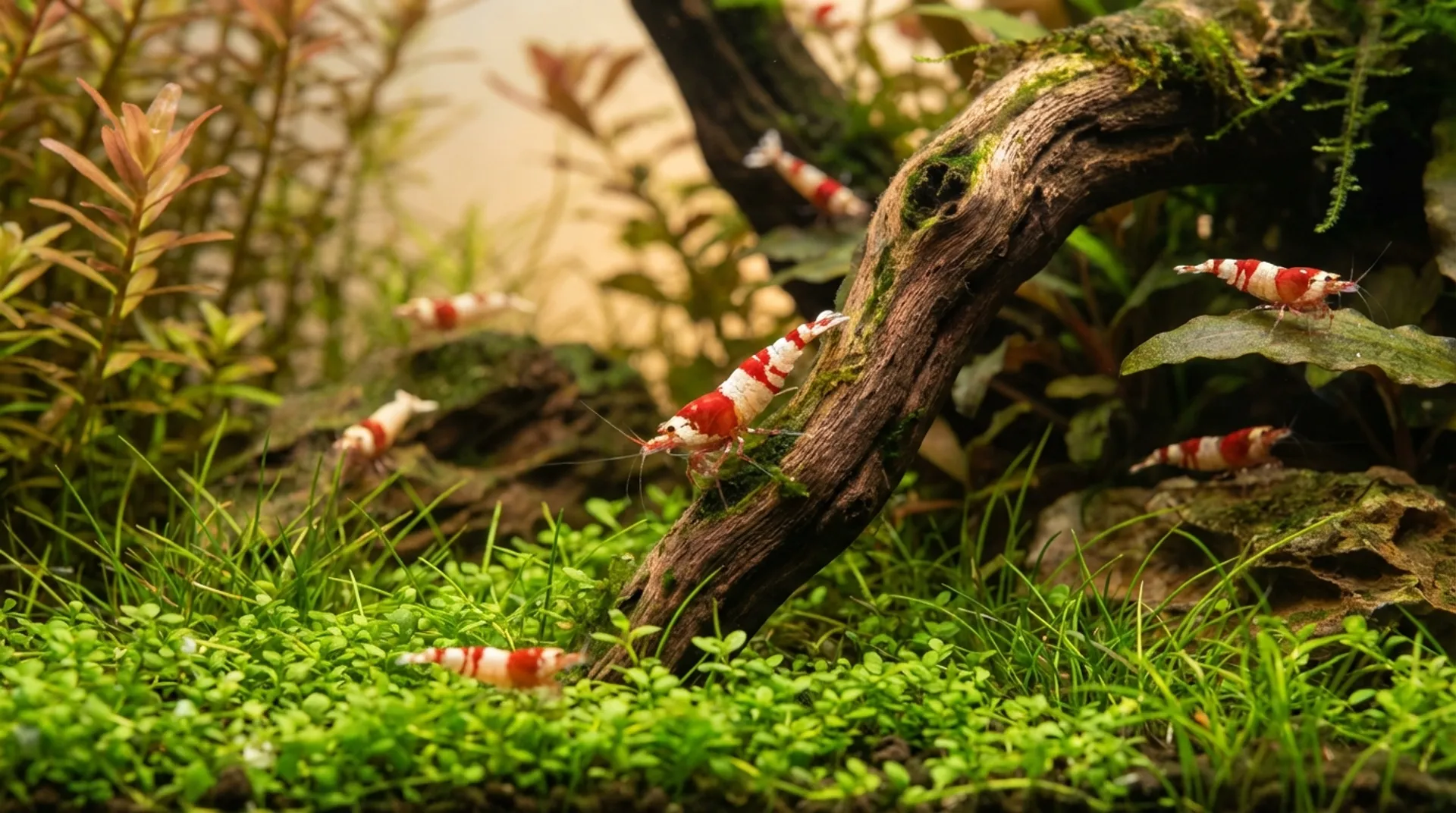
You’ve just brought home your first Crystal Red Shrimp, excited to watch these stunning creatures thrive in your aquarium. But within weeks, you notice molting problems, breeding failures, and declining health. The culprit? Water parameters that are completely wrong for these delicate Caridina species.
Unlike their hardy Neocaridina cousins, Caridina shrimp are incredibly sensitive to water chemistry. They evolved in soft, acidic mountain streams and require very specific conditions to survive and breed successfully. Getting these parameters right is the difference between a thriving colony and constant disappointment.
This comprehensive guide will teach you the exact water parameter ranges that Caridina species need, how to achieve and maintain them, and the common mistakes that kill even experienced aquarists’ colonies.
Understanding Caridina Water Chemistry
Caridina shrimp, including Crystal Red Shrimp (CRS), Crystal Black Shrimp (CBS), and Taiwan Bee varieties, originate from environments with naturally soft, acidic water. Unlike typical aquarium conditions, their native habitat resembles rainwater more than mineral-rich streams.
The key difference between Caridina and Neocaridina shrimp lies in their osmotic regulation. Caridina species have adapted to low-mineral environments and struggle when mineral content is too high. This is why standard aquarium water often proves fatal to these delicate creatures.
Pro tip: Think of Caridina water as “liquid distilled water with just enough minerals to sustain life.” This mindset will guide all your parameter decisions.
The Perfect Parameter Ranges
pH Levels: 6.0-6.8
Caridina shrimp absolutely require acidic water with pH below 7.0. The optimal range is 6.0-6.8, with most successful breeders targeting 6.0-6.5.
Why acidic pH matters:
- Improves molting success rates
- Enhances breeding behavior
- Increases lifespan significantly
- Prevents bacterial infections
- Maintains vibrant coloration
PH levels above 7.0 cause chronic stress, poor molting, and eventual death. Even pH 6.9 can reduce breeding success compared to 6.5.
General Hardness (GH): 4-6 degrees
GH measures dissolved minerals like calcium and magnesium. Caridina shrimp need soft water with GH between 4-6 degrees (71-107 ppm).
GH guidelines by species:
- Crystal Red/Black Shrimp: 4-6 GH
- Taiwan Bee varieties: 4-5 GH
- Shadow Pandas: 5-6 GH
Too high GH prevents proper molting and causes “white ring of death.” Too low GH leads to molting problems and weak shells.
Carbonate Hardness (KH): 0-2 degrees
KH measures water’s buffering capacity. Caridina shrimp prefer extremely low KH, ideally 0-1 degrees (0-18 ppm).
Why low KH is critical:
- Mimics natural rainwater conditions
- Allows pH to remain stable and acidic
- Enables consistent breeding
- Reduces mineral stress
Many successful breeders maintain KH at 0, using active substrates and RO water to achieve this.
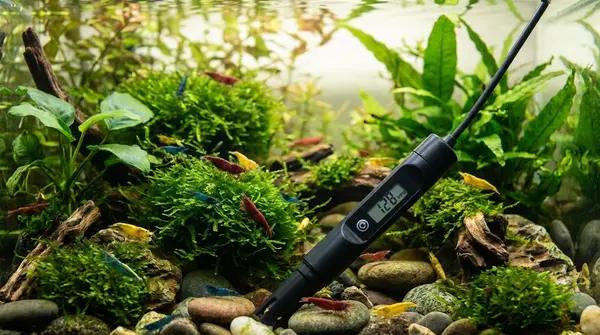
Total Dissolved Solids (TDS): 100-200 ppm
TDS measures all dissolved substances in water. Caridina shrimp thrive with TDS between 100-200 ppm, with 120-150 being optimal for most species.
TDS monitoring importance:
- Indicates overall water quality
- Helps match water change parameters
- Prevents osmotic shock
- Guides remineralization amounts
Temperature: 68-75°F (20-24°C)
Maintain stable temperatures between 68-75°F, with 70-72°F (21-23°C) being ideal for most Caridina species.
Temperature effects:
- 68-70°F: Enhanced coloration, slower metabolism
- 72-74°F: Balanced growth and breeding
- 75°F+: Faster breeding but reduced lifespan
Avoid temperature fluctuations greater than 2°F per day, as Caridina shrimp are extremely sensitive to sudden changes.
Achieving Perfect Parameters
The RO Water Foundation
Reverse osmosis (RO) water is essential for Caridina success. Tap water is almost always too hard and alkaline, making parameter control impossible.
RO water benefits:
- Removes chlorine, chloramines, and heavy metals
- Provides blank slate for precise remineralization
- Eliminates pH buffering compounds
- Ensures consistency between water changes
Remineralization Process
Use Caridina-specific remineralizers like SaltyShrimp GH/KH+ or Brightwell Aquatics Shrimp GH/KH+.
Step-by-step remineralization:
- Test RO water (should read 0 TDS)
- Add remineralizer gradually while stirring
- Target TDS 120-150 ppm initially
- Let water age 24 hours before testing pH/GH/KH
- Adjust if needed and age another 24 hours
Pro tip: Make water changes with identical parameters. Test both tank and new water before every change to prevent osmotic shock.
Active Substrate Systems
Buffering substrates like Fluval Stratum, ADA Amazonia, or SL-Aqua Black Earth help maintain acidic pH and low KH naturally.
Active substrate benefits:
- Slowly releases minerals appropriate for Caridina
- Buffers pH to acidic levels
- Provides beneficial bacteria colonization sites
- Supports plant growth
Replace buffering substrate every 12-18 months as effectiveness diminishes.
Testing and Monitoring
Essential Test Kits
Required testing equipment:
- API Master Test Kit (pH, ammonia, nitrite, nitrate)
- GH/KH test kit (API or Tetra)
- Reliable TDS meter
- Thermometer
Testing schedule:
- Daily: Temperature, TDS
- Weekly: pH, GH, KH
- Bi-weekly: Ammonia, nitrite, nitrate
- After water changes: All parameters
Reading the Signs
Healthy parameters produce visible results:
Good parameters indicators:
- Regular, successful molts every 3-4 weeks
- Active grazing behavior
- Vibrant coloration
- Breeding activity (berried females)
- Steady population growth
Poor parameters warning signs:
- Failed molts or “white ring of death”
- Lethargy and hiding
- Faded colors
- No breeding activity
- Population decline
Common Parameter Mistakes
Mistake #1: Using Tap Water
Even “soft” tap water usually has GH above 8 and pH above 7.5. Municipal water treatment adds chemicals that stress Caridina shrimp.
Solution: Always use RO water with proper remineralization.
Mistake #2: Inconsistent Water Changes
Mismatched parameters between tank and new water cause osmotic shock, even with small differences.
Solution: Test both waters and adjust new water to match exactly.
Mistake #3: Rushing the Cycle
Caridina shrimp need mature, stable biofilms and bacteria colonies. Adding shrimp to young tanks often results in deaths.
Solution: Cycle tank 4-6 weeks minimum, seed with established filter media.
Mistake #4: Ignoring TDS Creep
TDS gradually increases between water changes due to fish waste, food, and substrate leaching.
Solution: Monitor TDS weekly and increase water change frequency if it exceeds 200 ppm.
Species-Specific Considerations
Crystal Red/Black Shrimp
- pH: 6.0-6.8
- GH: 4-6
- KH: 0-2
- TDS: 120-150
- Temperature: 68-74°F
Taiwan Bee Shrimp
- pH: 5.8-6.5
- GH: 4-5
- KH: 0-1
- TDS: 100-130
- Temperature: 70-75°F
Shadow Pandas
- pH: 6.2-6.8
- GH: 5-6
- KH: 1-2
- TDS: 140-180
- Temperature: 68-72°F
Pro tip: Start with less sensitive varieties like Shadow Pandas before attempting high-grade Crystal Red or Taiwan Bee shrimp.
Seasonal Adjustments
Caridina shrimp benefit from slight seasonal parameter variations that mimic natural conditions.
Breeding season (spring/summer):
- Slightly higher temperature (72-74°F)
- Lower pH (6.0-6.3)
- Consistent feeding schedule
Rest period (fall/winter):
- Slightly lower temperature (68-70°F)
- Normal pH range (6.2-6.5)
- Reduced feeding frequency
Troubleshooting Parameter Problems
pH Won’t Stay Acidic
Causes: High KH, inadequate buffering substrate, hard decorations Solutions: Use more RO water, replace substrate, remove limestone/coral decorations
GH Too High Despite RO Water
Causes: Over-remineralization, leaching decorations, old substrate Solutions: Reduce remineralizer dose, test decorations separately, consider substrate replacement
TDS Climbing Rapidly
Causes: Overfeeding, inadequate filtration, decomposing plants Solutions: Reduce feeding, upgrade filtration, remove dead plant matter, increase water change frequency
Conclusion
Perfect water parameters are the foundation of Caridina shrimp success. These delicate creatures reward meticulous care with stunning beauty, fascinating behavior, and rewarding breeding experiences. Remember that consistency matters more than perfection—stable parameters within the ideal ranges will always outperform constantly fluctuating “perfect” numbers.
Start with RO water, invest in quality test kits, and be patient with the process. Your Caridina shrimp will thank you with vibrant colors, successful molts, and thriving colonies that become the centerpiece of your aquarium hobby.
Frequently Asked Questions
Caridina shrimp thrive in slightly acidic water with pH levels between 6.0-6.8. Most breeders target 6.0-6.5 for optimal breeding success and longevity.
Crystal Red Shrimp require soft water with GH (General Hardness) between 4-6 degrees and KH (Carbonate Hardness) between 0-2, ideally near 0 for breeding.
Caridina shrimp perform best in water with TDS (Total Dissolved Solids) between 100-200 ppm, measured with a reliable TDS meter for consistency.
Most tap water is too hard and alkaline for Caridina shrimp. Use RO (Reverse Osmosis) water remineralized with Caridina-specific salts for best results.
Maintain temperatures between 68-75°F (20-24°C), with 70-72°F (21-23°C) being ideal. Lower temperatures enhance coloration while higher temps can aid breeding.
Test pH, GH, KH, and TDS weekly using liquid test kits and TDS meters. Daily monitoring may be needed when cycling or adjusting parameters.
Track Your Parameters Like a Pro
Stop guessing if your water is right. ShrimpKeeper tracks TDS, GH, KH, pH, and temperature with species-specific recommendations.
Download FreeRelated Articles
How to Raise TDS in Your Shrimp Tank: Complete Guide
Master the art of raising TDS in your shrimp tank with our comprehensive guide covering target ranges, remineralization techniques, and monitoring strategies.

How to Lower pH in a Shrimp Tank Safely
Discover proven methods to safely lower pH in your shrimp tank without shocking your precious Caridina shrimp. Master gradual adjustments using natural techniques.
How to Make Your Own Shrimp Food at Home: Complete DIY Guide
Discover how to create cost-effective, nutritious homemade shrimp food that promotes better growth and breeding. Get proven recipes and step-by-step instructions.