
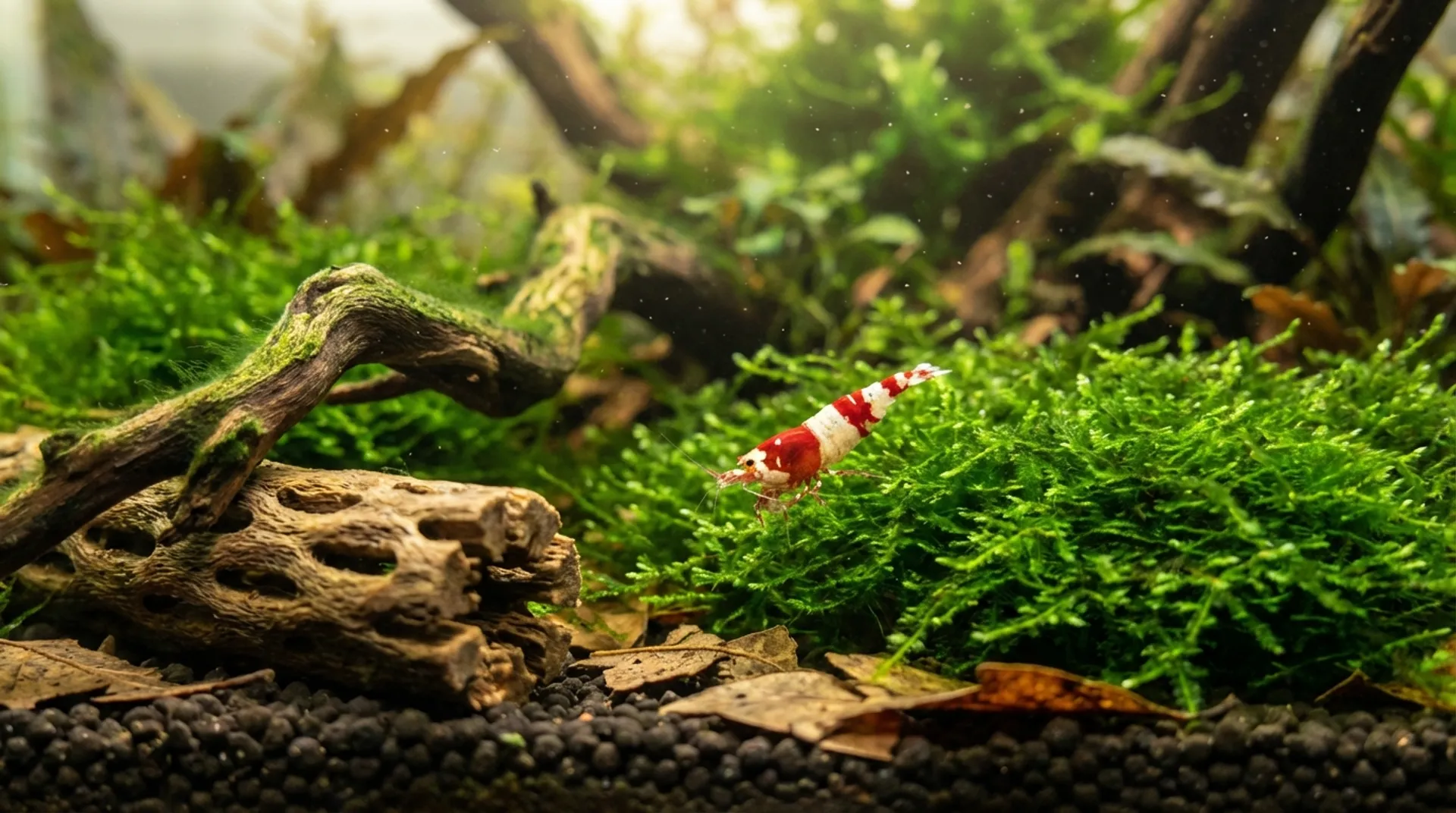
Picture this: you’re gazing into your aquarium as a berried female Taiwan Bee glides gracefully across a carpet of moss, her vibrant red and white pattern so pristine it looks painted by an artist’s brush. This is the pinnacle of advanced shrimp keeping—a hobby that demands not just experience, but true mastery of aquatic ecosystems.
Taiwan Bee shrimp (Caridina species) represent the most challenging and rewarding freshwater shrimp you can keep. These stunning creatures have captivated advanced aquarists worldwide with their incredible color variations, from deep Fire Reds to striking Pandas and Golden Bees. But make no mistake—these aren’t shrimp for beginners.
In this comprehensive guide, we’ll dive deep into the precise requirements, advanced techniques, and insider secrets that separate successful Taiwan Bee keepers from those who struggle. Whether you’re considering your first Taiwan Bee colony or looking to perfect your breeding program, this guide will give you the expert knowledge you need.
Understanding Taiwan Bee Shrimp
Taiwan Bee shrimp belong to the Caridina genus and are among the most selectively bred freshwater invertebrates in the hobby. Unlike hardy Neocaridina species, these shrimp evolved in soft, acidic mountain streams and have never adapted to harder water conditions.
What makes them “advanced” isn’t just their beauty—it’s their unforgiving nature. A single parameter swing can trigger mass molting deaths. Copper contamination that other shrimp might survive will wipe out an entire colony. Even experienced keepers often lose their first few attempts before achieving success.
The reward, however, is incomparable. A thriving Taiwan Bee colony displays colors and patterns that seem almost artificial in their perfection. High-grade specimens can command hundreds of dollars each, making successful breeding both personally and financially rewarding.
Critical Tank Setup Requirements
Tank Size and Equipment
Start with a minimum 10-gallon tank, though 20+ gallons provides much better parameter stability. Taiwan Bees are sensitive to fluctuations, and larger water volumes buffer against changes more effectively.
Filtration must be gentle yet efficient. Sponge filters are ideal—they provide biological filtration without creating strong currents that stress shrimp and their fry. Avoid powerheads or any equipment that creates significant water movement.
The Substrate Foundation
Active buffering substrate is absolutely non-negotiable. Products like ADA Amazonia, Brightwell Rio Escuero, or similar aquasoils don’t just provide a growing medium—they actively lower pH and maintain the acidic conditions Taiwan Bees require.
Never use inert substrates like sand or gravel with these shrimp. The buffering capacity of active soil is what makes long-term success possible. Plan to replace the substrate every 2-3 years as its buffering capacity diminishes.
Essential Décor Elements
Dense plantings aren’t just aesthetic—they’re functional necessities. Java moss, Christmas moss, and other fine-leaved plants provide hiding spots for molting shrimp and grazing surfaces for biofilm development.
Cholla wood and Malaysian driftwood release beneficial tannins while providing additional surface area for biofilm growth. Indian almond leaves serve dual purposes: they release antimicrobial tannins and break down into food for shrimplets.
Water Parameters: Precision is Everything
Taiwan Bee shrimp tolerance for parameter variation is essentially zero. Here are the non-negotiable requirements:
- Temperature: 66-74°F (18-23°C), with 68-70°F optimal
- pH: 5.5-6.5 (never above 6.8)
- GH: 4-6 dGH
- KH: 0-4 dKH (closer to 0 is better)
- TDS: Match existing tank conditions exactly during water changes
Water Source and Remineralization
Tap water is almost never suitable, even if naturally soft. Use RO/DI water exclusively, remineralized with products like Salty Shrimp GH+ or Brightwell Shrimp supplements. These products provide necessary minerals without raising KH, which would compromise pH stability.
Test every parameter before each water change. Even small deviations can trigger stress responses, failed molts, or breeding problems.
Pro tip: Invest in a quality TDS meter and keep detailed parameter logs. Successful Taiwan Bee keepers track parameters religiously and can spot problems before they become disasters.
Advanced Feeding Strategies
Forget everything you know about feeding other shrimp species. Taiwan Bees require a completely different approach focused on biofilm cultivation and minimal direct feeding.
The Biofilm Foundation
Biofilm—the invisible layer of bacteria and microorganisms coating all surfaces—is the primary food source for Taiwan Bees. Healthy biofilm development takes 4-6 weeks in a new tank, which is why patience during the cycling process is crucial.
Supplement biofilm development with products like Bacter AE or bee pollen powder. These create bacterial blooms that form the base of the food web your shrimp depend on.
Direct Feeding Guidelines
Feed sparingly—every other day at most. High-quality, low-protein foods work best:
- Specialized Taiwan Bee foods (Shrimp King Complete, GlasGarten)
- Herbivore pellets designed for soft water species
- Blanched vegetables (spinach, zucchini) in tiny portions
- Occasional protein treats (frozen bloodworms, but rarely)
Remove any uneaten food within one hour. Overfeeding is the fastest way to destroy water quality and trigger molting problems.
Breeding Excellence
Breeding Taiwan Bees successfully requires understanding their unique reproductive cycle and providing optimal conditions for both adults and shrimplets.
Creating Breeding Conditions
Mature females carry eggs for approximately 4 weeks, fanning them constantly with specialized appendages called pleopods. Unlike many aquatic species, Taiwan Bee shrimplets hatch as fully-formed miniatures with no larval stage.
Maintain slightly cooler temperatures (68-70°F) to encourage breeding behavior. Provide abundant hiding spots, as pregnant females become more reclusive.
Shrimplet Care
Newborn shrimplets are incredibly vulnerable to parameter swings. Reduce water change frequency to 10% bi-weekly for the first 2 months, as frequent molting makes them sensitive to any variations.
Feed powdered foods that can be consumed by tiny mouths. Bacter AE works excellently, as does finely ground specialized fry food.
Grading and Line Management
Advanced Taiwan Bee keeping involves rigorous selection and line management. This isn’t just about pretty colors—it’s about maintaining genetic health and improving quality over generations.
Understanding Grades
High-grade Taiwan Bees display intense, consistent coloration with clean pattern boundaries. Lower grades show washed-out colors, irregular patterns, or mixed characteristics.
Successful breeders maintain separate tanks for different grades, preventing dilution of superior lines. This requires multiple tank systems but ensures consistent quality improvement.
Culling Strategies
Culling—removing inferior specimens from breeding populations—is essential but difficult for new keepers emotionally. Plan to cull 50% or more of offspring to maintain line quality.
Cull for:
- Washed-out or inconsistent coloration
- Poor pattern development
- Physical deformities
- Behavioral abnormalities
Pro tip: Establish relationships with other Taiwan Bee keepers for culling exchanges. Your culls might be perfect for someone else’s breeding program, and vice versa.
Common Pitfalls and Solutions
Even experienced keepers face challenges with Taiwan Bees. Here are the most common problems and their solutions:
Parameter Instability
Solution: Larger tanks, quality buffering substrate, and religious testing schedules.
Copper Contamination
Solution: Use only shrimp-safe products, test tap water copper levels, and consider copper-removing resins.
Failed Molts
Solution: Ensure adequate GH levels, reduce feeding, and maintain stable parameters during molting periods.
Poor Breeding Success
Solution: Verify sex ratios (aim for 1:2 male to female), reduce disturbances, and ensure abundant biofilm.
Advanced Equipment Considerations
Successful Taiwan Bee keeping often requires specialized equipment:
- TDS meters: For precise parameter matching
- pH controllers: For automated pH monitoring
- Chiller units: In warm climates where temperature control is critical
- RO/DI systems: For consistent water quality
- Backup equipment: Power outages can be catastrophic
Conclusion
Taiwan Bee shrimp keeping represents the ultimate challenge in freshwater invertebrate husbandry. Success requires not just technical knowledge, but patience, attention to detail, and the wisdom that comes from experience.
Start slowly, focus on parameter stability above all else, and don’t be discouraged by initial setbacks. Even master breeders lost colonies while learning. The key is treating each failure as a learning opportunity and gradually building the expertise these remarkable creatures demand.
With dedication and proper technique, you’ll eventually witness the magical moment when your first Taiwan Bee shrimplets appear—tiny, perfect replicas of their parents, representing your mastery of one of the hobby’s greatest challenges. The journey is demanding, but the rewards are truly extraordinary.
Frequently Asked Questions
Taiwan Bee shrimp require soft, acidic water with pH 5.5-6.5, GH 4-6 dGH, KH 0-4 dKH, and temperature 66-74°F. They must have RO/DI water remineralized with GH+ products and active buffering substrate.
No, Taiwan Bee shrimp are strictly for advanced keepers. They require precise water parameters, specialized equipment, and extensive experience with Caridina species to survive and breed successfully.
Female Taiwan Bee shrimp carry eggs for approximately 4 weeks under their abdomen, fanning them with pleopods. Shrimplets hatch as fully-formed mini-adults with no larval stage.
Active buffering substrates like ADA Amazonia or Brightwell Rio Escuero are essential. These soils maintain the low pH needed and must be paired with RO/DI water for optimal results.
Feed Taiwan Bee shrimp sparingly every other day, focusing on low-protein biofilm-based foods. Remove any uneaten food within 1 hour to prevent water quality issues and molting problems.
Grading involves evaluating and separating shrimp by color intensity, pattern quality, and overall appearance. Advanced keepers cull over 50% of offspring to maintain high-quality breeding lines.
Track Your Parameters Like a Pro
Stop guessing if your water is right. ShrimpKeeper tracks TDS, GH, KH, pH, and temperature with species-specific recommendations.
Download FreeRelated Articles
Yellow Golden Back Shrimp Care Guide: Complete Setup & Breeding Tips
Yellow Golden Back Shrimp are stunning, hardy Neocaridina perfect for beginners. Learn proper water parameters, tank setup, and breeding techniques for a thriving colony.
Red Bee Shrimp: Complete Care Guide and Grading System
Red Bee Shrimp are stunning Caridina species known for their vibrant red and white patterns. Learn the precise water parameters, grading system, and care requirements needed for success.
Blue Bolt Shrimp: Complete Care and Breeding Guide
Blue Bolt shrimp are stunning Caridina specimens that reward dedicated keepers with vibrant colors and successful breeding when provided with soft, acidic water conditions.