
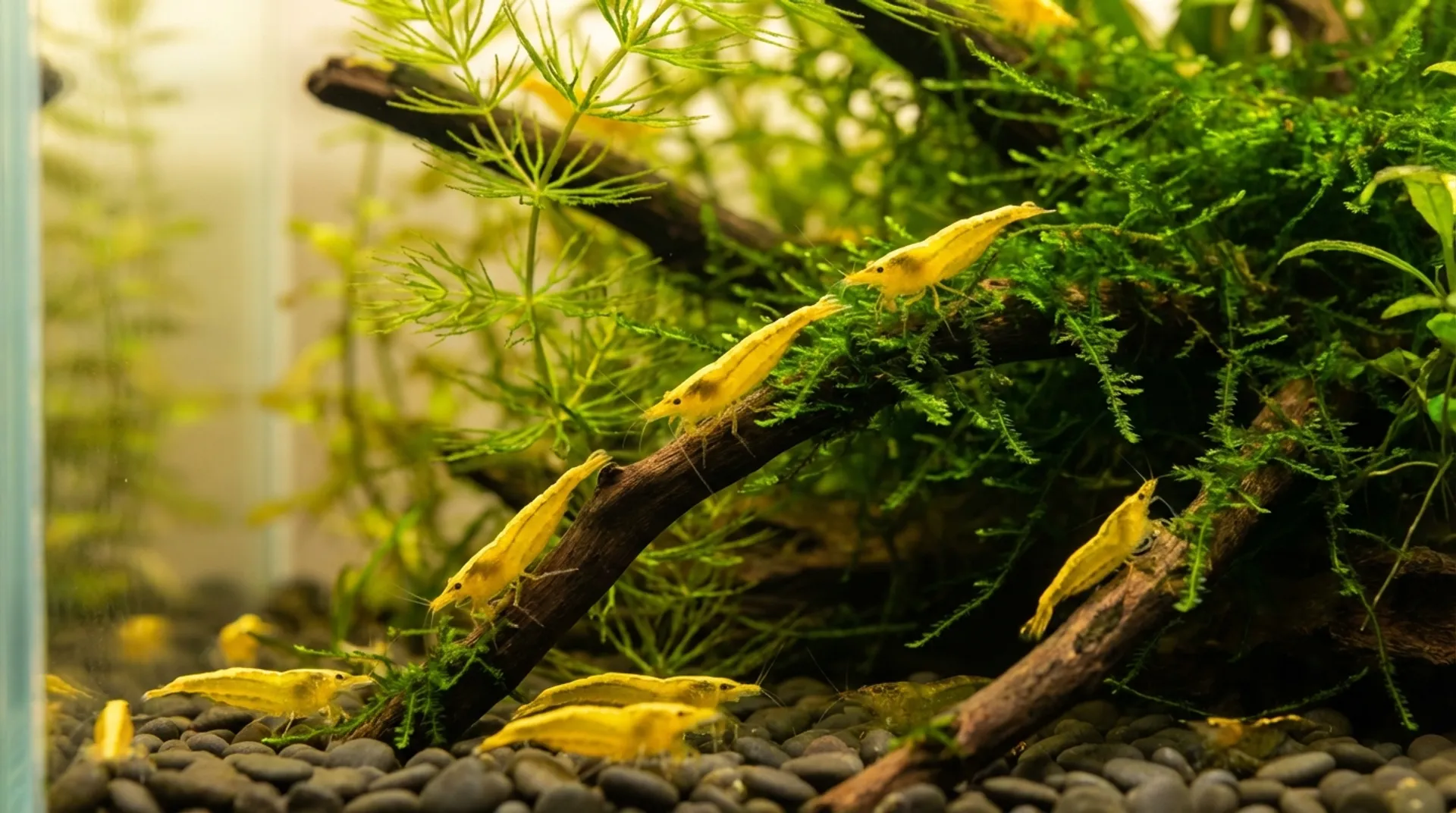
Picture a living jewel gliding through your aquarium - that’s exactly what you get with Yellow Golden Back Shrimp. These stunning Neocaridina davidi varieties, also known as Neon Yellow or 24K Golden Back Shrimp, bring brilliant sunshine colors to any freshwater setup while being incredibly rewarding to keep.
What makes these shrimp so special isn’t just their eye-catching golden-yellow coloration with that distinctive bright stripe down their back. They’re also one of the most beginner-friendly shrimp species available, combining stunning looks with hardy genetics that can adapt to a wide range of water conditions. Unlike their more demanding Caridina cousins, Yellow Golden Back Shrimp forgive minor parameter fluctuations while still rewarding you with prolific breeding and active behavior.
In this comprehensive guide, you’ll discover everything needed to successfully keep and breed these golden beauties - from setting up the perfect tank environment to understanding their specific care requirements and breeding behavior.
Species Overview and Characteristics
Yellow Golden Back Shrimp are a selectively bred variety of Neocaridina davidi, the same species that gave us Red Cherry Shrimp. Through careful breeding, aquarists have developed this variety to display intense yellow coloration with a distinctive golden or bright yellow stripe running down the back - hence the “Golden Back” name.
These shrimp typically reach 1-1.5 inches in length, with females being slightly larger and more robust than males. The coloration ranges from pale yellow in lower grades to intense, almost neon yellow in premium specimens. The golden back stripe is most pronounced in higher-grade individuals and becomes more vibrant as the shrimp mature.
One of their most appealing characteristics is their active, social behavior. Unlike some shy shrimp species, Yellow Golden Backs are constantly on the move, grazing on biofilm, exploring their environment, and interacting with tank mates. This makes them excellent display shrimp that add both color and movement to your aquarium.
Tank Setup Requirements
Creating the ideal environment for Yellow Golden Back Shrimp doesn’t require expensive equipment, but attention to detail makes all the difference. Start with a minimum 5-10 gallon tank, though larger setups provide better parameter stability and more breeding space for growing colonies.
Substrate choice impacts both aesthetics and shrimp health. Smooth gravel or specialized substrates like Eco Complete work excellently, providing surface area for beneficial biofilm while avoiding sharp edges that could injure molting shrimp. Dark substrates help enhance the shrimp’s bright coloration through natural color contrast.
Filtration is critical but must be shrimp-safe. Sponge filters are ideal because they provide excellent biological filtration while protecting tiny shrimplets from being sucked into intake tubes. If using a canister or HOB filter, always cover the intake with a pre-filter sponge.
Live plants aren’t just decorative - they’re essential for creating a thriving shrimp ecosystem. Java moss, Anubias, Cryptocoryne, and fine-leaved plants like Cabomba provide grazing surfaces, hiding spots, and help maintain water quality. Add pieces of driftwood and smooth rocks to create additional surface area for biofilm development.
Pro tip: Add Indian almond leaves or alder cones to your tank. They release beneficial tannins, provide natural food sources, and create the slightly acidic conditions many shrimp prefer.
Water Parameters and Quality
Yellow Golden Back Shrimp demonstrate remarkable adaptability, but maintaining stable parameters is key to their long-term health and breeding success. Here are the specific ranges you should target:
Essential Parameters:
- pH: 6.0-8.0 (ideal: 6.8-7.5)
- General Hardness (GH): 4-14 dGH (ideal: 4-8 dGH)
- Carbonate Hardness (KH): 0-15 dKH (ideal: 3-10 dKH)
- Total Dissolved Solids (TDS): 80-250 ppm (ideal: 150-250 ppm)
- Temperature: 65-80°F (ideal: 74-78°F for breeding)
Critical Requirements:
- Ammonia: 0 ppm (absolutely essential)
- Nitrite: 0 ppm (absolutely essential)
- Nitrate: Below 20 ppm (ideally under 10 ppm)
Most conditioned tap water works perfectly for these shrimp, making them much more accessible than species requiring RO water. However, always test your specific tap water and adjust if necessary. Use liquid test kits rather than strips for accuracy, especially when monitoring ammonia and nitrite levels.
Perform regular 10-20% weekly water changes to maintain stability. Gradual, consistent changes are much better than large, infrequent ones. Always match the temperature and use a quality water conditioner to neutralize chlorine and chloramines.
Diet and Feeding Guidelines
Yellow Golden Back Shrimp are natural grazers with omnivorous appetites, spending most of their time picking at biofilm, algae, and organic matter throughout the tank. This constant foraging behavior means they need surprisingly little supplemental feeding when kept in established, planted aquariums.
Primary Diet Sources:
- Biofilm and aufwuchs on plants and surfaces
- Soft algae (green spot algae, brown diatoms)
- Decomposing plant matter
- Naturally occurring microorganisms
Supplemental Foods:
- High-quality shrimp pellets (2-3 times per week)
- Algae wafers (broken into appropriate sizes)
- Blanched vegetables (zucchini, spinach, peas)
- Specialized foods like Bacter AE for shrimplets
- Occasional protein treats (bloodworms, brine shrimp)
Feeding frequency should be conservative - overfeeding is one of the most common mistakes new shrimp keepers make. One dime-sized piece of food every 2-3 days is typically sufficient for 10+ adult shrimp. Remove any uneaten food after 3-4 hours to prevent water quality issues.
Pro tip: Use a feeding dish to concentrate food in one area, making cleanup easier and preventing food from getting lost in the substrate where it can decompose and affect water quality.
Breeding and Reproduction
One of the most rewarding aspects of keeping Yellow Golden Back Shrimp is their eager breeding behavior. Under proper conditions, females will carry eggs almost continuously, leading to rapidly expanding colonies that can grow from 10 adults to over 1,000 individuals within 6-8 months.
Breeding Process: Females carry 20-50 eggs under their tail (called being “berried”) for approximately 3 weeks. The exact timing depends on temperature - warmer water (76-78°F) speeds development while cooler temperatures slow it down. Shrimplets hatch as miniature versions of adults, immediately beginning to graze on biofilm and microscopic foods.
Optimal Breeding Conditions:
- Stable parameters within ideal ranges
- Abundant biofilm and algae for shrimplet food
- Minimal stress from aggressive tank mates
- Regular small feedings of powdered foods
- Plenty of hiding spots (moss, plants, tubes)
Supporting Shrimplet Survival: Newborn shrimplets are tiny but surprisingly capable. They don’t require special foods initially, instead grazing on the same biofilm as adults. However, supplementing with powdered spirulina, crushed flakes, or commercial shrimplet foods improves growth rates and survival.
Sexing becomes possible around 3 months of age. Females develop a curved underline (pleopods for carrying eggs) and tend to be larger with more vibrant coloration. Males remain smaller with straighter underlines.
Tank Mates and Compatibility
Yellow Golden Back Shrimp are peaceful community members that coexist well with many other aquarium species, but choosing appropriate tank mates requires careful consideration of size, temperament, and feeding habits.
Excellent Companions:
- Other Neocaridina shrimp varieties
- Peaceful snails (Nerite, Mystery, Ramshorn)
- Otocinclus catfish (excellent algae team)
- Small, peaceful fish like Neon Tetras
- Kuhli Loaches (too small to eat adult shrimp)
- Pygmy Corydoras
Fish to Avoid:
- Any fish large enough to eat shrimplets
- Aggressive or territorial species
- Fish known to nip at shrimp (some Barbs, Bettas)
- Bottom feeders that compete heavily for food
Special Considerations: Even with “shrimp-safe” fish, some shrimplet predation is normal and expected. If maintaining maximum breeding success is your goal, consider a species-only shrimp tank or limit fish to very small, peaceful species.
Common Health Issues and Troubleshooting
Healthy Yellow Golden Back Shrimp are active, colorful, and constantly foraging. Recognizing signs of stress or illness early allows for quick intervention before problems become serious.
Warning Signs:
- Lethargy or unusual stillness
- Loss of color intensity
- Failed molts or difficulty molting
- Erratic swimming or floating
- Reduced feeding activity
Common Causes and Solutions:
- Parameter swings: Test water immediately, perform gradual water changes
- Poor water quality: Increase water change frequency, check filtration
- Nutritional deficiencies: Vary diet, ensure calcium availability for molting
- Stress: Reduce disturbances, check for aggressive tank mates
- Disease: Quarantine affected individuals, maintain excellent water quality
Prevention remains the best medicine. Maintaining stable parameters, avoiding overfeeding, and quarantining new additions prevents most health issues before they start.
Advanced Care Tips
Once you’ve mastered basic Yellow Golden Back Shrimp care, several advanced techniques can help you achieve even better results and higher-grade offspring.
Selective Breeding: Choose the most intensely colored individuals with the brightest golden back stripes for breeding. Remove lower-grade individuals to prevent diluting your line’s genetics.
Parameter Optimization: Slightly acidic water (pH 6.8-7.0) often enhances coloration and breeding success. Consider using RO water remineralized to specific parameters for ultimate control.
Feeding Specialization: Rotate between different food types to provide complete nutrition. Color-enhancing foods containing spirulina and astaxanthin can intensify yellow coloration over time.
Conclusion
Yellow Golden Back Shrimp offer an perfect combination of stunning visual appeal and beginner-friendly care requirements. Their hardy nature, adaptable water parameter needs, and prolific breeding make them ideal for both new and experienced shrimp keepers looking to add brilliant color to their aquariums.
Success with these golden beauties comes down to maintaining stable water conditions, providing appropriate food sources, and creating a well-planted environment that mimics their natural habitat. With proper care, you’ll soon have a thriving colony of these living jewels brightening your aquarium for years to come. Start with a small group, focus on water quality fundamentals, and watch as your Yellow Golden Back Shrimp reward your efforts with active behavior, vibrant colors, and the excitement of successful breeding.
Frequently Asked Questions
Yellow Golden Back Shrimp thrive in pH 6.8-7.5, GH 4-8, KH 3-10, TDS 150-250, and temperature 74-78°F. They're adaptable but need zero ammonia/nitrite and stable conditions.
A minimum 5-10 gallon tank works for a small colony, but larger tanks provide better stability and breeding space. Include live plants, moss, and sponge filtration.
Yes, Yellow Golden Back Shrimp are excellent for beginners due to their hardy nature, wide parameter tolerance, and easy breeding. They're more forgiving than Caridina species.
Females carry 20-50 eggs for about 3 weeks, breeding continuously in good conditions. A colony of 10 adults can produce over 1,000 shrimp in 6-8 months.
They're omnivorous grazers that primarily eat algae, biofilm, and aufwuchs. Supplement with algae wafers, shrimp pellets, and blanched vegetables 1-3 times per week.
Yes, they're compatible with peaceful nano fish like Neon Tetras, Otocinclus, and Corydoras. Avoid aggressive fish or large species that might eat shrimplets.
Track Your Parameters Like a Pro
Stop guessing if your water is right. ShrimpKeeper tracks TDS, GH, KH, pH, and temperature with species-specific recommendations.
Download FreeRelated Articles
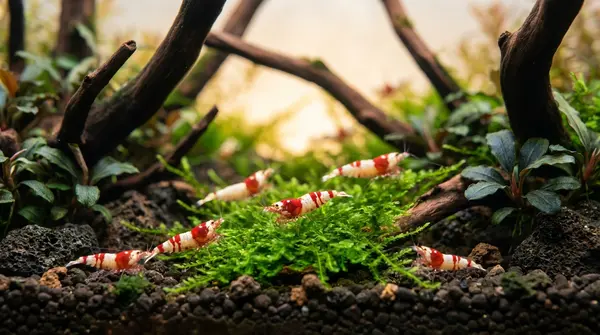
Red Bee Shrimp: Complete Care Guide and Grading System
Red Bee Shrimp are stunning Caridina species known for their vibrant red and white patterns. Learn the precise water parameters, grading system, and care requirements needed for success.
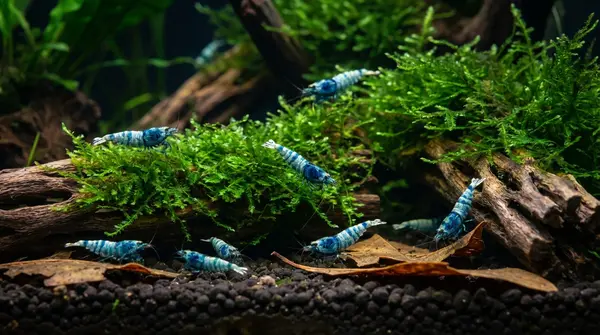
Blue Bolt Shrimp: Complete Care and Breeding Guide
Blue Bolt shrimp are stunning Caridina specimens that reward dedicated keepers with vibrant colors and successful breeding when provided with soft, acidic water conditions.
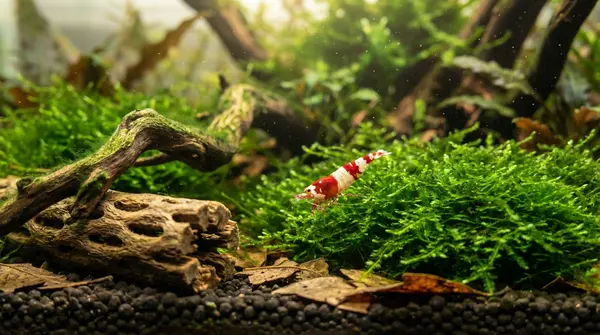
Taiwan Bee Shrimp Care Guide for Advanced Keepers
Taiwan Bee shrimp represent the pinnacle of advanced shrimp keeping, demanding precision, patience, and expertise to achieve stunning colors and successful breeding in your aquarium.