
What Are Caridina Shrimp?
Caridina is a diverse genus containing over 300 species of freshwater shrimp. In the aquarium hobby, when we talk about “Caridina,” we’re typically referring to four main categories: Crystal Shrimp (CRS/CBS), Taiwan Bee varieties, Tiger Shrimp, and Amano Shrimp. Each has captured the hearts of hobbyists with their stunning patterns and colors.
These shrimp evolved in soft, acidic mountain streams of Asia, developing biology fundamentally different from their Neocaridina cousins. This evolutionary history means Caridina have precise parameter requirements that cannot be compromised.
The Critical Warning You Must Understand
If you set up a tank for Neocaridina and add Caridina, the Caridina will die.
This isn’t an exaggeration or worst-case scenario. It’s what happens when Caridina are placed in water conditions opposite to their biological needs. The hobby is full of stories from well-meaning beginners who lost expensive shrimp because they didn’t understand this fundamental difference.
Caridina require:
- RO/DI water (tap water is generally unsuitable)
- Active buffering substrate (non-negotiable)
- GH+ remineralizer (NOT GH/KH+)
- Acidic pH (5.8-6.8, not neutral)
- Zero or near-zero KH
If any of these requirements seem inconvenient, consider starting with Neocaridina instead. Caridina reward dedicated keepers with stunning colors and fascinating breeding projects, but they punish shortcuts with death.
Caridina vs Neocaridina: The Key Differences
Understanding these differences is essential before purchasing your first Caridina. These aren’t minor variations; they’re opposite requirements.
| Parameter | Neocaridina | Caridina (Crystal/Taiwan Bee) |
|---|---|---|
| pH | 6.8-8.0 (neutral to alkaline) | 5.8-6.8 (acidic) |
| GH | 6-12 dGH | 4-6 dGH |
| KH | 2-8 dKH | 0-1 dKH |
| TDS | 150-300 ppm | 100-150 ppm |
| Temperature | 70-78F (21-26C) | 68-74F (20-23C) |
| RO Water | Optional | Required |
| Active Substrate | Not needed | Required |
| Remineralizer | GH/KH+ | GH+ only |
| Difficulty | Beginner | Intermediate-Advanced |
| Cost | $2-10 per shrimp | $5-500+ per shrimp |
Why This Matters
The biological differences run deep:
Osmoregulation: Caridina evolved to absorb minerals from extremely dilute water. Placing them in mineral-rich tap water creates osmotic stress, damaging their cells and organs.
pH Adaptation: Their gill ion exchange and enzyme systems function optimally in acidic conditions. Neutral or alkaline water disrupts basic biological processes.
Shell Formation: While all shrimp need calcium for shells, Caridina need less and have different mineral absorption mechanisms optimized for soft water.
What Caridina Tanks Require (That Neocaridina Don’t)
- RO/DI System - To start with pure water you can control
- GH+ Remineralizer - Salty Shrimp Bee Shrimp Mineral GH+ (NOT GH/KH+)
- Active Buffering Substrate - ADA Amazonia, SL-Aqua Soil, Controsoil, etc.
- TDS Meter - Essential for monitoring water quality
- pH Monitor - To track substrate buffering capacity
All Caridina Varieties
Crystal Shrimp (Caridina cantonensis)
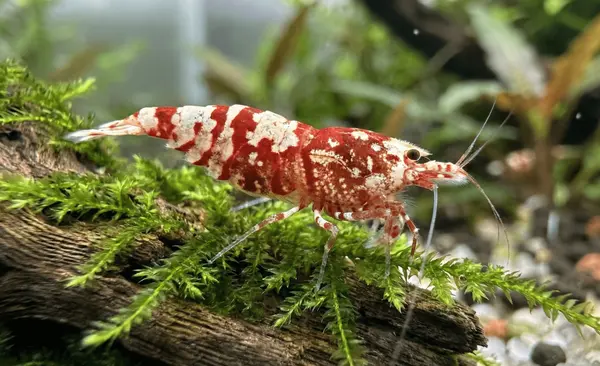
Crystal Shrimp are the foundation of the Caridina hobby. Available in red (CRS) and black (CBS) color forms, they feature the iconic alternating bands that have made them famous.
Crystal Red Shrimp (CRS)
Crystal Red Shrimp are the most iconic Caridina variety. Their alternating red and white bands create a striking appearance that intensifies with higher grades.
The CRS Grading System:
| Grade | Description | White Coverage | Typical Price |
|---|---|---|---|
| C | Mostly red, minimal white, translucent areas | Less than 25% | $5-10 |
| B | More white but blotchy, uneven bands | 25-35% | $8-15 |
| A | Cleaner bands, brighter colors | 35-50% | $12-25 |
| S | Solid white sections, defined bands | 50-60% | $20-40 |
| SS | Very white, deep red, symmetric pattern | 60-70% | $35-75 |
| SSS | Exceptional pattern, near-opaque white | 75%+ | $50-150+ |
| SSS+ | Competition grade, extreme coloration | 85%+ | $100-500+ |
Special Patterns:
- Mosura: White body with red only on head and tail
- Hinomaru: Red circle on the back (Japanese flag pattern)
- No Entry: White body with single red line
- V-Band: V-shaped bands on the tail
- Crown: Pattern resembling a crown on the head
Crystal Black Shrimp (CBS)
Crystal Black Shrimp share identical genetics and care requirements with CRS. The only difference is black pigmentation instead of red. The same grading system applies, and CBS can interbreed with CRS to produce interesting offspring.
Taiwan Bee Varieties
Taiwan Bee shrimp were created by crossing Crystal Shrimp with wild Taiwan Bee genes, resulting in more extreme colors and patterns. They share the same parameter requirements as Crystal Shrimp but tend to be more expensive and slightly more demanding.
All Taiwan Bee share these parameters:
- TDS: 100-150 ppm
- GH: 4-6 dGH
- KH: 0-1 dKH
- pH: 6.0-6.8
- Temperature: 68-74F (cooler preferred)
Blue Bolt
Blue Bolt shrimp display brilliant aquamarine to royal blue coloration. They’re the most popular Taiwan Bee variety, combining stunning color with relative availability. Quality Blue Bolts have deep, consistent color throughout their body.
Black King Kong (BKK)
Black King Kong shrimp are solid black with minimal or no white markings. For many serious keepers, BKK represent the “holy grail” of the hobby. Their deep, velvety black coloration is mesmerizing.
Critical Breeding Note: BKK x BKK breeding has approximately 10% survival rate. This isn’t a parameter problem; it’s genetics. Most experienced breeders cross BKK with Pandas to maintain population while producing BKK offspring.
Red King Kong / Wine Red
Red King Kong shrimp display deep wine-red coloration that’s more intense than standard CRS. They’re rare and command premium prices, appealing to collectors seeking something beyond standard Crystal Shrimp.
Panda Shrimp
Panda shrimp have black or red bodies with thick white bands, creating the distinctive “panda” appearance. They’re popular for their bold pattern contrast and breed more reliably than solid King Kong varieties.
Shadow Panda
Shadow Panda shrimp are similar to regular Pandas but with blue bands instead of white. This stunning variation is rarer and more expensive than regular Pandas. The blue coloration creates a unique, almost ethereal appearance.
Galaxy Pinto
Galaxy Pinto shrimp feature distinctive white “star-like” spots on their cheeks. This pattern is highly prized and commands prices ranging from $50-$400+ per shrimp. Galaxy Pintos represent the high end of Taiwan Bee breeding.
Fishbone Pinto
Fishbone Pinto shrimp have a dorsal stripe with a “fishbone” pattern extending down their sides. The pattern quality varies between individuals, with the best specimens showing clear, symmetric patterns.
Tiger Shrimp
Tiger Shrimp are a different lineage from Crystal and Taiwan Bee varieties. They’re generally hardier and more forgiving of parameter variations.
Tiger Shrimp Parameters (slightly different from Crystal/Taiwan Bee):
- TDS: 120-200 ppm
- GH: 4-8 dGH
- KH: 0-3 dKH
- pH: 6.0-7.5
- Temperature: 68-78F
Orange Eye Blue Tiger (OEBT)
Orange Eye Blue Tiger shrimp are stunning with their blue bodies and distinctive orange eyes. However, their care is controversial in the hobby because:
- Parameter recommendations vary widely between sources
- They do NOT breed true (offspring show significant variation)
- Some keepers report success in Caridina setups, others in Neocaridina-like conditions
If keeping OEBT, start with Caridina-style parameters and adjust based on your colony’s response.
Tangerine Tiger
Tangerine Tiger shrimp are orange with tiger stripes. They’re considered the “beginner Caridina” because:
- Most prolific and adaptable Caridina variety
- Tolerate wider parameter ranges than Crystal/Taiwan Bee
- Hardy and forgiving of minor mistakes
- Affordable compared to other Caridina
If you want to try Caridina but feel intimidated, Tangerine Tigers are an excellent starting point.
Amano Shrimp (Caridina multidentata)
Amano Shrimp deserve a separate discussion because their requirements differ significantly from other Caridina.
Key Differences:
- Size: Much larger at 1.5-2.5 inches
- Parameters: Tolerates wide range (TDS 100-300+, GH 6-10, KH 2-8, pH 6.5-7.5, Temp 65-82F)
- RO Water: NOT required
- Active Substrate: NOT required
- Breeding: EXTREMELY difficult (larvae require brackish/saltwater)
Amano Shrimp are famous as the best algae eaters in the hobby. If you just want algae control and don’t care about breeding, Amanos are an excellent choice that can live in standard aquarium conditions.
Water Parameters (Critical!)
Why Caridina Parameters Are So Specific
Caridina evolved in mountain streams with:
- Extremely soft water (low TDS, low GH)
- Acidic conditions (low pH, no KH buffering)
- Cool temperatures
- Minimal mineral content
Their biology adapted to:
- Absorbing minerals from dilute water through specialized mechanisms
- Regulating internal pH in acidic external conditions
- Functioning at cooler temperatures with slower metabolism
Placing Caridina in “normal” aquarium water causes:
- Osmotic stress from high TDS/mineral content
- pH stress from neutral/alkaline conditions
- Metabolic stress from warm temperatures
- Failed molts from improper mineral ratios
- Immune compromise leading to bacterial infections
- Death (often within days to weeks)
TDS for Caridina
Target Range: 100-150 ppm (optimal 120-140 ppm)
This is MUCH lower than Neocaridina’s 150-300 ppm range.
| TDS Range | Assessment |
|---|---|
| Below 80 ppm | Too low, risk of osmotic issues |
| 100-150 ppm | Optimal for Crystal/Taiwan Bee |
| 150-200 ppm | Acceptable for Tiger Shrimp |
| Above 200 ppm | Too high for most Caridina |
How to achieve correct TDS:
- Start with RO/DI water (0 TDS)
- Add Salty Shrimp Bee Shrimp Mineral GH+ to target TDS
- Never use GH/KH+ (the KH will exhaust your substrate)
- Test before each water change
For detailed information, see our TDS parameter guide.
GH for Caridina
Target Range: 4-6 dGH (optimal 5-6 dGH)
| GH Range | Assessment |
|---|---|
| Below 3 dGH | Too low, molting issues |
| 4-6 dGH | Optimal |
| 7-8 dGH | Acceptable but high |
| Above 8 dGH | Risk of problems |
Remineralizer: Use Salty Shrimp Bee Shrimp Mineral GH+ (NOT GH/KH+)
For detailed information, see our GH parameter guide.
KH for Caridina
Target Range: 0-1 dKH (optimal: 0 dKH)
This is CRITICAL and commonly misunderstood.
Active substrate buffers pH by absorbing carbonates and releasing humic acids. When you add water with KH (carbonates), the substrate must absorb those carbonates, which:
- Exhausts the substrate’s buffering capacity faster
- Turns 18-month substrate lifespan into 6-12 months
- Leads to pH instability when substrate is exhausted
- Costs you money replacing substrate more often
Rule: Never add KH to Caridina tanks. If your remineralizer contains KH (like Salty Shrimp GH/KH+), you’re using the wrong product.
For detailed information, see our KH parameter guide.
pH for Caridina
Target Range: 5.8-6.8 (optimal 6.0-6.5)
With Caridina, you don’t directly control pH. Instead:
- Active substrate buffers pH to 5.5-6.5 naturally
- You maintain this by adding 0 KH water
- The substrate does the work
If your pH is wrong:
- Rising above 7.0? Substrate may be exhausted
- Falling below 5.5? Unusual, may indicate water quality issues
For detailed information, see our pH parameter guide.
Temperature for Caridina
Target Range: 68-74F (20-23C) for Taiwan Bee, 68-76F (20-24C) for Crystal Shrimp
Caridina prefer cooler temperatures than Neocaridina.
| Temperature | Effects |
|---|---|
| 65-68F (18-20C) | Cool but acceptable, very slow metabolism |
| 68-74F (20-23C) | Optimal for Taiwan Bee |
| 68-76F (20-24C) | Acceptable for Crystal Shrimp |
| Above 78F (26C) | Stress, reduced breeding, shortened lifespan |
Benefits of cooler temperatures:
- Slower metabolism = longer lifespan
- Higher dissolved oxygen
- Reduced bacterial growth
- Better color expression
For detailed information, see our temperature parameter guide.
Tank Setup and Equipment
Required Equipment
Unlike Neocaridina, certain equipment is non-negotiable for Caridina success:
RO/DI System
Why required: Tap water contains minerals, chemicals, and contaminants that harm Caridina.
Options by budget:
- Budget: RO Buddy 3-stage system (~$50-70)
- Mid-range: 4-stage RODI with DI stage (~$100-150)
- Alternative: Buy RO water from your local fish store or grocery store
Target: 0-5 TDS from your RO system
Active Buffering Substrate
What it does: Absorbs carbonates and buffers pH to 5.5-6.5
Recommended brands (in order of preference):
| Brand | Buffered pH | Ammonia Leaching | Lifespan | Notes |
|---|---|---|---|---|
| ADA Amazonia | 6.6-6.8 | Heavy (6-8 weeks) | 12-18 months | Gold standard |
| ADA Amazonia Light | 6.6-6.8 | Moderate | 12-18 months | Less ammonia cycling |
| SL-Aqua Soil | 6.4-6.6 | Light | 12-18 months | Popular with breeders |
| Controsoil | 6.2-6.6 | Light | 4-6 months | Good budget option |
| Fluval Stratum | 6.6-6.8 | Light | 6-12 months | Weakest buffering |
Substrate depth: 1-2 inches minimum
Critical notes:
- Never rinse active substrate
- Never use with tap water containing KH
- ADA Amazonia leeches ammonia initially, requiring 4-8 weeks cycling before adding shrimp
Sponge Filter
Essential for:
- Baby shrimp safety (they can’t be sucked in)
- Biofilm grazing surface
- Gentle water flow
Recommended Tank Setup
10 gallon tank
|-- Substrate: ADA Amazonia Light (1.5" depth)
|-- Filter: Double sponge filter
|-- Heater: 50W adjustable (set to 70-72F)
|-- Lighting: Low-moderate (8 hours)
|-- Plants: Java Moss, Bucephalandra, Anubias
|-- Hardscape: Spider wood, lava rock
|-- Water: RO + Salty Shrimp GH+
The Nitrogen Cycle
Before adding Caridina, your tank must be fully cycled:
- Ammonia: 0 ppm
- Nitrite: 0 ppm
- Nitrate: Below 10 ppm
Cycling active substrate:
- Set up tank with substrate, filter, plants
- Add ammonia source (fish food, pure ammonia)
- Wait 4-6 weeks for cycle to complete
- ADA Amazonia adds extra time due to ammonia leaching
- Wait additional 2-4 weeks for biofilm to develop
Total time before adding shrimp: 6-12 weeks minimum
Feeding Caridina
Feeding Caridina is similar to Neocaridina but requires even more care due to their smaller bioload tolerance in soft water.
Feeding Guidelines
Frequency: Every 2-3 days
Amount: What they consume in 1-2 hours
Warning: Overfeeding in soft water tanks is even more dangerous than in standard tanks. Uneaten food breaks down faster in acidic conditions and can quickly spike ammonia.
Recommended Foods
Biofilm Boosters (Essential):
- Bacter AE (primary recommendation)
- SL-Aqua Milione
These aren’t traditional foods but encourage biofilm growth, which is crucial for Caridina health and baby survival.
Commercial Foods:
- Shrimp King Complete
- Glasgarten Shrimp Dinner
- Borneo Wild
- Shrimp King Mineral (calcium supplement)
Natural Foods:
- Blanched spinach or kale
- Dried mulberry leaves (also slightly lowers pH)
- Indian Almond Leaves
Protein (sparingly):
- Glasgarten Shrimp Dinner Protein
- Bee pollen
- Once per week maximum
Mineral Supplementation
- Mineral Junkie pearls
- Montmorillonite clay
- Cuttlebone (small piece)
These provide additional calcium and trace minerals for healthy molts.
Breeding Caridina
Why Breeding Is Harder Than Neocaridina
Several factors make Caridina breeding more challenging:
- Narrower parameter tolerance: Less room for error
- Longer maturation: Takes longer to reach sexual maturity
- Smaller clutch sizes: 15-25 eggs vs Neocaridina’s 20-30
- Higher sensitivity during breeding: Stress more easily disrupts reproduction
- Complex genetics (Taiwan Bee): Breeding outcomes aren’t always predictable
Prerequisites for Breeding Success
- Established, mature tank (3+ months old)
- Stable parameters maintained for 2-4 weeks
- Abundant biofilm (add Bacter AE)
- High-quality diet with occasional protein
- Dense moss for baby hiding spots
- Minimal disturbance (don’t constantly move things around)
Breeding Triggers
Caridina typically start breeding when:
- Parameters have been stable for several weeks
- Tank is mature with established biofilm
- Temperature is in optimal range
- Small water change with slightly cooler water (2-3F drop)
Taiwan Bee Genetics
Taiwan Bee genetics are complex because they carry both “bee” and “Taiwan” genes.
Basic principles:
- Like x Like doesn’t always produce like offspring
- BKK x BKK = ~10% survival rate (lethal gene combination)
- BKK x Panda = Better survival, mixed offspring
- Blue Bolt x Blue Bolt = Mostly Blue Bolt offspring
For serious Taiwan Bee breeding projects, study genetics separately. It’s a deep topic that dedicated breeders spend years learning.
Culling
To maintain high-grade colonies:
- Remove low-grade offspring to separate tank
- Select breeding pairs carefully
- Separate by grade level
- Be patient; improving a line takes generations
Troubleshooting Caridina
Deaths After Adding to Tank
Most common cause: Parameter shock (TDS, temperature, pH mismatch)
Solution: Drip acclimate for 2-4 hours minimum
- Float bag to equalize temperature (30 minutes)
- Open bag, add air line with knot for drip control
- Drip tank water into bag at 1-2 drops per second
- Continue until bag water volume has tripled
- Net shrimp into tank (don’t pour bag water in)
For more details, see our acclimation deaths guide.
Substrate Stopped Buffering
Signs:
- pH rising above 7.0
- KH becoming detectable (above 1 dKH)
- Shrimp showing stress
Solutions:
- Partial replacement: Remove 30% of substrate, add fresh
- Full reset: Complete substrate replacement (requires cycling again)
- Temporary: Indian Almond Leaves add mild acidification
For more details, see our exhausted substrate guide.
Bacterial Infections
Signs:
- Milky or cloudy body
- Internal organs visible as dark masses
- Sudden deaths without obvious cause
- Multiple deaths over several days
Emergency protocol:
- 50% water changes daily for a week (match parameters exactly)
- Increase aeration significantly
- Remove dead shrimp immediately
- Consider UV sterilizer
- Stop feeding for several days
For more details, see our bacterial infections guide.
Not Breeding After Months
Check:
- Tank maturity (need 3+ months)
- Parameter stability
- Temperature (try 70-72F)
- Biofilm presence (add Bacter AE)
- Sex ratio (need both males and females)
- Stress factors (tankmates, disturbances)
Frequently Asked Questions
See the FAQ section in the sidebar for the 8 most common questions about Caridina care.
Track Your Caridina with ShrimpKeeper
Caridina require precise parameters. Guessing isn’t an option when a single shrimp can cost $50-400.
The ShrimpKeepersapp was designed for keepers who take their parameters seriously.
Features built for Caridina keepers:
- Caridina-specific parameter ranges with instant feedback
- TDS tracking with optimal targets for Crystal/Taiwan Bee vs Tiger
- Substrate age tracking so you know when buffering will exhaust
- Remineralization calculator for Salty Shrimp GH+ and other products
- Historical graphs to detect parameter drift before it becomes a problem
Stop relying on memory and guesswork. Your investment in quality Caridina deserves quality tracking.
Download ShrimpKeeper and give your Caridina the precision care they need.
Related Guides
Explore more shrimp keeping guides:
-
Neocaridina Shrimp Care Guide: If Caridina seem too demanding, start with these hardy, colorful beginner shrimp.
-
Sulawesi Shrimp Care Guide: Ready for the next challenge? Sulawesi shrimp have completely different requirements (high pH, high temperature) that make them the ultimate advanced species.
This guide synthesizes information from scientific literature, manufacturer specifications (Salty Shrimp, SL-Aqua, ADA), and experienced hobbyist communities including Aquarium Breeder, The Shrimp Farm, Flip Aquatics, and r/shrimptank. Water parameters have been verified across multiple authoritative sources.
Frequently Asked Questions
No. Most tap water has too high TDS, too high KH (fights substrate), chlorine/chloramine, and possible copper. Use RO water remineralized with GH+.
Not recommended. They require opposite parameters: Neocaridina need high KH and neutral pH, while Caridina need zero KH and acidic pH.
12-18 months typically, depending on KH of water added (should be 0), frequency of water changes, and substrate depth.
Common causes include tank being too new (need 3+ months maturation), unstable parameters, temperature too high, not enough hiding spots, and poor diet.
Taiwan Bee are hybrids with wild Taiwan Bee genes, showing more extreme colors and patterns. Same care requirements but more expensive and harder to breed.
No! Use only GH+ (no KH). Adding KH exhausts active substrate buffering capacity much faster.
Rarity, difficulty breeding, complex genetics, and high demand. High-grade Galaxy Pintos can cost $100-400+ each.
They're more adaptable than other Caridina but still benefit from soft, acidic water. Can tolerate higher pH/KH than Crystal Shrimp.
Track Your Parameters with ShrimpKeeper
Stop guessing. Start tracking. Our app gives you species-specific parameter ranges, instant diagnostics, and historical graphs.