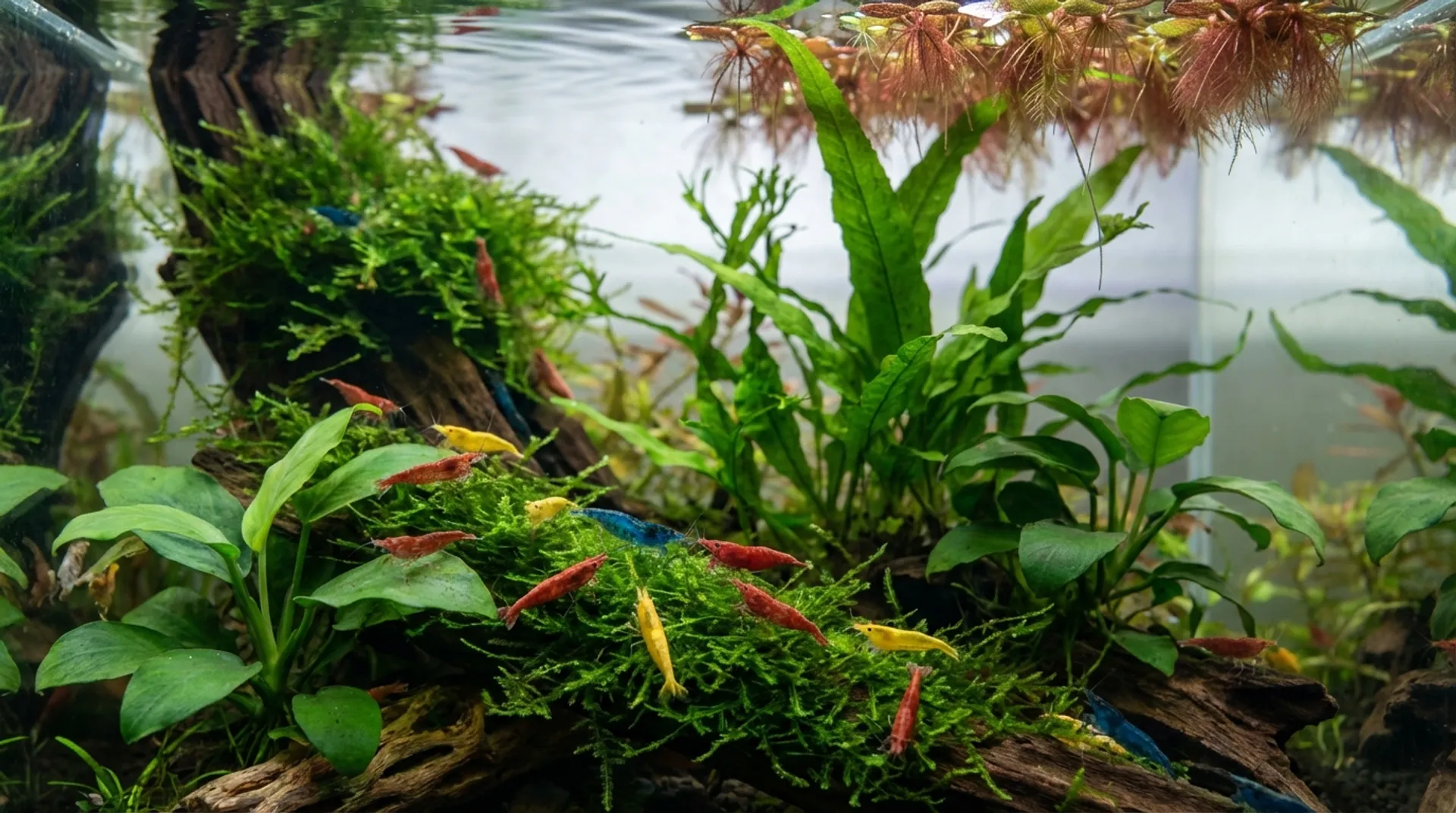
Picture this: your shrimp gliding gracefully through a lush underwater jungle, grazing on biofilm-covered moss while shrimplets dart between the safety of broad Anubias leaves. A well-planted shrimp tank isn’t just beautiful—it’s a complete ecosystem that provides natural filtration, endless grazing opportunities, and the perfect environment for breeding.
The right plants can transform your shrimp tank from a simple container into a thriving aquatic paradise. But here’s the catch: not all aquarium plants are created equal when it comes to shrimp keeping. Some require fertilizers containing copper (deadly to shrimp), while others need intense lighting that promotes algae growth.
In this comprehensive guide, we’ll explore the 10 best plants specifically chosen for their shrimp-friendly nature, low maintenance requirements, and ability to create the perfect environment for your colony to flourish. Whether you’re setting up your first planted shrimp tank or looking to upgrade your current setup, these plants will provide everything your shrimp need to thrive.
Why Plants Are Essential for Shrimp Tanks
Plants do far more than just look pretty in your shrimp tank. They serve as living water filters, absorbing harmful nitrates and helping maintain stable water chemistry. The surfaces of plants, especially fine-leaved varieties like mosses, collect beneficial biofilm and microfauna that shrimp constantly graze on.
Furthermore, plants provide crucial shelter for molting shrimp and safe hiding spots for vulnerable shrimplets. Dense plant growth creates the sense of security that encourages natural behaviors and successful breeding. The oxygen production during photosynthesis also helps maintain healthy dissolved oxygen levels.
The Top 10 Shrimp-Safe Plants
1. Java Moss (Taxiphyllum barbieri)
Java moss reigns supreme in shrimp tanks for good reason. This incredibly hardy moss tolerates a wide range of conditions and provides the perfect grazing surface for biofilm accumulation. Shrimp spend hours picking through its fine structure, making it essential for any shrimp keeper.
Care Requirements:
- Light: Very low to moderate
- Temperature: 68-82°F (20-28°C)
- pH: 6.0-8.5
- Attachment: Tie to driftwood, rocks, or let float
- Growth rate: Moderate
Pro tip: Create a “moss wall” by sandwiching Java moss between two pieces of mesh—your shrimp will thank you with increased breeding activity.
2. Anubias Nana (Anubias barteri var. nana)
Anubias nana offers broad, sturdy leaves that serve as perfect resting spots for adult shrimp and provide excellent grazing surfaces. This slow-growing plant is virtually indestructible and thrives in low-light conditions ideal for shrimp tanks.
Care Requirements:
- Light: Very low to moderate
- Temperature: 72-82°F (22-28°C)
- pH: 6.0-7.5
- Attachment: Rhizome must be attached to hardscape, never buried
- Growth rate: Very slow
3. Java Fern (Microsorum pteropus)
The feathery fronds of Java fern create natural hiding spots while the plant’s hardy nature makes it perfect for beginners. Like Anubias, it attaches to hardscape rather than rooting in substrate, making tank maintenance easier.
Care Requirements:
- Light: Low to moderate
- Temperature: 68-82°F (20-28°C)
- pH: 6.0-7.5
- Attachment: Attach rhizome to wood or rock
- Growth rate: Slow to moderate
4. Cryptocoryne Wendtii
Cryptocoryne wendtii provides broader leaves for grazing and creates natural territories within the tank. This versatile plant comes in various colors and adapts well to different water conditions, though it may initially “melt” when introduced to new conditions before recovering.
Care Requirements:
- Light: Low to moderate
- Temperature: 68-82°F (20-28°C)
- pH: 6.5-7.5
- Substrate: Plant in nutrient-rich substrate
- Growth rate: Slow to moderate
5. Water Wisteria (Hygrophila difformis)
Also known as water sprite, this fast-growing stem plant excels at nutrient absorption, helping prevent algae while providing dense cover for shy shrimp. Its finely divided leaves create perfect micro-habitats for shrimplets.
Care Requirements:
- Light: Low to moderate
- Temperature: 68-82°F (20-28°C)
- pH: 6.5-7.5
- Planting: Can be planted or left floating
- Growth rate: Fast
6. Hornwort (Ceratophyllum demersum)
Hornwort serves as a natural nitrate sponge while providing excellent cover for breeding shrimp. This floating plant requires no substrate and can be anchored with weights if desired.
Care Requirements:
- Light: Low to moderate
- Temperature: 59-86°F (15-30°C)
- pH: 6.0-7.5
- Planting: Free-floating or weighted down
- Growth rate: Very fast
7. Floating Plants (Amazon Frogbit & Red Root Floaters)
Floating plants provide natural shade while their extensive root systems offer perfect grazing opportunities. Amazon frogbit (Limnobium laevigatum) and red root floaters (Phyllanthus fluitans) both excel at nutrient export and create a natural canopy.
Care Requirements:
- Light: Low to moderate
- Temperature: 68-82°F (20-28°C)
- pH: 6.0-7.5
- Maintenance: Thin regularly to prevent complete surface coverage
- Growth rate: Fast
8. Staurogyne Repens
This compact carpeting plant creates a lush foreground while providing grazing surfaces close to the substrate where shrimp naturally forage. While it benefits from moderate lighting, it will grow slowly in lower light conditions.
Care Requirements:
- Light: Moderate to high for best growth
- Temperature: 68-82°F (20-28°C)
- pH: 6.0-7.5
- Substrate: Nutrient-rich substrate preferred
- Growth rate: Slow to moderate
9. Pearl Weed (Hemianthus micranthemoides)
Pearl weed forms dense carpets that provide excellent shrimplet hiding spots and foraging areas. Its small leaves create intricate structures that trap beneficial microorganisms.
Care Requirements:
- Light: Moderate
- Temperature: 68-79°F (20-26°C)
- pH: 6.0-7.5
- Substrate: Benefits from nutrient substrate
- Growth rate: Moderate
10. Rotala/Ludwigia Species
Colorful stem plants like Rotala rotundifolia and Ludwigia repens add visual interest while providing vertical structure and cover. Choose varieties that tolerate lower light to maintain shrimp-safe conditions.
Care Requirements:
- Light: Moderate (colors may fade in low light)
- Temperature: 68-82°F (20-28°C)
- pH: 6.0-7.5
- Maintenance: Regular trimming required
- Growth rate: Moderate to fast
Critical Safety: Copper-Free Fertilizers Only
This cannot be overstated: copper is deadly to shrimp even in trace amounts. Many standard aquarium fertilizers contain copper as a micronutrient for plants, but this will kill your shrimp. Always choose fertilizers explicitly labeled as “copper-free” or “safe for invertebrates.”
Safe fertilizing practices:
- Use root tabs for substrate-rooted plants (Crypts, carpeting plants)
- Apply liquid fertilizers sparingly and only copper-free formulations
- Consider relying on fish waste and biofilm for nutrition in shrimp-only tanks
- Test any new fertilizer on a few shrimp in a separate container first
Essential Water Parameters for Planted Shrimp Tanks
Maintaining proper water parameters ensures both plants and shrimp thrive:
- Temperature: 68-79°F (20-26°C)
- pH: 6.5-8.0 (stable is more important than perfect)
- GH (General Hardness): 4-12 dGH
- KH (Carbonate Hardness): 1-4 dKH
- TDS: 150-300 ppm
- Ammonia: 0 ppm
- Nitrite: 0 ppm
- Nitrate: Below 20-40 ppm
Pro tip: Test water weekly and make small, gradual adjustments. Shrimp are more sensitive to parameter swings than to slightly imperfect numbers.
Setting Up Your Planted Shrimp Tank
Equipment Checklist
- Sponge filter (protects shrimplets and provides biofilm surface)
- Low to moderate LED lighting
- Nutrient substrate for rooted plants
- Driftwood and rocks for attachment plants
- Copper-free fertilizers
- Quality water test kit
Planting Strategy
- Attach epiphytes first: Secure Anubias and Java fern to hardscape
- Plant substrate rooters: Place Crypts and carpeting plants in substrate
- Add mosses: Attach to various surfaces throughout the tank
- Introduce floaters: Add after plants are established
- Wait before adding shrimp: Allow 4-6 weeks for full cycling
Maintenance Tips for Long-Term Success
Weekly Tasks:
- Perform 10-20% water changes with dechlorinated water
- Test water parameters
- Trim fast-growing plants
- Remove dead plant matter
Monthly Tasks:
- Clean sponge filter gently in tank water
- Add root tabs to heavy feeders
- Thin floating plants if needed
Ongoing Monitoring:
- Watch for algae growth (indicates lighting/nutrient imbalance)
- Observe shrimp behavior for signs of stress
- Quarantine new plants before adding to main tank
Conclusion
Creating the perfect planted shrimp tank requires choosing the right combination of hardy, low-maintenance plants that provide everything your shrimp need to thrive. The 10 plants featured in this guide offer the ideal balance of beauty, functionality, and shrimp safety.
Start with the easiest options like Java moss, Anubias nana, and Java fern to build confidence, then gradually add more challenging species as your experience grows. Remember that patience is key—allow your tank to fully cycle before introducing shrimp, and always prioritize copper-free products to keep your colony safe.
With proper plant selection and care, you’ll create a thriving ecosystem where your shrimp can exhibit natural behaviors, breed successfully, and live their best lives in a beautiful planted paradise.
Frequently Asked Questions
The best plants for shrimp tanks include Java moss, Anubias nana, Java fern, and Cryptocoryne wendtii. These plants provide excellent grazing surfaces, require low light, and tolerate shrimp-friendly water conditions.
Yes, shrimp are extremely sensitive to copper. Always use copper-free fertilizers specifically labeled as safe for invertebrates. Many standard plant fertilizers contain copper which is toxic to shrimp even in small amounts.
Planted shrimp tanks thrive with pH 6.5-8.0, temperature 68-79°F (20-26°C), GH 4-12 dGH, KH 1-4 dKH, and nitrates below 20-40 ppm. Maintain 0 ppm ammonia and nitrite at all times.
CO2 is generally not required for most shrimp-safe plants like mosses, Anubias, and Java fern. While CO2 can accelerate growth, it complicates shrimp care and most hardy species grow well without it.
Attach Anubias and Java fern to driftwood or rocks using fishing line or super glue gel. Never bury their rhizomes in substrate as this will cause them to rot and die.
Most shrimp-safe plants like Java moss, Anubias, and Java fern thrive under low to moderate lighting. This also helps prevent algae growth which can compete with plants and stress shrimp.
Create the Perfect Planted Shrimp Tank
Learn more about setting up the ideal environment for your shrimp with our comprehensive guides.
View GuidesRelated Articles
How to Make Your Own Shrimp Food at Home: Complete DIY Guide
Discover how to create cost-effective, nutritious homemade shrimp food that promotes better growth and breeding. Get proven recipes and step-by-step instructions.
Why Is My Shrimp Swimming Erratically? Complete Troubleshooting Guide
When your shrimp suddenly start darting around frantically, it's usually a cry for help. Learn to identify the causes and implement life-saving solutions quickly.
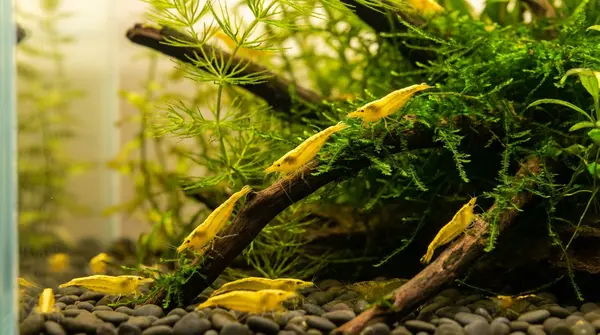
Yellow Golden Back Shrimp Care Guide: Complete Setup & Breeding Tips
Yellow Golden Back Shrimp are stunning, hardy Neocaridina perfect for beginners. Learn proper water parameters, tank setup, and breeding techniques for a thriving colony.