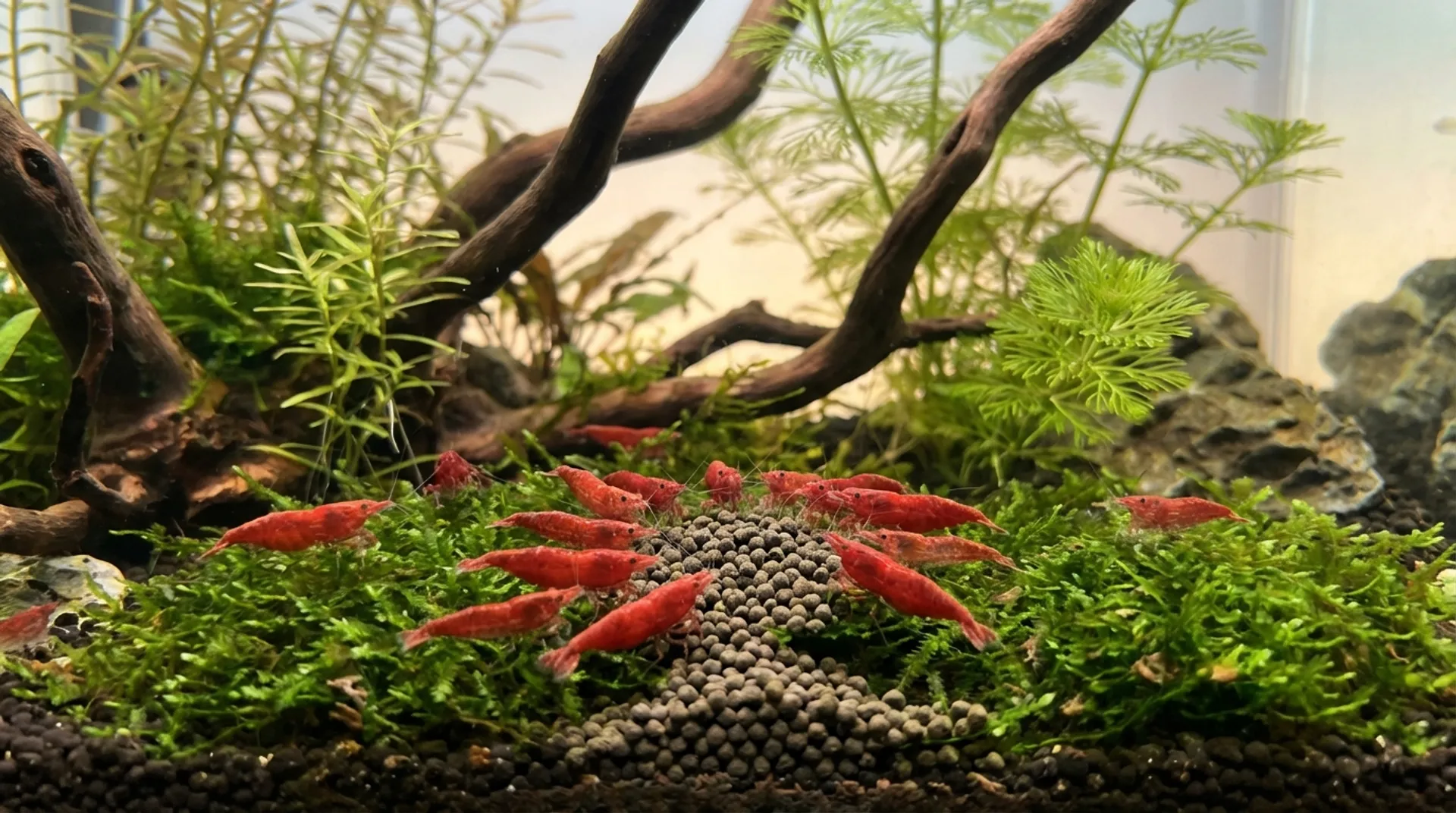
Picture this: you’re standing in front of your shrimp tank, pellet container in hand, wondering if you should feed your little crustacean friends again today. You fed them yesterday, but they seem to be actively foraging around the tank. Are they hungry, or are they just doing what shrimp naturally do? This daily dilemma faces every shrimp keeper, and getting it wrong can spell disaster for your colony.
Feeding frequency is one of the most critical aspects of shrimp care, yet it’s also one of the most misunderstood. Unlike fish that can handle irregular feeding schedules, shrimp have unique digestive systems that process food incredibly quickly. They’re natural grazers that spend most of their waking hours searching for food particles, biofilm, and microorganisms.
The key to successful shrimp keeping lies in understanding that overfeeding is far more dangerous than underfeeding. When you provide too much food, uneaten portions decompose rapidly, creating ammonia spikes that can wipe out entire colonies overnight. This guide will help you establish the perfect feeding routine based on your shrimp’s life stage, tank setup, and colony size.
Understanding Shrimp Digestion
Freshwater dwarf shrimp have incredibly fast digestive systems compared to most aquarium inhabitants. Food passes through their digestive tract in just a few hours, which explains why they’re constantly foraging and grazing. This rapid digestion means they need consistent access to small amounts of food rather than large, infrequent meals.
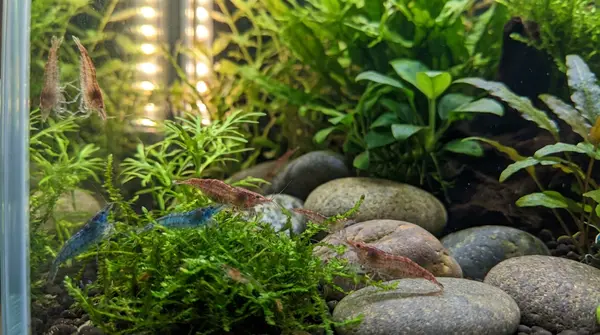
Shrimp are opportunistic feeders that will consume anything from commercial pellets to decaying plant matter, biofilm, and even their own molts. In nature, they spend up to 80% of their time foraging, picking up microscopic particles and organic matter from surfaces throughout their environment.
This natural behavior is crucial to understand because it influences how we should approach feeding in captivity. Rather than thinking of feeding as discrete meal times, consider it as supplementing their natural grazing behavior.
Feeding Schedule by Life Stage
Adult Shrimp (3+ months old)
Adult shrimp should be fed once or twice daily with small portions they can consume within 2-3 minutes. In well-established planted tanks with abundant biofilm and microorganisms, you can reduce this frequency to 2-5 times per week.
The amount should be tiny – think of a pinhead-sized portion of pellets for every 10-20 adult shrimp. Watch your colony’s behavior: if they swarm the food immediately and finish it quickly, you can maintain daily feeding. If food remains after an hour, reduce the quantity or frequency.
Juvenile Shrimp (Under 3 months)
Juvenile shrimp require twice daily feeding to support their rapid growth and frequent molting. Use finely crushed pellets or specialized powder foods that their smaller mouths can handle effectively.
Continue offering powdered supplements 2-3 times per week even after juveniles can handle larger pellets, as the fine particles provide essential nutrients during their development phase.
Breeding Females and Berried Shrimp
Pregnant females carrying eggs need additional nutrition to support egg development and shrimplet growth. Feed breeding females once or twice daily and supplement with protein-rich foods like frozen brine shrimp or specialized breeding supplements 1-2 times per week.
Berried females often become less active feeders, so ensure food reaches their hiding spots by distributing it throughout the tank rather than feeding in one central location.
Tank Setup Impact on Feeding Frequency
Heavily Planted and Bioactive Tanks
Tanks with abundant live plants, driftwood, and established biofilm require less supplemental feeding. The natural ecosystem provides continuous grazing opportunities through:
- Biofilm growth on all surfaces
- Decaying plant matter
- Microorganisms in the substrate
- Algae growth on glass and decorations
In these setups, feed 2-5 times per week and monitor your shrimp’s activity and coloration. Well-fed shrimp in bioactive tanks often display better colors and more active breeding behavior.
Bare or Minimally Planted Tanks
Tanks with limited natural food sources require daily feeding to maintain shrimp health. Without biofilm and natural grazing opportunities, your shrimp depend entirely on the food you provide.
Consider adding driftwood, live plants, or specialized shrimp feeding dishes to create more natural feeding opportunities and reduce dependence on supplemental feeding.
Signs of Proper vs. Improper Feeding
Indicators You’re Feeding Correctly
- Shrimp swarm food immediately when added
- Food disappears within 2-3 minutes
- Active, colorful shrimp with good growth rates
- Regular molting cycles
- Successful breeding activity
- Stable water parameters
Warning Signs of Overfeeding
- Food remains visible after 1 hour
- Cloudy water or bacterial blooms
- Ammonia or nitrite spikes (test weekly)
- Shrimp become lethargic or hide
- Increased deaths without apparent cause
- Film developing on water surface
Signs of Underfeeding
- Shrimp constantly searching substrate
- Pale or faded coloration
- Reduced breeding activity
- Slower growth in juveniles
- Aggressive behavior toward tank mates
Pro tip: If you’re unsure about feeding frequency, err on the side of underfeeding. Healthy shrimp can survive 5-7 days without supplemental food by grazing on biofilm and microorganisms, but they cannot survive poor water quality from overfeeding.
Creating Your Feeding Schedule
Beginner-Friendly Schedule
Monday through Friday: Feed small amounts daily Weekends: Skip feeding or provide variety foods like blanched vegetables
This schedule works well for most setups while reducing weekend overfeeding risks when you might be tempted to “treat” your shrimp.
Advanced Hobbyist Schedule
Daily: Rotate between different food types Monday/Wednesday/Friday: Commercial pellets Tuesday/Thursday: Vegetable supplements Saturday: Protein-rich foods Sunday: Fasting day or biofilm grazing only
Vacation Feeding
For trips up to one week, healthy shrimp colonies can survive without supplemental feeding. For longer absences, use automatic feeders set to dispense minimal amounts every 2-3 days, or ask someone to feed small pinches twice weekly.
Avoid vacation feeding blocks, which often decompose and pollute water faster than shrimp can consume them.
Water Quality and Feeding Connection
Feeding frequency directly impacts water quality, making it essential to monitor parameters regularly. Test ammonia, nitrite, and nitrate levels weekly, especially when adjusting feeding schedules.
Perform 10-15% water changes weekly in well-fed tanks, increasing frequency if you notice parameter fluctuations. Remember that decomposing food produces ammonia much faster than shrimp waste, making overfeeding the primary cause of sudden water quality crashes.
Adjusting Based on Colony Size
As your shrimp colony grows, gradually increase food quantities rather than frequency. A tank that started with 10 shrimp might house 100+ after successful breeding, requiring proportionally more food.
Monitor feeding response regularly – if food disappears in under a minute, slowly increase portions until consumption takes 2-3 minutes. This ensures adequate nutrition without waste.
Conclusion
Successful shrimp feeding comes down to observation, consistency, and restraint. Feed adult shrimp once or twice daily with portions they consume in 2-3 minutes, adjust frequency based on your tank’s natural food sources, and always prioritize water quality over generous feeding.
Remember that shrimp are incredibly resilient grazers that thrive on consistency rather than abundance. Start conservative with your feeding schedule, observe your colony’s response, and make gradual adjustments based on their behavior and your tank’s specific conditions. Your shrimp will reward proper feeding practices with vibrant colors, active breeding, and a thriving colony that brings joy for years to come.
Frequently Asked Questions
Adult shrimp should be fed once or twice daily with small portions they can consume in 2-3 minutes. In heavily planted tanks, you can reduce this to 2-5 times per week.
Yes, overfeeding is more dangerous than underfeeding. It causes ammonia spikes and poor water quality. Remove any uneaten food after 1 hour to prevent decomposition.
Juvenile shrimp need to be fed twice daily with finely crushed or powdered foods to support their rapid growth and development.
No, shrimp in planted tanks with biofilms and microorganisms can be fed less frequently (2-5 times per week) since they graze naturally on tank surfaces.
Healthy shrimp can survive several days without supplemental feeding by grazing on biofilm and algae. Short fasting periods are less harmful than overfeeding.
Feed an amount your shrimp can consume within 2-3 minutes ideally, or 1 hour maximum. Watch for swarming behavior and remove any food that remains after an hour.
Optimize Your Feeding Schedule
Track what you feed and when with ShrimpKeeper. Never overfeed again.
Download FreeRelated Articles
How to Make Your Own Shrimp Food at Home: Complete DIY Guide
Discover how to create cost-effective, nutritious homemade shrimp food that promotes better growth and breeding. Get proven recipes and step-by-step instructions.
What Do Shrimp Eat? Complete Feeding Guide for Healthy Freshwater Shrimp
Discover the complete guide to feeding freshwater aquarium shrimp, from natural biofilm grazing to commercial foods and proper feeding schedules for optimal health.
Why Is My Shrimp Swimming Erratically? Complete Troubleshooting Guide
When your shrimp suddenly start darting around frantically, it's usually a cry for help. Learn to identify the causes and implement life-saving solutions quickly.