
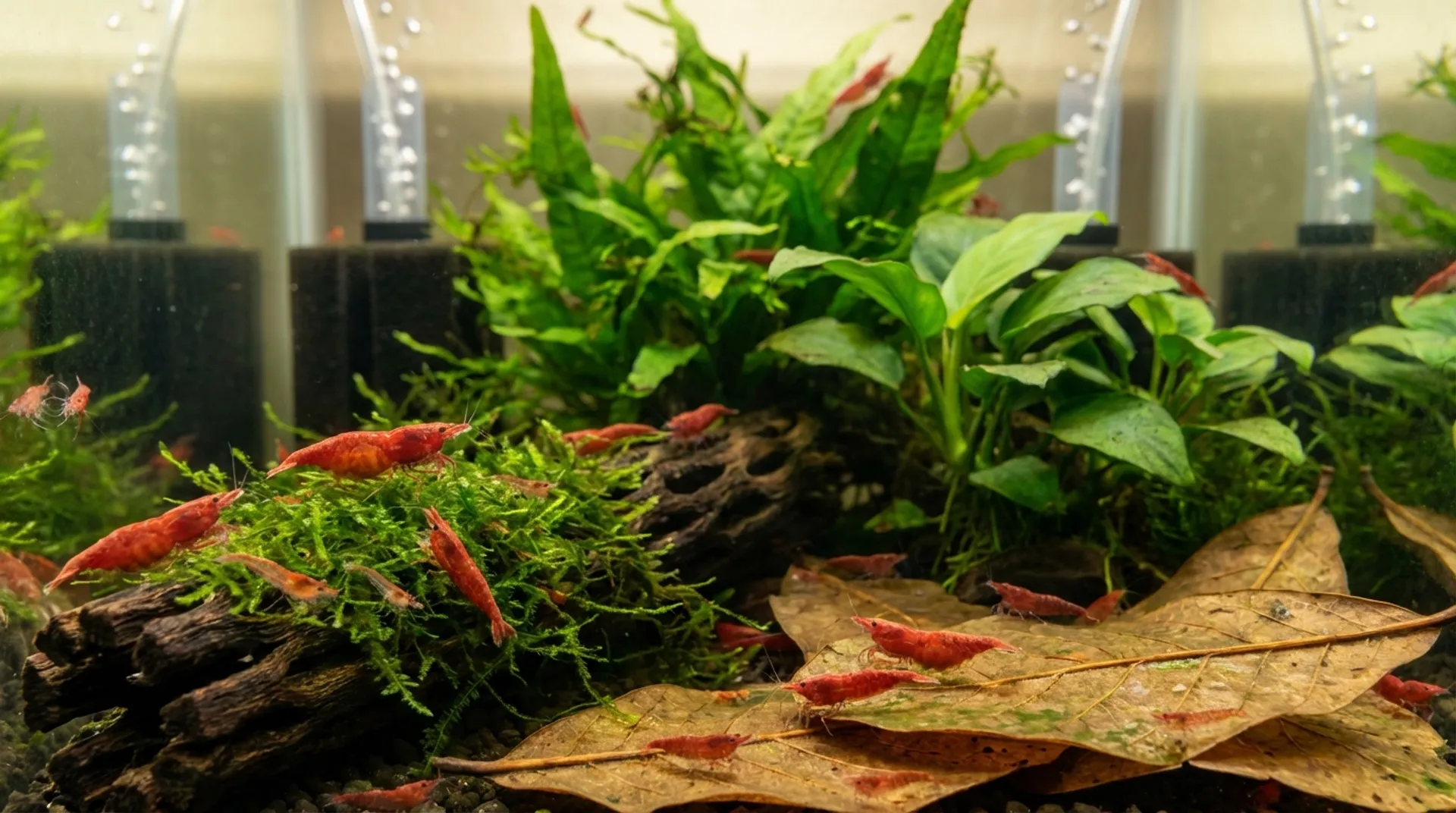
Picture this: you’re watching dozens of tiny red shrimp scurrying around your aquarium, each one potentially worth $3-8 to local hobbyists. With cherry shrimp reproducing every 30 days and colonies that can grow exponentially, it’s easy to see why many aquarists consider breeding them for profit. But before you start calculating your potential earnings, there’s a reality check you need to hear.
While cherry shrimp are indeed prolific breeders and relatively easy to maintain, turning a consistent profit requires much more than just letting nature take its course. Market saturation, color degradation, and the significant scaling required for commercial viability make this venture more challenging than it initially appears. However, with the right approach, realistic expectations, and dedication to quality, it’s possible to generate supplemental income from these fascinating creatures.
This guide will walk you through everything you need to know about breeding cherry shrimp commercially, from the initial setup and breeding basics to the realities of grading, genetics, and market economics.
Understanding Cherry Shrimp Breeding Basics
Cherry shrimp (Neocaridina davidi) are among the most straightforward freshwater invertebrates to breed in captivity. These hardy creatures reach sexual maturity in 4-6 months and can live 1-2 years under proper conditions. Females carry 20-30 eggs for approximately 30 days, fanning them continuously to provide oxygen and keep them clean.
The breeding process is refreshingly simple compared to most aquarium species. Males are typically smaller and more transparent, while females are larger with more intense red coloration. After a female molts, she releases pheromones that attract males for mating. She then carries the fertilized eggs under her tail until they hatch as miniature versions of adult shrimp – no larval stage required.
Pro tip: Colonies typically explode in population after 6-8 months when multiple generations begin breeding simultaneously. This exponential growth is when commercial potential begins to emerge.
Essential Tank Setup for Breeding Success
Successful commercial breeding starts with proper tank setup and unwavering attention to water parameters. Stability trumps perfection – cherry shrimp adapt to a wide range of conditions but struggle with fluctuations.
Water Parameters
- Temperature: 22-26°C (72-79°F) for optimal breeding
- pH: 6.5-8.0 (stable is more important than exact)
- GH: 4-8 dGH (general hardness)
- KH: 3-15 dKH (carbonate hardness)
- TDS: 150-300 ppm
Use dechlorinated tap water and avoid any copper-based medications or fertilizers, which are lethal to shrimp.
Tank Requirements
Start with 20-40 gallon tanks for initial colonies, but serious commercial operations require much larger setups. Many successful breeders use rack systems with multiple 40-75 gallon tanks to segregate different grades and maintain genetic diversity.
Essential equipment includes:
- Gentle sponge filtration (strong currents stress shrimp)
- Live plants like Java moss, Java fern, and Anubias
- Hiding spots such as shrimp caves and cholla wood
- Indian almond leaves (catappa) for biofilm and pH buffering
- Dark substrate to enhance red coloration
Scaling Up for Commercial Production
The leap from hobbyist breeding to commercial production requires significant scaling. While a 10-gallon tank might house 50-100 shrimp comfortably, commercial operations often maintain colonies of 500-1000+ individuals across multiple tanks.
This scaling brings several challenges:
- Water parameter stability becomes more critical with larger bioloads
- Regular maintenance requires 20-30% weekly water changes across multiple systems
- Population monitoring to prevent overcrowding and maintain breeding ratios
- Feeding management with high-protein supplements like Repashy at 45% protein content
Many commercial breeders invest in automated systems for water changes, temperature control, and feeding to manage the workload efficiently.
Genetics and Grading: The Profit Differentiators
Here’s where commercial breeding gets complex. Cherry shrimp grading directly impacts profitability, with high-grade specimens commanding premium prices while low-grade individuals flood the market.
Understanding Color Grades
Cherry shrimp are typically graded from lowest to highest quality:
- Cherry (basic red with clear patches)
- Sakura (more solid red coverage)
- Fire Red (intense red, minimal clear areas)
- Painted Fire Red (solid, deep red coloration)
- Bloody Mary (darkest, most intense red)
The Color Degradation Challenge
Even the highest-grade lines tend to produce lower-grade offspring over time. This means successful commercial breeders must continuously:
- Cull lower-grade individuals to maintain line quality
- Introduce new bloodlines periodically to prevent inbreeding
- Separate breeding groups by grade to maintain genetic integrity
- Keep detailed records of lineages and breeding outcomes
Pro tip: Many breeders find cherry reds easier to maintain than blue or green varieties, making them the most practical choice for commercial breeding.
Market Economics and Realistic Profit Expectations
The harsh reality of cherry shrimp breeding is that market saturation significantly impacts profitability. While high-grade individuals can sell for $3-8 each, the market is flooded with lower-grade specimens selling for $1-3.
Consider these economic factors:
Startup Costs
- Initial breeding stock: $100-300
- Tank setup and equipment: $300-800 per system
- Monthly operating costs: $20-50 per tank (food, electricity, water treatments)
Revenue Potential
- Low-grade shrimp: $1-3 each
- Mid-grade shrimp: $3-5 each
- High-grade shrimp: $5-8 each
- Breeding-age females: $8-15 each
Time Investment
Successful commercial breeding requires significant time investment:
- Daily monitoring and feeding
- Weekly water changes and parameter testing
- Regular grading and culling
- Customer communication and shipping logistics
Common Challenges and Solutions
Commercial cherry shrimp breeding presents several unique challenges that hobbyists rarely encounter at small scales.
Population Explosions: Colonies can quickly become overcrowded, leading to stress, decreased breeding rates, and potential crashes. Regular culling and strategic sales help maintain optimal population density.
Disease Management: Larger populations increase disease risk. Quarantine systems for new stock and immediate isolation of symptomatic individuals are essential.
Shipping Logistics: Live shipping requires specialized packaging, appropriate weather timing, and reliable carrier relationships to maintain customer satisfaction.
Quality Control: Maintaining consistent grading standards while processing hundreds of shrimp requires systematic approaches and honest self-assessment.
Building Your Customer Base
Successful commercial breeders typically develop multiple sales channels:
- Local aquarium stores (wholesale pricing but consistent volume)
- Online marketplaces (higher margins but more competition)
- Local aquarium clubs and forums (relationship-based sales)
- Aquarium shows and conventions (premium pricing opportunities)
Building a reputation for quality and reliability takes time but creates sustainable, repeat business that commands premium pricing.
Conclusion
Breeding cherry shrimp for profit is entirely possible, but success requires realistic expectations, significant dedication, and a long-term perspective. This isn’t a “get rich quick” venture – it’s more accurately described as a way to turn a passionate hobby into supplemental income while contributing to the aquarium community.
The most successful commercial breeders treat it as a serious business: maintaining detailed records, investing in proper equipment, dedicating consistent time to husbandry, and building relationships within the aquarium community. They understand that sustainable profits come from quality over quantity and reputation over volume.
If you’re considering this venture, start small with a single high-quality colony, master the basics of maintaining stable parameters and producing consistent grades, and gradually scale up as you develop systems and customer relationships. With patience, attention to detail, and realistic expectations, cherry shrimp breeding can become a rewarding and profitable extension of your aquarium hobby.
Frequently Asked Questions
Most breeders need 6-12 months to establish large enough colonies for consistent sales. Cherry shrimp reach maturity at 4-6 months, and colonies grow exponentially after 6-8 months with multiple generations breeding simultaneously.
Profits vary widely based on scale, grading quality, and local markets. High-grade cherry shrimp sell for $3-8 each, but market saturation and ongoing expenses make this more of a supplemental income than a primary business for most breeders.
Start with 20-40 gallons for initial colonies, but serious commercial operations require 100+ gallons across multiple tanks or rack systems. Larger volumes provide stability and allow for proper segregation of different grades.
Yes, color degradation is a major challenge. Even high-grade lines like Bloody Mary can fade over generations without selective breeding and regular culling of lower-grade offspring to maintain color intensity.
Market saturation, maintaining color quality through selective breeding, scaling operations while keeping water parameters stable, and the time investment required for grading and culling large populations.
Cherry shrimp are among the easiest freshwater species to breed, requiring no special breeding setup or intervention. Females carry 20-30 eggs for 30 days, producing miniature adults that are immediately independent.
Ready to Breed Your Shrimp?
Track berried females, monitor gestation, and maintain perfect breeding conditions with ShrimpKeeper.
Download FreeRelated Articles
How to Make Your Own Shrimp Food at Home: Complete DIY Guide
Discover how to create cost-effective, nutritious homemade shrimp food that promotes better growth and breeding. Get proven recipes and step-by-step instructions.
Why Is My Shrimp Swimming Erratically? Complete Troubleshooting Guide
When your shrimp suddenly start darting around frantically, it's usually a cry for help. Learn to identify the causes and implement life-saving solutions quickly.
Yellow Golden Back Shrimp Care Guide: Complete Setup & Breeding Tips
Yellow Golden Back Shrimp are stunning, hardy Neocaridina perfect for beginners. Learn proper water parameters, tank setup, and breeding techniques for a thriving colony.