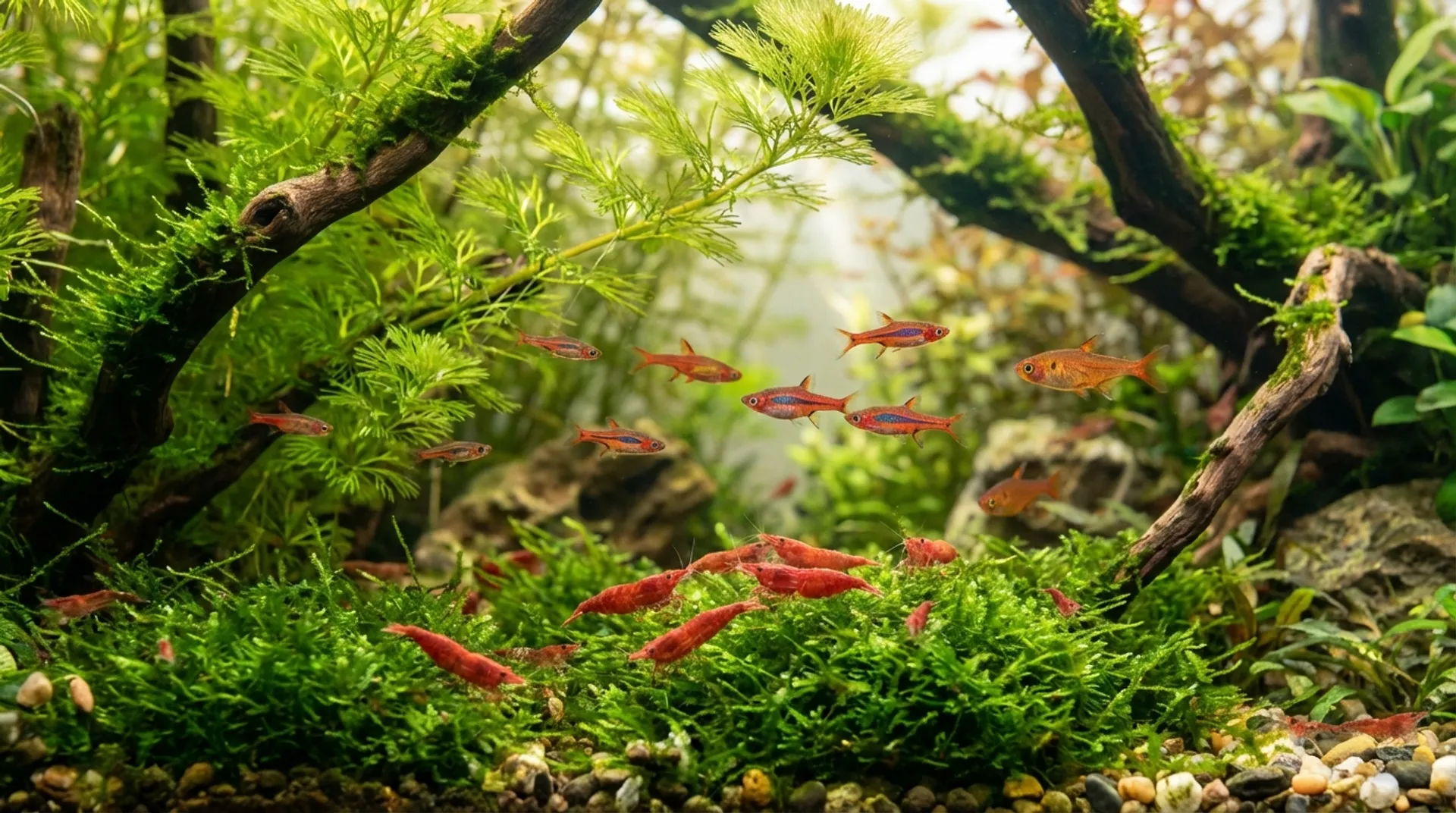
Watching your colorful shrimp colony busily foraging through your aquarium is incredibly rewarding, but many hobbyists wonder if they can safely add fish to create a more dynamic community tank. The good news is that several peaceful fish species can coexist beautifully with shrimp when chosen carefully and introduced properly.
The key to success lies in understanding that not all “peaceful” fish are truly shrimp-safe. Even gentle species may view your precious shrimp as tasty snacks, especially the vulnerable shrimplets. However, with the right species selection, proper tank setup, and careful management, you can create a thriving mixed community that showcases both the industrious nature of shrimp and the graceful swimming patterns of compatible fish.
This comprehensive guide will walk you through the best fish choices for shrimp tanks, essential compatibility criteria, and practical setup tips to ensure your community thrives long-term.
What Makes a Fish Shrimp-Safe?
Before diving into specific species recommendations, it’s crucial to understand the characteristics that make certain fish compatible with shrimp colonies:
Size matters most - Fish under 1.5 inches are generally safer choices. Larger fish, even peaceful ones, may view adult shrimp as food and will almost certainly eat shrimplets.
Mouth size is critical - A fish’s mouth should be too small to easily consume an adult shrimp. Even if they don’t actively hunt, opportunistic feeding on molting or weak shrimp can occur.
Water column preference - The best tank mates occupy different areas of the tank. Mid-water and surface swimmers are less likely to compete directly with bottom-dwelling shrimp.
Temperament and activity level - Hyperactive or aggressive fish stress shrimp and may chase them. Calm, slow-moving species are ideal companions.
Feeding behavior - Algae grazers and microorganism feeders are safer than predatory fish. Avoid species known for hunting small invertebrates.
Top Fish Recommendations for Shrimp Tanks
Nano Schooling Fish
Chili Rasboras (Boraras brigittae) are arguably the perfect shrimp tank mates. At just 0.7 inches fully grown, these tiny red fish add vibrant color while remaining completely non-threatening to even the smallest shrimplets. They prefer soft, slightly acidic water (pH 6.0-7.0) and temperatures of 72-79°F, making them compatible with most Neocaridina varieties.
Ember Tetras (Hyphessobrycon amandae) reach 1 inch and display beautiful orange coloration that complements red cherry shrimp beautifully. They’re peaceful schoolers that occupy the middle water column, leaving the bottom free for shrimp foraging. Maintain groups of 6-8 individuals in tanks 10 gallons or larger.
Celestial Pearl Danios (Danio margaritatus), also called Galaxy Rasboras, grow to 1 inch and feature stunning spotted patterns. They prefer slightly cooler water (70-76°F) and softer parameters (pH 6.5-7.5), making them excellent choices for Caridina shrimp tanks.
Bottom-Dwelling Companions
Pygmy Corydoras (Corydoras pygmaeus) are exceptional shrimp tank mates despite being bottom dwellers. At 1.25 inches, they’re small enough to be safe while helping clean up leftover food. Unlike larger Corydoras, pygmies are less likely to accidentally damage shrimp during their bottom-scouring activities.
Otocinclus Catfish are outstanding algae eaters that ignore shrimp completely. These 1.5-inch fish focus exclusively on biofilm and algae, making them beneficial tank mates that actually improve water quality. They require mature tanks with established biofilm and work best in groups of 3-6.
Peaceful Surface Dwellers
Medaka Ricefish (Oryzias latipes) are incredibly peaceful 1.5-inch fish that spend most time at the surface. Their calm demeanor and different feeding niche make them excellent community members. They tolerate a wide range of parameters (pH 6.5-8.0, temperature 65-75°F).
Pro tip: Always introduce fish to an established shrimp colony, never the reverse. Shrimp are more sensitive to changes and need time to establish hiding spots and territories first.
Invertebrate Tank Mates
Beyond fish, several invertebrate species make excellent shrimp companions:
Nerite Snails are perfect algae-eating partners that won’t reproduce in freshwater, preventing overpopulation. Their varied shell patterns add visual interest while they tirelessly clean glass and decorations.
Mystery Snails (Pomacea bridgesii) are larger but completely peaceful. They help consume excess food and dead plant matter while producing minimal bioload relative to their cleaning efficiency.
Malaysian Trumpet Snails aerate substrate through their burrowing behavior, preventing anaerobic dead spots. While they do reproduce readily, they rarely become problematic in balanced tanks.
Amano Shrimp (Caridina multidentata) are excellent algae eaters that coexist peacefully with smaller Neocaridina species. At 2 inches, they’re too large to be eaten by most fish while remaining non-aggressive toward smaller shrimp.
Fish to Avoid
Certain species, despite being labeled “community fish,” pose significant risks to shrimp colonies:
Bettas have strong predatory instincts and will hunt shrimp, especially in smaller tanks where hiding spots are limited.
Angelfish, Gouramis (except Honey Gouramis), and Dwarf Cichlids are all potential shrimp predators due to their size and feeding behavior.
Pea Puffers are voracious invertebrate hunters that will systematically eliminate your entire colony.
Most Tetras over 1.5 inches, including popular species like Neon Tetras, may eat shrimplets and stress adult shrimp through active swimming.
Goldfish and Koi will consume any shrimp they can catch and have incompatible temperature and space requirements.
Setting Up a Successful Mixed Community
Tank Requirements
Minimum tank size should be 10 gallons for most fish-shrimp combinations, with 20 gallons being ideal for better bioload management and territory establishment.
Water parameters should overlap between chosen species. Most successful combinations thrive in pH 6.5-7.5, temperature 70-78°F, and moderately soft water (GH 4-8, KH 2-6).
Essential Cover and Plants
Dense plant coverage is absolutely critical for shrimplet survival. Java moss, Christmas moss, and moss walls provide ideal nurseries where baby shrimp can hide and feed on biofilm.
Fine-leaved plants like Cabomba, Limnophila, and dense carpeting plants create additional refuge areas throughout the tank.
Driftwood and rock crevices offer supplementary hiding spots and biofilm-producing surfaces.
Introduction Strategy
- Establish the shrimp colony first - Allow 2-3 months for population growth and territory establishment
- Quarantine all new fish for 2-4 weeks to prevent disease introduction
- Introduce fish gradually - Add one species at a time with 2-week intervals
- Monitor behavior closely - Watch for signs of predation or stress for the first month
- Maintain feeding schedules - Ensure both fish and shrimp receive adequate nutrition without overfeeding
Pro tip: Feed fish at one end of the tank while simultaneously dropping shrimp food at the opposite end. This reduces competition and ensures all inhabitants get proper nutrition.
Feeding Considerations
Balancing nutrition in mixed communities requires careful planning. Fish need regular feedings, but excess food can deteriorate water quality that shrimp depend on.
Use high-quality, appropriately-sized fish foods and supplement with shrimp-specific pellets or blanched vegetables. Sinking foods ensure bottom-dwellers like Corydoras and shrimp both receive adequate nutrition.
Monitor for overfeeding signs like uneaten food accumulation or water quality degradation. Shrimp are excellent cleanup crew members but shouldn’t be relied upon to handle excessive waste.
Breeding Considerations
If shrimp breeding is your primary goal, consider keeping only the smallest, most peaceful fish or maintaining a shrimp-only setup. Even compatible fish will consume some shrimplets, reducing overall reproduction success.
For maximum shrimplet survival in community tanks, provide extensive moss coverage and consider adding breeding caves or dense plant thickets where pregnant females can safely molt and carry eggs.
Conclusion
Creating a successful shrimp and fish community requires careful species selection, proper setup, and ongoing management. Focus on small, peaceful fish that occupy different water layers and share similar parameter requirements with your shrimp.
Remember that even “safe” fish may occasionally consume shrimplets, so dense plant coverage and multiple hiding spots are essential. Start with established shrimp colonies, introduce fish gradually, and monitor interactions closely during the first few weeks.
With patience and proper planning, you can enjoy a vibrant mixed community that showcases the best of both shrimp keeping and fish keeping in one beautiful aquarium.
Frequently Asked Questions
The safest fish for cherry shrimp are small, peaceful species like Chili Rasboras, Ember Tetras, Celestial Pearl Danios, and Pygmy Corydoras. These fish are under 1.5 inches, occupy different water levels, and rarely bother adult shrimp.
Most fish will eat shrimplets if given the chance, even peaceful species. Dense plant cover, Java moss, and hiding spots are essential for shrimplet survival in community tanks with any fish present.
Bettas are generally not recommended with shrimp as their predatory instincts and territorial behavior make them likely to hunt and eat shrimp. Individual temperament varies, but the risk is high.
Most shrimp-safe fish thrive in pH 6.5-7.5, temperature 70-78°F (21-25°C), and soft to moderately hard water. These parameters overlap well with Neocaridina shrimp requirements.
In a 10-gallon tank, limit yourself to small schools of 6-8 nano fish like Chili Rasboras or 3-4 Pygmy Corydoras. Keep bioload light to maintain water quality for shrimp.
Yes, always quarantine new fish for 2-4 weeks before introduction. Shrimp are sensitive to diseases and medications, so preventing disease introduction is critical for colony health.
Track Your Parameters Like a Pro
Stop guessing if your water is right. ShrimpKeeper tracks TDS, GH, KH, pH, and temperature with species-specific recommendations.
Download FreeRelated Articles
How to Make Your Own Shrimp Food at Home: Complete DIY Guide
Discover how to create cost-effective, nutritious homemade shrimp food that promotes better growth and breeding. Get proven recipes and step-by-step instructions.
Why Is My Shrimp Swimming Erratically? Complete Troubleshooting Guide
When your shrimp suddenly start darting around frantically, it's usually a cry for help. Learn to identify the causes and implement life-saving solutions quickly.
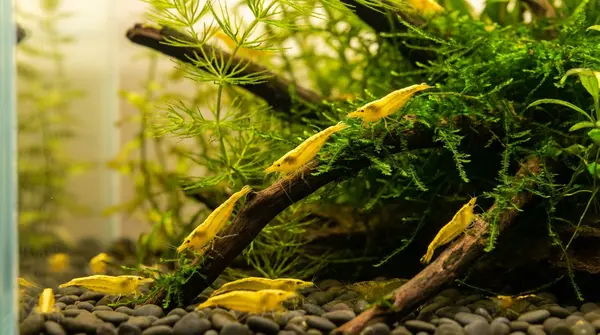
Yellow Golden Back Shrimp Care Guide: Complete Setup & Breeding Tips
Yellow Golden Back Shrimp are stunning, hardy Neocaridina perfect for beginners. Learn proper water parameters, tank setup, and breeding techniques for a thriving colony.