
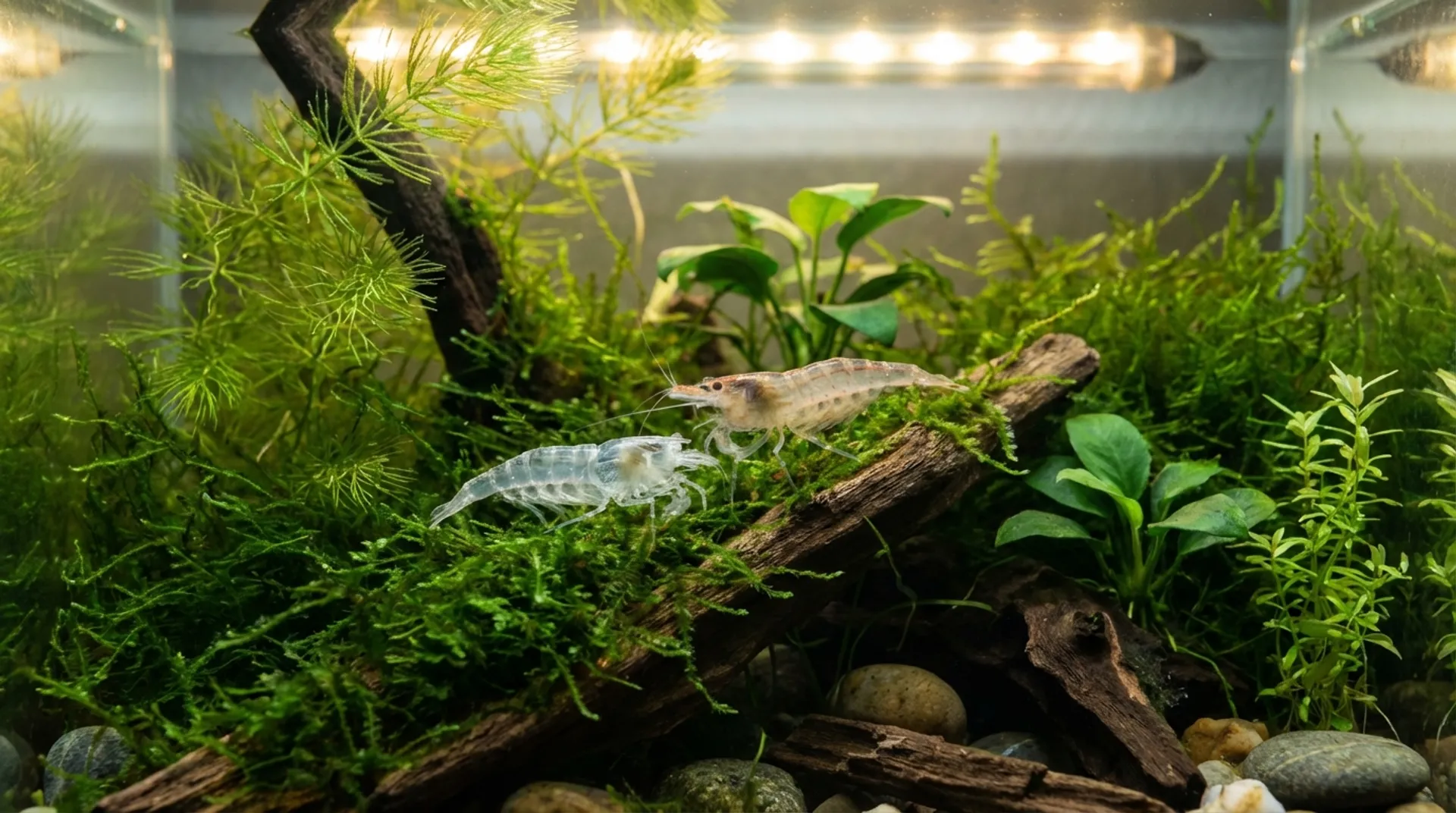
Picture this: you’re doing your morning tank check when you spot what looks like a dead shrimp on the substrate. Your heart sinks as you reach for the net, only to realize it’s completely translucent and intact - just an empty shell. Meanwhile, somewhere in the moss, the actual shrimp is hiding with a brand new, soft exoskeleton that will harden over the next few days.
This scenario plays out in shrimp tanks worldwide, often causing unnecessary panic among new hobbyists. Molting is one of the most fascinating yet misunderstood aspects of shrimp keeping. Understanding the difference between normal molting and dangerous molt failures can mean the difference between a thriving colony and repeated losses.
In this comprehensive guide, we’ll explore everything you need to know about shrimp molting - from recognizing healthy molt cycles to preventing and troubleshooting common problems that can devastate your colony.
What Is Molting and Why Does It Happen?
Molting, scientifically known as ecdysis, is the process where shrimp shed their rigid exoskeleton to grow larger. Unlike vertebrates that grow continuously, crustaceans are trapped inside their hard shells and must periodically break free to expand.
The molting cycle consists of four distinct phases:
- Pre-molt: The shrimp’s body begins swelling as a new, soft cuticle forms underneath the existing shell
- Inter-molt: Internal preparation occurs as the shrimp builds energy reserves
- Ecdysis: The actual shedding process where the shrimp exits its old shell
- Post-molt: The new exoskeleton hardens and becomes mineralized over 42-72 hours
Young, rapidly growing shrimp molt much more frequently than adults. Juvenile shrimp may molt every 5-7 days, while mature adults typically molt every 3-6 weeks depending on species, temperature, and nutrition.
Recognizing Normal Molting Behavior
Healthy molting follows predictable patterns that every shrimp keeper should recognize:
Before Molting
- Reduced grazing and feeding activity
- Increased hiding behavior in moss or plants
- Slightly swollen appearance as the new shell forms
- Some species show a “white ring of death” around the neck area (this is actually normal pre-molt preparation, not a disease)
During and After Molting
- An intact, translucent exoskeleton left behind
- The shrimp disappears into hiding spots for 1-3 days
- Gradual return to normal activity as the shell hardens
- Often improved coloration and vitality after successful molts
Pro tip: Don’t panic if you can’t find your shrimp immediately after discovering a molt. They instinctively hide when vulnerable and will reappear once their new shell hardens sufficiently.
Warning Signs of Problematic Molting
While molting is natural, several red flags indicate serious problems:
Immediate Danger Signs
- Shrimp stuck halfway out of their old shell
- Shredded or incomplete exuviae
- Finding a molt but the shrimp never reappears after 24 hours
- Multiple shrimp dying during molting attempts
- White, mushy appearance in newly molted shrimp
Chronic Issues
- Excessively frequent molting without proper hardening time
- Delayed or missing molts in active shrimp
- Repeated molt failures across the colony
- Poor coloration or lethargy following molts
Essential Water Parameters for Healthy Molting
Successful molting depends heavily on proper water chemistry, particularly mineral content:
Critical Parameters
- GH (General Hardness): 4-8 dGH for most species
- KH (Carbonate Hardness): 1-5 dKH for buffering
- pH: 6.5-7.5 depending on species
- TDS: Species-specific (150-250 ppm for Neocaridina, 90-150 ppm for Caridina)
- Temperature: Stable within species range
The Mineral Connection
Calcium and iodine are absolutely crucial for exoskeleton formation. Calcium provides structural strength, while iodine supports chitin synthesis - the protein that forms the exoskeleton framework.
If you use RO/DI water, remineralize with shrimp-specific products that include these essential trace elements. Tap water users should test and adjust GH/KH if levels are too low.
Pro tip: Perform water changes slowly and consistently. Large, sudden changes (over 30-50%) can trigger stress molts when shrimp aren’t prepared, leading to failures.
Supporting Successful Molts Through Environment
Hiding Places Are Critical
Newly molted shrimp are incredibly vulnerable with soft shells that take days to harden. Provide abundant cover through:
- Dense mosses (Java moss, Christmas moss)
- Fine-leaved plants (Cabomba, Hornwort)
- Driftwood caves and crevices
- Commercial shrimp tubes or ceramic rings
Tank Mates and Stress
Even peaceful fish may attack soft, newly molted shrimp. If keeping mixed tanks, ensure overwhelming hiding options or consider species-only setups for valuable breeding colonies.
Nutrition’s Role in Molting Success
Proper nutrition supports both the energy demands of molting and provides building blocks for new exoskeletons:
Balanced Diet Essentials
- High-quality shrimp pellets with calcium
- Blanched vegetables (spinach, zucchini, peas)
- Occasional protein sources (bloodworms, brine shrimp)
- Mineral supplements containing calcium and iodine
The Molt-Eating Mystery
Many new keepers worry when shrimp eat their old shells, but this behavior is completely normal and beneficial. The exuviae contains valuable calcium and other minerals that the shrimp recycles for its new exoskeleton.
Troubleshooting Common Molting Problems
Frequent Molt Failures
Symptoms: Multiple shrimp dying during molting Solutions:
- Test and correct GH/KH levels immediately
- Add calcium supplementation
- Eliminate parameter swings
- Reduce feeding to prevent water quality issues
Stress Molts After Water Changes
Symptoms: Sudden molting following maintenance Solutions:
- Reduce water change volume to 15-20%
- Use drip acclimation for new water
- Match temperature and TDS closely
- Extend time between changes if necessary
Incomplete or Stuck Molts
Symptoms: Shrimp trapped in old shell Solutions:
- Usually indicates mineral deficiency
- Increase calcium/iodine supplementation gradually
- Ensure stable parameters
- Consider quarantine for affected individuals
Species-Specific Considerations
Different shrimp species have varying molting requirements:
- Neocaridina (Cherry shrimp): More tolerant of parameter fluctuations, molt every 3-4 weeks as adults
- Caridina (Crystal shrimp): Require more stable conditions, sensitive to parameter changes
- Amano shrimp: Larger species with longer molt cycles, need higher GH levels
Always research your specific species’ requirements, as generalized advice may not apply to specialized varieties.
Creating a Molting-Friendly Routine
Establish these practices for consistent molting success:
- Weekly Testing: Monitor GH, KH, pH, and TDS
- Consistent Water Changes: 15-20% every 1-2 weeks with matched parameters
- Mineral Supplementation: Regular calcium/iodine dosing for soft water
- Observation Logs: Track molting frequency and success rates
- Emergency Protocol: Know how to respond to molt failures quickly
Conclusion
Understanding shrimp molting transforms it from a source of anxiety into a fascinating window into your colony’s health. Normal molting indicates thriving shrimp with proper nutrition and water conditions, while molt problems serve as early warning signs requiring immediate attention.
Remember that prevention through stable parameters, adequate minerals, and proper environment is far easier than treating molt failures after they occur. By maintaining consistent water chemistry, providing abundant hiding places, and feeding a balanced diet, you’ll support successful molts that keep your shrimp growing, reproducing, and displaying their best colors.
Start implementing these molting best practices today, and watch as your shrimp colony thrives through each successful molt cycle.
Frequently Asked Questions
Young shrimp molt every 5-7 days while adults typically molt every 3-6 weeks. The frequency depends on species, temperature, diet, and age - warmer water and better nutrition increase molting frequency.
Yes, finding intact translucent shells (exuviae) is completely normal. These are molted exoskeletons, not dead shrimp. Many shrimp eat their old shells to reclaim minerals for their new exoskeleton.
After molting, shrimp remain soft and vulnerable for 42-72 hours while their new exoskeleton hardens and mineralizes. During this time, they hide and avoid activity.
Molt failure is typically caused by poor water parameters, mineral deficiencies (especially calcium and iodine), sudden parameter changes, high stress, or inadequate nutrition. Stable conditions and proper minerals prevent most failures.
Generally no - leave molted shells in the tank as shrimp eat them to recover calcium and nutrients. Only remove them if they're causing water quality issues or you prefer the aesthetic.
Maintain stable GH 4-8, KH 1-5, pH 6.5-7.5, and appropriate TDS for your species. Consistent parameters with adequate calcium and trace elements are crucial for successful molts.
Track Your Parameters Like a Pro
Stop guessing if your water is right. ShrimpKeeper tracks TDS, GH, KH, pH, and temperature with species-specific recommendations.
Download FreeRelated Articles
How to Treat Bacterial Infections in Shrimp: Complete Recovery Guide
Bacterial infections can devastate shrimp colonies, but with early detection and proper treatment, most shrimp can make a full recovery. Learn the warning signs and proven treatment methods.
Signs Your Shrimp Are Stressed and How to Help
Stressed shrimp show clear warning signs like erratic swimming, color loss, and hiding behavior. Learn to recognize these symptoms early and take action to save your colony.
How to Make Your Own Shrimp Food at Home: Complete DIY Guide
Discover how to create cost-effective, nutritious homemade shrimp food that promotes better growth and breeding. Get proven recipes and step-by-step instructions.