
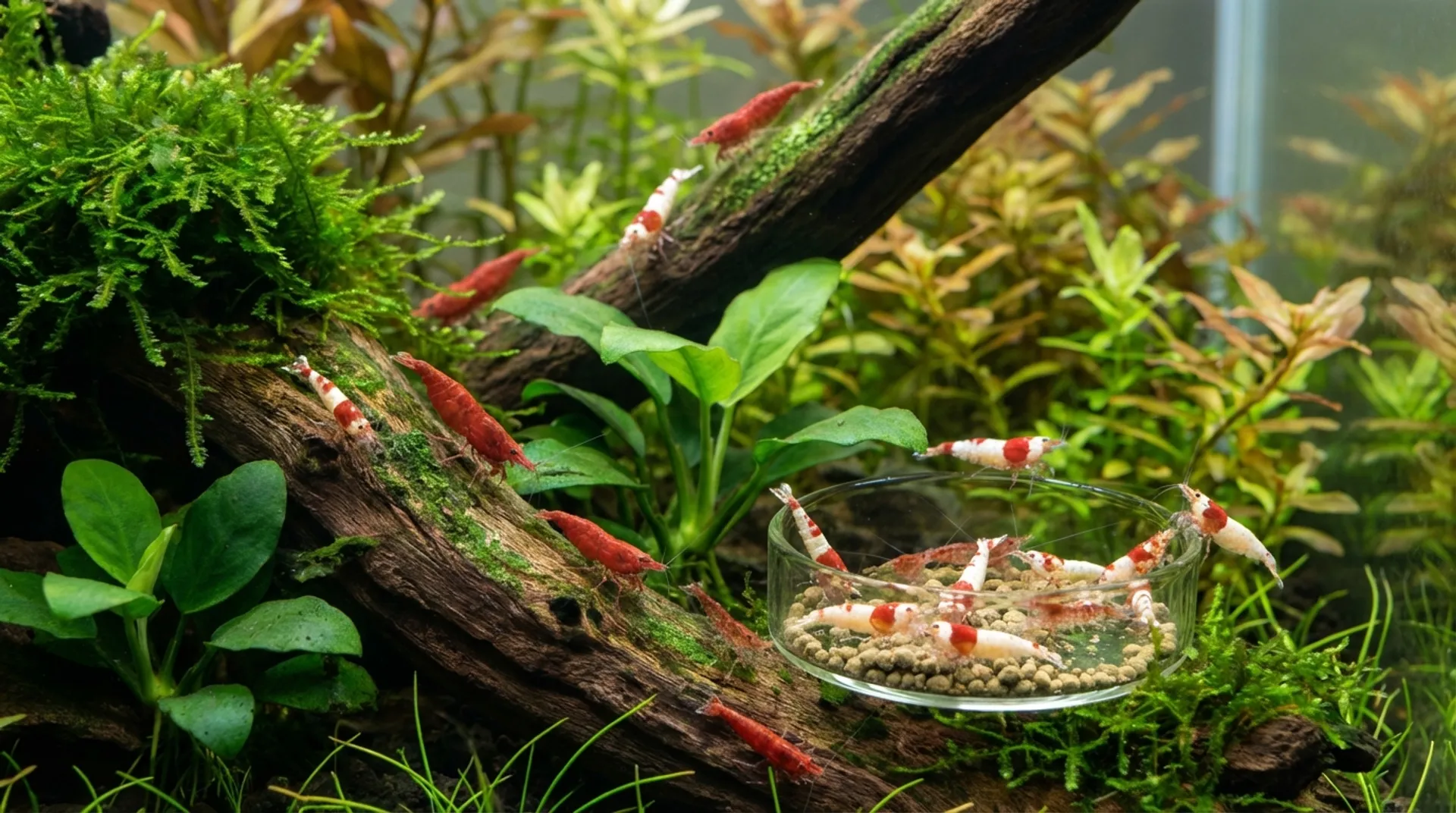
Picture this: you’ve just set up your first shrimp tank, and those tiny Cherry Shrimp are constantly moving around, seemingly eating something invisible. What exactly are they munching on, and should you be worried they’re not getting enough food? Understanding what shrimp eat is crucial for their health, successful breeding, and vibrant colors.
Freshwater aquarium shrimp are natural grazers and omnivores, spending most of their day searching for food particles, biofilm, and algae. Unlike fish that need scheduled meals, shrimp have extremely fast digestive systems that require constant access to food sources. Getting their diet right means understanding both their natural feeding behaviors and how to supplement appropriately in captivity.
This complete feeding guide will walk you through everything from natural foods that should form the foundation of their diet to commercial options and feeding schedules that keep your shrimp colony thriving without compromising water quality.
Natural Foods: The Foundation of Shrimp Nutrition
In the wild and in well-established aquariums, shrimp spend their time grazing on naturally occurring foods that provide complete nutrition. These natural food sources should form 80% or more of your shrimp’s diet.
Biofilm and Bacterial Growth
Biofilm is the invisible layer of bacteria, fungi, and microorganisms that grows on all surfaces in your aquarium. This slimy coating on plants, driftwood, rocks, and glass contains:
- Essential bacteria and microorganisms
- Proteins and amino acids
- Vitamins and minerals
- Digestible fiber
Shrimp can graze biofilm continuously without any risk of overfeeding. In established planted tanks with good biofilm development, many shrimp colonies thrive with minimal supplemental feeding.
Algae Varieties
Shrimp eagerly consume most types of algae, including:
- Green algae on glass and plants
- Brown diatoms (especially beneficial for new tanks)
- Soft green hair algae
- Biofilm-associated microalgae
While they’ll eat algae, don’t rely on algae blooms to feed your shrimp. A balanced ecosystem with controlled algae growth is healthier than letting algae take over.
Decaying Plant Matter
Organic debris provides essential nutrients:
- Fallen aquarium plant leaves
- Decomposing root matter
- Mulm (organic sediment)
- Indian almond leaves or other botanicals
This plant matter breaks down slowly, providing a steady food source while adding beneficial tannins to the water.
Pro tip: Add a few Indian almond leaves to your shrimp tank. As they decompose, they provide food while releasing beneficial compounds that support shrimp health and natural coloration.
Commercial Shrimp Foods
While natural foods should be the foundation, high-quality commercial foods ensure your shrimp get complete nutrition, especially for breeding and optimal growth.
Comprehensive Daily Foods
These complete foods can be offered 1-3 times weekly as your base supplemental feeding:
- Shrimp King Complete: Balanced daily nutrition with proper protein levels
- Pure Nordic Daybyday: Comprehensive nutrition focusing on natural ingredients
- Hwa Comprehensive: Well-regarded option with balanced nutritional profile
- Dennerle Shrimp King Active: Supports activity and natural behaviors
Offer just 1-2 small pellets per 10 shrimp, and remove any uneaten food after 2 hours.
Protein-Rich Foods
Use protein supplements 1-2 times weekly, especially for breeding colonies or growing juveniles:
- Shrimp King Protein: High-quality protein without excess that causes molting issues
- Pure Nordic Aminostix: Amino acid-rich sticks for growth and breeding
- Brine shrimp (frozen/freeze-dried): Natural protein source, use sparingly
- Mosquito larvae: Occasional treat, but avoid overfeeding protein
Specialized Supplements
Mineral Supplements
Crucial for proper molting, especially in soft water:
- Shrimp King Mineral: Offer twice weekly in RO or soft water setups
- Pure Nordic Saltix: Mineral supplement for molting support
- Calcium-rich foods for shell development
Foods for Shrimplets (Baby Shrimp)
Baby shrimp need finely ground foods:
- Nutridust or Nutrigreens: Powdered foods for filter-feeding babies
- Crushed adult pellets
- Specialized shrimplet powders
- Feed powder supplements 2+ times weekly for growing babies
Fresh and Blanched Vegetables
Vegetables provide fiber, vitamins, and variety. Offer blanched vegetables 2-3 times weekly:
Best Vegetable Options
- Spinach: High in minerals, blanch for 30 seconds
- Zucchini: Popular choice, easy to prepare
- Cucumber: Low nutrition but enjoyed by most shrimp
- Broccoli: Nutrient-dense, blanch until bright green
- Kale: High in vitamins, use organic only
- Brussels sprouts: Occasional treat, high in nutrients
Preparation Guidelines
- Use only organic vegetables to avoid pesticides
- Blanch in boiling water for 30-60 seconds
- Cool in ice water to stop cooking
- Cut into small pieces appropriate for your shrimp size
- Remove any uneaten portions after 1 hour to prevent water quality issues
Pro tip: Prepare vegetables in batches and freeze portions. This makes it easy to offer variety without waste, and frozen vegetables often break down more easily for shrimp to consume.
Feeding Schedule and Frequency
Proper feeding frequency is more important than food variety. Shrimp need constant grazing opportunities rather than large meals.
Daily Routine
- Natural grazing: Ensure constant access to biofilm and algae
- Supplemental feeding: Only when natural foods are depleted
- Observation time: Watch feeding behavior to gauge hunger levels
Weekly Schedule Example
- Monday: Comprehensive pellets (1-2 pellets per 10 shrimp)
- Tuesday: Natural grazing only
- Wednesday: Blanched vegetable (remove after 1 hour)
- Thursday: Natural grazing only
- Friday: Protein supplement (very small amount)
- Saturday: Mineral supplement (soft water tanks)
- Sunday: Natural grazing only
Tank-Specific Considerations
Community Tanks
Shrimp in community tanks often get adequate nutrition from:
- Fish food leftovers
- Natural biofilm growth
- Minimal supplemental feeding needed (1-2 times weekly)
Shrimp-Only Tanks
Dedicated shrimp tanks may need more supplemental feeding:
- Daily feeding may be necessary if biofilm is limited
- Monitor natural food availability closely
- Adjust feeding based on shrimp activity and interest in food
Nutritional Requirements
Understanding what shrimp need nutritionally helps you make better feeding decisions:
Essential Nutrients
- Protein: Moderate levels (avoid excess that causes molting problems)
- Calcium: Critical for shell development and successful molting
- Fiber: From plant matter and biofilm for proper digestion
- Vitamins: Especially C, E, and B-complex for immunity and metabolism
- Minerals: Balanced calcium-phosphorus ratio for shell health
Nutritional Focus by Life Stage
- Adults: Balanced nutrition with emphasis on plant matter (70-80%)
- Breeding females: Increased calcium and moderate protein
- Shrimplets: Higher protein needs but still plant-matter focused
- Elderly shrimp: Easily digestible foods, softer options
Signs of Overfeeding and Prevention
Overfeeding is one of the most common mistakes in shrimp keeping and can be fatal to your colony.
Warning Signs
- Water quality issues: Cloudy water, ammonia spikes, bacterial blooms
- Behavioral changes: Shrimp ignoring new food offerings
- Physical signs: Food remaining after 2 hours, film on water surface
- Health problems: Molting failures, white ring of death, sudden deaths
Prevention Strategies
- Feed less than you think: Shrimp are efficient at finding food
- Remove uneaten food: Use a turkey baster after 1-2 hours
- Test water parameters: Monitor ammonia, nitrites, and nitrates
- Focus on natural foods: Encourage biofilm and algae growth
- Use feeding dishes: Makes food removal easier and prevents waste spread
Recovery from Overfeeding
If you’ve overfed:
- Stop all supplemental feeding immediately
- Increase water changes (25% daily until parameters stabilize)
- Remove all visible uneaten food
- Monitor water parameters closely
- Resume minimal feeding only when water quality is stable
Pro tip: If your shrimp aren’t immediately interested in food you offer, they’re probably finding plenty of natural food sources. This is actually a good sign of a healthy, established tank ecosystem.
Conclusion
Successful shrimp feeding is about understanding their natural grazing behavior and supporting it rather than replacing it. Focus on maintaining excellent biofilm growth and natural food sources, then supplement minimally with high-quality commercial foods and occasional vegetables. Remember that less is almost always more when it comes to feeding shrimp.
The key to healthy, breeding shrimp colonies is providing constant access to natural foods while avoiding the water quality problems that come from overfeeding. Start with minimal supplemental feeding and increase only if you observe signs that natural food sources are insufficient. Your shrimp will reward you with vibrant colors, active behavior, and successful breeding when their nutritional needs are met naturally and sustainably.
Frequently Asked Questions
Freshwater shrimp primarily graze on biofilm, algae, and decaying plant matter. These natural foods contain bacteria, fungi, and microalgae that provide essential nutrients and fiber for proper digestion.
Provide daily grazing access to natural foods like biofilm and algae. Supplement with commercial foods only 1-3 times weekly in small portions, as shrimp need constant grazing rather than large meals.
Use comprehensive shrimp pellets like Shrimp King Complete or Pure Nordic Daybyday as basics. Add protein-rich sticks 1-2 times weekly for breeding, and mineral supplements twice weekly in soft water tanks.
Yes, blanched vegetables like spinach, zucchini, cucumber, and broccoli make excellent supplements 2-3 times weekly. Always use organic vegetables, blanch them first, and remove after 1 hour to prevent water quality issues.
Signs of overfeeding include cloudy water, uneaten food after 1-2 hours, shrimp ignoring new food, and bacterial blooms. Overfeeding can cause molting failures and water quality problems.
Yes, baby shrimp (shrimplets) need finely powdered foods like Nutridust or crushed pellets since they can't handle large pieces. Feed powder supplements 2+ times weekly until they can graze on regular pellets.
Optimize Your Feeding Schedule
Track what you feed and when with ShrimpKeeper. Never overfeed again.
Download FreeRelated Articles
How to Make Your Own Shrimp Food at Home: Complete DIY Guide
Discover how to create cost-effective, nutritious homemade shrimp food that promotes better growth and breeding. Get proven recipes and step-by-step instructions.
How Often Should You Feed Your Shrimp? The Complete Feeding Schedule Guide
Discover the optimal feeding frequency for healthy, thriving shrimp colonies. Learn when, how much, and what to feed based on your tank setup and shrimp life stages.
Why Is My Shrimp Swimming Erratically? Complete Troubleshooting Guide
When your shrimp suddenly start darting around frantically, it's usually a cry for help. Learn to identify the causes and implement life-saving solutions quickly.