

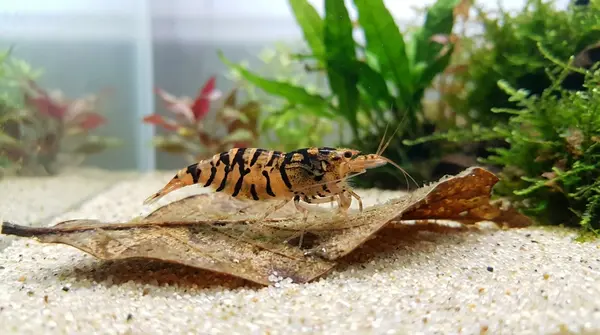
What Are Tiger Shrimp?
Tiger Shrimp (Caridina mariae) are a fascinating group of freshwater dwarf shrimp native to southern China and Hong Kong. They get their name from the distinctive dark stripes running along their semi-transparent bodies, reminiscent of tiger markings. Through years of selective breeding, hobbyists have developed stunning color varieties including the famous Orange Eye Blue Tiger (OEBT).
What makes Tiger Shrimp special in the hobby is their middle-ground position between beginner-friendly Neocaridina and demanding Crystal/Taiwan Bee shrimp. They’re more forgiving than Crystal Shrimp while still offering beautiful colors and interesting breeding projects.
Why Choose Tiger Shrimp?
Tiger Shrimp are an excellent choice for:
- Intermediate keepers ready to move beyond Neocaridina
- Those who want Caridina aesthetics without extreme parameter requirements
- Hybridization projects (creating Tibee and Fancy Tiger varieties)
- Keepers who can’t commit to RO-only water systems
They’re NOT ideal if you:
- Want shrimp that breed 100% true to color
- Prefer the most beginner-friendly option (choose Neocaridina)
- Want the extreme colors of Taiwan Bee (those need stricter parameters)
Tiger Shrimp vs Other Caridina
Understanding where Tiger Shrimp fit in the Caridina family helps you provide appropriate care.
| Parameter | Neocaridina | Tiger Shrimp | Crystal/Taiwan Bee |
|---|---|---|---|
| pH | 6.8-8.0 | 6.5-7.5 | 5.8-6.8 |
| GH | 6-12 dGH | 4-10 dGH | 4-6 dGH |
| KH | 2-8 dKH | 0-4 dKH | 0-1 dKH |
| TDS | 150-300 ppm | 130-220 ppm | 100-150 ppm |
| Temperature | 70-78F | 68-77F | 68-74F |
| RO Water | Optional | Recommended | Required |
| Active Substrate | Not needed | Optional | Required |
| Difficulty | Beginner | Intermediate | Advanced |
Key Differences
Compared to Neocaridina:
- Tigers need softer water with lower TDS
- Tigers prefer slightly cooler temperatures
- Tigers benefit from RO water (though some succeed with soft tap)
- Tigers are more sensitive to parameter swings
Compared to Crystal/Taiwan Bee:
- Tigers tolerate higher pH (neutral rather than acidic)
- Tigers can handle some KH (don’t need zero)
- Tigers don’t require active buffering substrate
- Tigers are more forgiving of minor parameter fluctuations
- Tigers are generally hardier and less prone to bacterial infections
The Taxonomy Confusion
You’ll see Tiger Shrimp labeled as both Caridina mariae and Caridina cantonensis (or cf. cantonensis). Here’s the clarification:
In 2014, researchers Klotz & von Rintelen formally described Tiger Shrimp as Caridina mariae, distinguishing them from the related Caridina cantonensis (Bee Shrimp/Crystal Shrimp).
Key distinctions:
- C. mariae (Tiger): Semi-transparent body with dark tiger stripes, stripes extend across carapace and abdominal segments
- C. cantonensis (Bee/Crystal): Numerous small spots, bands rather than stripes
Why it matters: Despite being different species, Tigers and Bees can interbreed and produce fertile offspring. This has led to popular hybrids like Tibee and Fancy Tiger shrimp.
All Tiger Shrimp Varieties
Orange Eye Blue Tiger (OEBT)
Orange Eye Blue Tiger shrimp are the most sought-after Tiger variety. Their striking combination of blue body coloration and distinctive orange eyes makes them instantly recognizable.
Critical breeding note: OEBTs do NOT breed true. Offspring show significant variation:
- Some will be solid blue (desired)
- Many will be blonde or light-colored
- Some may have brownish rather than orange eyes
Maintaining a quality OEBT colony requires regular culling - removing lighter-colored individuals from the breeding population. Without culling, your colony will drift toward lighter colors over generations.
The orange eye genetics: The bright orange eyes result from a lack of rhodopsin, a light-sensitive pigment. This genetic trait may cause reduced vision or partial blindness, which is why OEBTs often appear “bolder” than other shrimp - they simply can’t see predators as well.
OEBT Grading:
| Grade | Characteristics |
|---|---|
| Low | Splotchy, translucent blue; brownish eyes |
| Medium | Solid blue body with transparent legs/underbelly |
| High | Fully opaque blue including legs; bright orange eyes |
| Royal | Extremely dark blue, almost black; no visible stripes |
Super Tiger
Super Tiger shrimp represent the “enhanced” wild-type Tiger pattern. They feature:
- Intense, well-defined stripes (darker and more pronounced than standard Tigers)
- Semi-transparent base coloration
- Bold patterning that makes stripes “pop”
Super Tigers are excellent for breeding projects when you want to emphasize the classic tiger pattern.
Royal Blue Tiger
Royal Blue Tiger shrimp are the darkest blue Tiger variety:
- Extremely deep blue coloration appearing almost black
- Blue coverage so complete that tiger stripes may be invisible
- Most have orange eyes (Orange Eye Royal Blue Tiger - OERBT)
Royal Blue Tigers command premium prices due to their intense coloration. They’re essentially the “highest grade” of the blue Tiger line.
Aura Blue Tiger
Aura Blue Tiger shrimp display a unique characteristic:
- Blue coloration appears to “glow” or emanate from within
- Softer, more ethereal appearance than solid Blue Tigers
- Tiger stripes still visible through the “aura” effect
The aura effect is best visible under proper lighting against dark backgrounds.
Fancy Tiger Hybrids
Fancy Tigers are hybrids between Tiger Shrimp (C. mariae) and Taiwan Bee/Crystal Shrimp (C. cantonensis). They combine:
- Tiger stripe patterns
- Taiwan Bee intense coloration
Blue Fancy Tiger
Blue Fancy Tiger shrimp feature blue tiger stripes on lighter backgrounds. They often show:
- Blue striping from Taiwan Bee genetics
- Tiger pattern from C. mariae genetics
- Some specimens may have orange eyes (OEBT influence)
Red Fancy Tiger
Red Fancy Tiger shrimp display vivid red stripes:
- Red coloration inherited from Crystal Red/Taiwan Bee lines
- Tiger striping pattern
- Often show good “hybrid vigor” - hardier than pure Taiwan Bee
Breeding Fancy Tigers: Because they’re hybrids, offspring show significant variation. F1 hybrids often breed relatively true, but subsequent generations produce more varied patterns. This can be frustrating for some keepers but exciting for those who enjoy selective breeding projects.
Wild Type Tiger
Standard Tiger Shrimp with natural coloration:
- Semi-transparent body
- Dark brown to black stripes
- No selective breeding for enhanced color
Wild types are hardy and affordable, making them good starter Tigers for new keepers.
Water Parameters
Tiger Shrimp are more parameter-flexible than Crystal/Taiwan Bee, but they still need attention to water quality.
TDS for Tiger Shrimp
Target Range: 130-220 ppm (optimal 150-200 ppm)
This is lower than Neocaridina but higher than Crystal Shrimp, reflecting Tiger Shrimp’s middle-ground position.
| TDS Range | Assessment |
|---|---|
| Below 100 ppm | Too low, risk of osmotic stress |
| 130-180 ppm | Good for most Tigers |
| 180-220 ppm | Acceptable, upper range |
| Above 250 ppm | Too high, may cause stress |
GH for Tiger Shrimp
Target Range: 4-10 dGH (optimal 6-8 dGH)
Tiger Shrimp tolerate a wider GH range than other Caridina. This flexibility is one reason they’re easier to keep.
| GH Range | Assessment |
|---|---|
| Below 4 dGH | Risk of molting issues |
| 4-6 dGH | Lower end, suitable |
| 6-8 dGH | Optimal range |
| 8-10 dGH | Higher end, acceptable |
| Above 10 dGH | Too high for most Tigers |
KH for Tiger Shrimp
Target Range: 0-4 dKH (optimal 1-3 dKH)
Unlike Crystal/Taiwan Bee that need zero KH, Tiger Shrimp tolerate some carbonate hardness. This is significant because:
- You don’t need active buffering substrate
- Tap water may be usable (if soft enough)
- pH stability is easier to maintain
pH for Tiger Shrimp
Target Range: 6.5-7.5 (optimal 7.0-7.4)
This is notably higher than Crystal Shrimp’s 5.8-6.8 range. Tiger Shrimp actually prefer slightly alkaline to neutral water rather than acidic conditions.
Some successful OEBT breeders report keeping them at pH 7.2-7.4 with excellent results.
Temperature for Tiger Shrimp
Target Range: 68-77F / 20-25C (optimal 70-74F / 21-23C)
Tiger Shrimp are comfortable at room temperature and generally don’t need heaters. Cooler temperatures offer benefits:
- Longer lifespan
- Better color expression
- Higher dissolved oxygen
- Reduced bacterial growth
Tank Setup
Tank Size
- Minimum: 5 gallons (19 liters)
- Recommended: 10 gallons (38 liters) or larger
Larger tanks provide more stable parameters, which is beneficial for all shrimp keeping.
Substrate Options
Unlike Crystal/Taiwan Bee, Tiger Shrimp don’t require active buffering substrate. Options include:
Active Substrates (optional):
- ADA Amazonia
- SL-Aqua Soil
- Controsoil
- Fluval Stratum
Inert Substrates (acceptable):
- Black sand
- Fine gravel
- Pool filter sand
- Fluorite Black
Some experienced keepers use a mix - part active substrate for some buffering, combined with inert substrate. Dark substrates help Tiger Shrimp display their best colors.
Filtration
Sponge filters are ideal:
- Safe for baby shrimp
- Provide surface area for biofilm grazing
- Gentle water flow
If using canister or HOB filters, protect the intake with a sponge pre-filter.
Water: RO vs Tap
RO Water (Recommended):
- Full control over mineral content
- Consistent results
- Best for breeding
Tap Water (Possible if):
- Your tap water is naturally soft (TDS below 150, GH below 8)
- You use water conditioner to remove chlorine/chloramine
- You test and monitor parameters regularly
Many OEBT breeders use RO water remineralized with Salty Shrimp GH/KH+ (note: GH/KH+ is acceptable for Tigers, unlike Crystal Shrimp which need GH+ only).
Plants and Hardscape
Essential elements:
- Java Moss - Critical for baby shrimp survival, biofilm growth
- Anubias, Bucephalandra - Hardy, low-light plants
- Driftwood - Provides hiding spots and biofilm surface
- Indian Almond Leaves - Mild antibacterial properties, biofilm food
Feeding Tiger Shrimp
Tiger Shrimp are omnivorous and more aggressive eaters than many shrimp species.
Feeding Schedule
- Frequency: Every 1-2 days
- Amount: What they consume in 2-3 hours
- Warning: Overfeeding causes water quality issues
Recommended Foods
Biofilm Boosters:
- Bacter AE
- SL-Aqua Milione
- Powdered spirulina
Commercial Foods:
- Shrimp King Complete
- Glasgarten Shrimp Dinner
- Borneo Wild
- Dennerle Shrimp King
Natural Foods:
- Blanched vegetables (zucchini, spinach, carrots)
- Indian Almond Leaves
- Mulberry leaves
- Bee pollen
For Color Enhancement: Foods containing carotenoids (astaxanthin) help maintain and enhance blue coloration in OEBT. Carrots and quality commercial foods with color-enhancing ingredients are beneficial.
Breeding Tiger Shrimp
Basic Requirements
Tiger Shrimp breed readily when:
- Parameters are stable
- Tank is mature (3+ months)
- Biofilm is abundant
- Both sexes are present
- Temperature is appropriate
Sexual Dimorphism
| Characteristic | Male | Female |
|---|---|---|
| Size | 0.8-1 inch (2-2.5 cm) | 1-1.2 inches (2.5-3 cm) |
| Body Shape | Slimmer | Curved underbelly |
| Coloration | Often lighter | Usually darker, more intense |
Breeding Process
- Mating: Female releases pheromones after molting; males actively search
- Egg carrying: Female carries 20-30 eggs under her tail (pleopods)
- Incubation: 28-36 days depending on temperature
- Hatching: Fully formed miniature shrimp emerge (no larval stage)
The Culling Necessity (OEBT)
OEBT require active selection to maintain quality. Without culling:
- Blue intensity decreases each generation
- More blonde/light-colored offspring
- Orange eye trait may weaken
Culling strategy:
- Identify highest-quality specimens (darkest blue, brightest orange eyes)
- Keep these as breeding stock
- Move lighter individuals to a separate tank
- Repeat each generation
Tiger Shrimp Grading
| Grade | Description | Characteristics |
|---|---|---|
| G3 | Low | Light, transparent coloring; weak pattern |
| G2 | Medium | Consistent but imperfect coloring; some transparency |
| G1 | High | Deep, vibrant colors; minimal transparency |
| G0 | Competition | Intense, saturated colors; full opacity |
Hybridization: Creating Tibees and Fancy Tigers
Tiger Shrimp’s ability to interbreed with Crystal/Bee shrimp opens exciting possibilities.
Tibee Shrimp
Tibee = Tiger x Bee
Crossing Tiger Shrimp with Crystal Red or Crystal Black produces Tibee shrimp with:
- Mixed characteristics of both parents
- Variable patterns
- Good hybrid vigor (often hardier)
Creating Fancy Tigers
Fancy Tigers result from crossing Tigers with Taiwan Bee varieties:
- Tiger x Blue Bolt → Blue Fancy Tiger potential
- Tiger x Crystal Red → Red Fancy Tiger potential
The genetics are complex, and results vary. Many breeders spend years developing stable Fancy Tiger lines.
Keeping Lines Pure
If you want pure Tiger Shrimp OR pure Crystal/Taiwan Bee:
- Keep them in separate tanks
- They WILL interbreed if housed together
- Even one stray shrimp can contaminate a line
Common Problems and Solutions
Color Fading
Causes:
- Stress from parameter fluctuations
- Poor diet lacking carotenoids
- Bright lighting washing out colors
- Genetics (culling may be needed)
Solutions:
- Stabilize parameters
- Feed color-enhancing foods
- Use moderate lighting
- Select darkest individuals for breeding
Deaths After Purchase
Common cause: Parameter shock from different water conditions at the source.
Prevention:
- Drip acclimate for 2-3 hours
- Match temperature first (float bag 30 minutes)
- Never pour shipping water into your tank
Bacterial Infections
Tiger Shrimp (especially intensely colored varieties like Royal Blue) can be susceptible to bacterial infections due to inbreeding.
Signs:
- Milky/cloudy body
- Visible internal masses
- Sudden deaths
Prevention:
- Maintain excellent water quality
- Don’t overcrowd
- Use UV sterilizer if problems persist
- Keep muck/debris buildup minimal
Not Breeding
Check:
- Tank maturity (need 3+ months)
- Parameter stability
- Both sexes present
- Temperature (try 70-72F)
- Stress factors
Frequently Asked Questions
See the FAQ section in the sidebar for the most common questions about Tiger Shrimp care.
Track Your Tigers with ShrimpKeeper
Tiger Shrimp occupy a unique middle ground in the hobby. Too demanding for complete neglect, but forgiving enough for intermediate keepers.
The ShrimpKeeper app helps you:
- Track Tiger-specific parameter ranges
- Monitor TDS and GH for optimal levels
- Log breeding and culling records
- Detect parameter drift before it causes problems
Your OEBT colony represents a significant investment in time and selective breeding. Give them the tracking they deserve.
Download ShrimpKeeper and take your Tiger keeping to the next level.
Related Guides
-
Caridina Shrimp Care Guide: Learn about Crystal Shrimp and Taiwan Bee varieties that share ancestry with Tigers.
-
Neocaridina Shrimp Care Guide: If Tigers seem demanding, start with these hardy, colorful beginner shrimp.
-
Sulawesi Shrimp Care Guide: Ready for the ultimate challenge? Sulawesi shrimp have completely different requirements.
This guide synthesizes information from scientific literature, experienced hobbyist communities, and breeder knowledge. Sources include Aquarium Breeder, The Shrimp Farm, Shrimp Science, Flip Aquatics, Buce Plant, and r/shrimptank.
Frequently Asked Questions
No! This is crucial to understand. OEBT offspring show significant color variation - many will be blonde or light-colored rather than blue. Maintaining a high-quality OEBT colony requires regular culling of lighter individuals.
Some keepers have success with treated tap water if it's soft enough. However, RO water remineralized with GH/KH+ is recommended for best results, especially for breeding.
Unlike Crystal and Taiwan Bee shrimp, Tiger Shrimp don't require active buffering substrate. They can thrive with inert substrates like sand or gravel, though some keepers still prefer active substrate.
Yes! Tiger x Bee crosses produce 'Tibee' shrimp. This is how Fancy Tiger varieties were created. Keep them separate if you want pure breeding lines.
This is normal - OEBT genetics are complex and don't breed true. Select your bluest specimens for breeding and cull lighter individuals to improve color over generations.
Royal Blue Tigers have more intense, darker blue coloration that can appear almost black. The blue coverage is more complete, often eliminating visible tiger striping. Both have orange eyes.
Yes, significantly. Tigers tolerate wider parameter ranges, don't require zero KH, and are generally hardier. They're a good stepping stone between Neocaridina and Crystal/Taiwan Bee.
The orange coloration results from a lack of rhodopsin, a light-sensitive pigment normally found in the eyes. This may cause reduced vision in these shrimp.
Track Your Parameters with ShrimpKeeper
Stop guessing. Start tracking. Our app gives you species-specific parameter ranges, instant diagnostics, and historical graphs.