
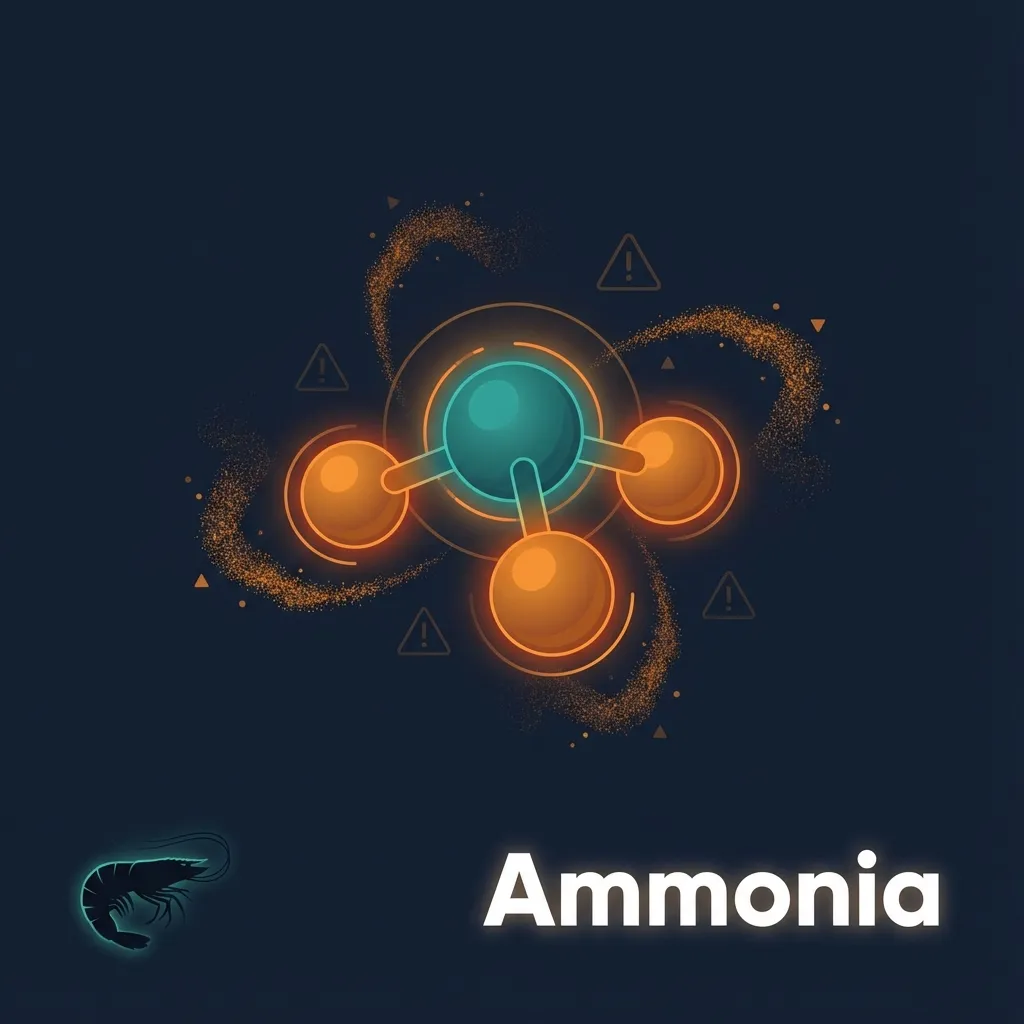
What is Ammonia?
Ammonia is the first and most toxic compound in the nitrogen cycle. It’s produced directly from:
- Shrimp and fish waste (respiration and excretion)
- Decomposing organic matter (dead animals, uneaten food, rotting plants)
- Tap water (if your municipal supply uses chloramine)
In your tank, ammonia exists in two forms that stay in chemical balance:
- NH3 (Free ammonia) - Extremely toxic, can cross cell membranes
- NH4+ (Ammonium) - Less toxic, but still not harmless
The ratio between these forms depends on pH and temperature. Higher pH = more toxic NH3. This makes ammonia particularly dangerous in Sulawesi and Neocaridina tanks with higher pH levels.
Why Ammonia Must Be Zero
Unlike other parameters where ranges are acceptable, ammonia has no safe level above zero for shrimp. Even small amounts cause:
Immediate Effects
- Gill damage (burning sensation, inability to breathe properly)
- Nervous system damage
- Disorientation and erratic swimming
- Death within hours at high concentrations
Chronic Effects (Low Levels)
- Weakened immune system
- Increased disease susceptibility
- Failed molts
- Reduced breeding
- Shortened lifespan
Shrimp are more sensitive to ammonia than most fish. A level that causes mild stress in a hardy fish can kill shrimp quickly.
The Nitrogen Cycle
Understanding the nitrogen cycle is essential for every shrimp keeper:
Ammonia (NH3) --> Nitrite (NO2) --> Nitrate (NO3)
      |               |               |
   Toxic!          Toxic!        Less toxic
                                (at low levels)
Beneficial bacteria perform these conversions:
These bacteria colonies take 4-8 weeks to establish in a new tank. This is why “cycling” is mandatory before adding shrimp.
New Tank Syndrome
“New Tank Syndrome” describes what happens when livestock is added before cycling completes:
- Shrimp produce waste (ammonia)
- Few bacteria exist to process it
- Ammonia builds up
- Shrimp become stressed or die
- Dead shrimp add more ammonia
- Cycle of death
This is the #1 killer of shrimp for new hobbyists. Always cycle your tank completely before adding shrimp.
How to Cycle a Tank (Fishless)
- Set up tank completely - substrate, filter, heater, decorations
- Add ammonia source - pure ammonia (unscented), fish food, or shrimp food
- Dose to 2-4 ppm ammonia
- Wait and test - Ammonia drops, nitrite rises, then both drop, nitrate rises
- Cycle is complete when - 2 ppm ammonia converts to 0 ammonia + 0 nitrite within 24 hours
- Do large water change to remove accumulated nitrates before adding shrimp
Emergency Response to Ammonia Spikes
If you detect ammonia in an established tank with shrimp:
Immediate Actions
- Large water change (50%+) - Dilute the ammonia immediately
- Dose Seachem Prime - Detoxifies ammonia for 24-48 hours
- Stop feeding - No new waste input
- Increase aeration - Stressed shrimp need more oxygen
Find the Source
- Check for dead animals (snails, shrimp, fish)
- Remove any uneaten food
- Check filter is running properly
- Test tap water for chloramine
Ongoing Treatment
- Test ammonia twice daily
- Water change when Prime wears off (24-48 hours)
- Continue Prime dosing until bacteria recover
- Add beneficial bacteria products to speed recovery
Ammonia and pH
The toxicity formula you need to know:
Higher pH = More toxic NH3 form = More dangerous
At pH 6.0, most ammonia is in the less toxic NH4+ form. At pH 8.0, a significant portion converts to highly toxic NH3.
This is why Sulawesi keepers at pH 8+ must be especially vigilant about ammonia, while Caridina tanks at pH 6.0-6.5 have a small buffer (though zero is still the goal).
Ammonia by Species Family
Different shrimp families have evolved in different environments, leading to varying ammonia requirements. Understanding these differences is crucial for successful shrimp keeping.
| Family | Acceptable Range | Optimal Range | Example Species | Notes |
|---|---|---|---|---|
| Neocaridina | 0-0 ppm | 0-0 ppm | Cherry Shrimp | Hardy, tolerates wider ranges |
| Caridina | 0-0 ppm | 0-0 ppm | Crystal Red Shrimp | Sensitive, requires stable parameters |
| Sulawesi | 0-0 ppm | 0-0 ppm | Cardinal Shrimp | Unique requirements, warm alkaline water |
Sensitive, requires stable parameters
Unique requirements, warm alkaline water
Stability Over Perfection
While hitting optimal ranges is ideal, stability is more important than exact numbers. Consistent parameters within the acceptable range are better than fluctuating values that occasionally hit optimal.
How to Test Ammonia
Accurate testing is essential for maintaining proper ammonia levels. Here are the most common testing methods, each with their own trade-offs.
Liquid Test Kit (API)
Pros
- Very accurate for detecting low levels
- Color chart shows severity
- Industry standard test
Cons
- Two-bottle reagent system
- Must shake bottle #2 vigorously
- Takes 5 minutes for accurate reading
Seachem Ammonia Alert
Pros
- Continuous monitoring badge
- No testing required - always visible
- Changes color to indicate ammonia presence
Cons
- Not precise - shows ranges, not exact values
- Needs replacement every year
- Supplements, doesn't replace, regular testing
Test Strips
Pros
- Quick screening
- Multiple parameters at once
Cons
- May not detect low ammonia levels
- Less accurate
- Not recommended for serious monitoring
Quick Comparison
| Method | Accuracy | Cost | Best For |
|---|---|---|---|
| Liquid Test Kit (API) | High | $ | Recommended choice |
| Seachem Ammonia Alert | Medium | $ | General use |
| Test Strips | Low | $ | Quick checks |
Testing Tip
Test at the same time of day for consistent results. Water parameters can fluctuate based on feeding, lighting, and CO2 levels. Morning tests before lights-on often provide the most stable readings.
How to Adjust Ammonia
Sometimes you need to adjust your ammonia levels. Here are safe methods for both raising and lowering values. Always make changes gradually - sudden parameter swings can stress or kill shrimp.
How to Lower Ammonia
Decrease ammonia levels
Large Water Change (50%+)
Immediately dilute ammonia with dechlorinated, parameter-matched water
Seachem Prime
Temporarily detoxifies ammonia for 24-48 hours while you address the source
Add Beneficial Bacteria
Bottled bacteria (Seachem Stability, Fritz Turbo Start) help establish ammonia-consuming bacteria
Add Established Filter Media
Transfer media from an established tank to immediately introduce ammonia-processing bacteria
Stop Feeding
Eliminate new ammonia input while dealing with the spike
Warnings
- Any detectable ammonia is an emergency for shrimp
- Prime only buys time - you must find and fix the source
- If cycling isn't complete, remove shrimp to a cycled tank if possible
Critical Safety Notice
Never make sudden, large changes to water parameters. Shrimp are extremely sensitive to parameter swings. All adjustments should be made gradually over hours or days, not minutes. When in doubt, go slower. Test frequently during adjustments to monitor progress.
Ammonia FAQ
NH3 is free ammonia (highly toxic) and NH4+ is ammonium (less toxic). In water, they exist in equilibrium - the ratio depends on pH and temperature. At low pH (<7), most ammonia is in the safer NH4+ form. At high pH (>8), more toxic NH3 dominates. This is why ammonia is MORE dangerous at higher pH levels.
Minimum 4-6 weeks with a proper ammonia source. The tank is cycled when you can dose ammonia to 2 ppm and see 0 ammonia and 0 nitrite within 24 hours, with nitrates present. Many experienced keepers wait 2-3 months to also develop biofilm for shrimp to graze. Never rush the cycle.
It's extremely risky and not recommended. Shrimp are more sensitive to ammonia than most fish, and even small amounts can be lethal. If you must (rescuing shrimp), use Seachem Prime daily to detoxify ammonia, test twice daily, do frequent small water changes, and don't feed until ammonia reads 0.
Common causes include: dead fish/shrimp/snails decomposing, overfeeding, filter failure or cleaning filter media with chlorinated water (killing bacteria), crashed cycle from medication, overstocking, or decaying plant matter. Check for dead animals first.
Some tap water contains chloramine, which releases ammonia when treated with dechlorinator. API test kits may also show a slight greenish tint (0.25) even with zero ammonia. Test your source water for comparison. True 0.25 ppm in a tank needs attention, but false positives are common.
It depends on concentration and pH. At 1+ ppm in high pH water, shrimp can die within hours. Lower levels cause chronic stress leading to failed molts, disease susceptibility, and gradual deaths over days/weeks. Any detectable ammonia should be treated as urgent.
Track Your Ammonia with ShrimpKeeper
Stop guessing. Start tracking. ShrimpKeeper gives you species-specific ammonia ranges, instant diagnostics, and historical graphs for your colony.
Ammonia Problems & Troubleshooting
Baby Shrimp (Shrimplets) Dying
HighWhy newborn shrimp disappear or die when adult shrimp seem healthy. Covers filter intake, predation, starvation, and sensitivity issues specific to shrimplets.
Bacterial Infection in Shrimp
HighIdentifying and treating bacterial infections in aquarium shrimp. Learn to recognize symptoms and understand why prevention through water quality is more effective than treatment.
Berried Shrimp Dropping Eggs
MediumWhy female shrimp release their eggs prematurely and what you can do to save the eggs or prevent future egg drops.
Planaria in Shrimp Tank
HighIdentifying and eliminating planaria flatworms that prey on shrimp, especially shrimplets. Learn safe treatment methods that won't harm your colony.