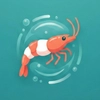
About Blue Jelly Shrimp
Blue Jelly Shrimp are one of the most unique-looking Neocaridina varieties, featuring a highly translucent body with a delicate blue tint that gives them a jelly-like or glass-like appearance. Their semi-transparent nature allows you to observe their internal structures, including the digestive system and, in mature females, the eggs developing in their saddle. This transparency makes them fascinating to watch and study. The Blue Jelly variety sits somewhere between the clear wild-type Neocaridina and the more intensely colored Blue Velvet or Blue Dream varieties. Their subtle coloration emerged from crossbreeding various blue lines, and they haven't been as heavily selected for color intensity as other blue varieties. This gives them their characteristic see-through appearance with just a hint of blue pigmentation. One interesting trait of Blue Jelly Shrimp is that they may occasionally display red or pink spots, particularly around the head, eyes, or tail region. This is not a defect but rather a genetic expression that some hobbyists find attractive, as it creates a unique color combination. Like all Neocaridina, Blue Jelly Shrimp are hardy, adaptable, and excellent for beginners who want an interesting conversation piece in their aquarium.
Quick Facts
Water Parameters for Blue Jelly Shrimp
Maintaining stable water parameters is crucial for the health and coloration of Blue Jelly Shrimp. As a Neocaridina species, they are relatively hardy and can tolerate a wider range of parameters than Caridina species.
| Parameter | Range | Optimal |
|---|---|---|
| TDS | 150-300 ppm | 180-250 ppm |
| GH | 4-14 dGH | 6-8 dGH |
| KH | 2-8 dKH | 2-5 dKH |
| pH | 6.5-8 | 6.8-7.5 |
| Temperature | 64-82°F (18-28°C) | 68-75°F |
Tank Setup for Blue Jelly Shrimp
- Minimum 5 gallon tank recommended
- Dark substrate helps their subtle blue color stand out
- Dense planting provides security and grazing surfaces
- Sponge filter for gentle flow and additional biofilm
- Good lighting helps display their unique translucent quality
Care Tips for Blue Jelly Shrimp
- Maintain stable water parameters for best health
- Keep in groups of at least 10 for natural behavior
- Their transparency makes them harder to spot - take care when cleaning
- Provide plenty of plants and hiding spots
- Their translucent nature makes internal health issues more visible
- Avoid copper-based medications
- Small weekly water changes of 10-15% are ideal
Feeding Blue Jelly Shrimp
- Feed quality shrimp foods 2-3 times weekly
- Biofilm is essential and should be their main food source
- Blanched vegetables provide variety
- Their transparent gut makes it easy to see when they've eaten
- Remove uneaten food within a few hours
Breeding Blue Jelly Shrimp
- Offspring may vary in blue intensity and transparency
- Some babies may show more or less red spotting
- Females carry 20-30 eggs visible through their transparent body
- Shrimplets are fully independent at birth
- Selective breeding can help achieve more consistent coloration
Common Problems with Blue Jelly Shrimp
- They can be hard to see in tanks - use care when doing maintenance
- Color consistency varies due to less selective breeding
- Red spots are normal genetic expression, not disease
- Their transparency makes internal parasites or issues more visible
- May produce offspring with varying color intensities
Troubleshooting Blue Jelly Shrimp
Neocaridina are hardy but still sensitive to sudden parameter changes. Here are common problems to watch for:
Failed Molt: Shrimp Stuck in Shell
Understanding failed molts where shrimp cannot escape their old exoskeleton. Learn why it happens, why affected shrimp cannot be saved, and how to prevent future molt failures.
Why Are My Shrimp Dying?
Comprehensive triage guide for unexplained shrimp deaths. Learn to identify the cause and take immediate action to save your remaining colony.
White Ring of Death in Shrimp
Understanding the dreaded white ring or white line that appears around a shrimp's body, signaling a fatal molting problem that cannot be reversed once visible.
Baby Shrimp (Shrimplets) Dying
Why newborn shrimp disappear or die when adult shrimp seem healthy. Covers filter intake, predation, starvation, and sensitivity issues specific to shrimplets.
Bacterial Infection in Shrimp
Identifying and treating bacterial infections in aquarium shrimp. Learn to recognize symptoms and understand why prevention through water quality is more effective than treatment.
Planaria in Shrimp Tank
Identifying and eliminating planaria flatworms that prey on shrimp, especially shrimplets. Learn safe treatment methods that won't harm your colony.
Blue Jelly Shrimp FAQ
Blue Jelly Shrimp are highly translucent with only a subtle blue tint, giving them a see-through, jelly-like appearance. Blue Dream Shrimp are opaque and solidly colored, while Blue Velvet have a softer blue but less transparency than Blue Jelly. Each has its own unique aesthetic appeal.
Red spots are a common genetic trait in Blue Jelly Shrimp and are completely normal. The spots often appear near the head, eyes, or tail region. Some hobbyists specifically seek out this color combination, while others breed it out through selective breeding.
Yes! One of the fascinating aspects of Blue Jelly Shrimp is their transparency. You can often see the developing eggs in a female's saddle before she becomes berried, and watch the eggs develop under her tail once she's carrying them.
Their translucent nature can make them harder to spot than more colorful varieties. Using a dark substrate helps them stand out, and you'll quickly learn to spot their subtle movements once your eye adjusts to looking for them.
They can produce offspring with varying degrees of blue intensity and transparency. The line hasn't been as selectively bred as Blue Dream or Blue Velvet, so expect some variation. Consistent selective breeding over generations can help stabilize the appearance.
Yes! They have identical care requirements to Cherry Shrimp and are equally hardy. The only challenge is they're harder to see during maintenance, so work carefully when cleaning the tank to avoid accidentally harming any hidden shrimp.
You can house them together, but they will interbreed and produce offspring with mixed characteristics. If you want to maintain the Blue Jelly appearance, keep them in a species-only tank or with non-Neocaridina tankmates.
Track Your Blue Jelly Shrimp Parameters
Stop guessing. Start tracking. ShrimpKeeper gives you species-specific parameter ranges, instant diagnostics, and historical graphs for your Blue Jelly Shrimp colony.